Key Takeaways
- Many fourth graders know social studies facts but still need help explaining cause and effect, reading maps, and using evidence from texts.
- Specific feedback helps your child see whether a mistake came from misunderstanding directions, weak background knowledge, rushed reading, or incomplete reasoning.
- In elementary social studies, guided practice often works best when students talk through timelines, regions, government ideas, and historical sources with an adult or teacher.
- Individualized support can help your child build stronger study habits, vocabulary, and confidence without making mistakes feel like failure.
Definitions
Feedback is specific information that tells a student what was correct, what needs revision, and what to try next. In social studies, good feedback often focuses on accuracy, evidence, vocabulary, and reasoning.
Primary source means a firsthand historical item such as a letter, speech, photograph, map, or diary entry from the time being studied. Fourth graders often begin learning how these sources differ from textbooks and summaries.
Why 4th grade social studies can feel harder than parents expect
By fourth grade, social studies often shifts from simple community topics to more detailed study of state history, regions, government, geography, economics, and early U.S. history, depending on the school or state standards. That means your child may be asked to do more than memorize names and dates. They may need to compare regions, explain why people settled in certain places, read maps and charts, identify important events in sequence, and support answers with details from a passage.
This is one reason the search for 4th Grade Social Studies mistakes feedback helps so many families. The challenge is not usually effort alone. It is that the course asks students to combine reading, writing, vocabulary, and reasoning at the same time. A child might understand a classroom discussion about colonies or state government, then lose points on a quiz because they misread a map key, skipped a text detail, or gave an answer that was too general.
Teachers in elementary classrooms often see a common pattern. A student can participate well out loud but struggle to show understanding independently on paper. That does not mean the child is not learning. It often means they still need practice turning ideas into complete written responses, using content words correctly, or checking their work carefully.
Parents also notice that social studies homework can look deceptively simple. A worksheet about landforms or branches of government may seem straightforward, but each question can require several skills at once. Your child may have to read closely, remember vocabulary, connect it to a lesson, and explain the answer clearly. When feedback points to the exact step that broke down, students usually make faster progress.
Common social studies mistakes in 4th grade classrooms
Some mistakes show up again and again in fourth grade social studies. Knowing what they look like can help you understand whether your child needs more content review, more reading support, or more guided practice.
Confusing facts that sound similar. Fourth graders often mix up terms such as state, country, capital, citizen, governor, and president. They may also confuse region names, landforms, or historical groups with similar sounding labels. This is especially common when a unit moves quickly and vocabulary builds from lesson to lesson.
Missing the difference between main idea and detail. In social studies reading, students may remember one interesting fact but miss the larger point. For example, after reading about why settlers chose river valleys, your child may write only that rivers had fish, instead of explaining that rivers supported transportation, farming, and daily needs.
Struggling with timelines and sequence. Many elementary students know important events but place them in the wrong order. They may not yet understand how one event led to another. In history units, this often affects answers about cause and effect.
Using opinions instead of evidence. A child might answer, “I think this leader was good because people liked him,” when the question asks for evidence from a text. In fourth grade, teachers begin expecting students to point to details from a reading passage, chart, or source.
Reading maps too quickly. Social studies includes many visuals, and map work creates frequent errors. Students may ignore the compass rose, misunderstand the legend, or confuse physical features with political boundaries. A child may know where north is in general but still answer a map question incorrectly because they did not use the scale or labels.
Writing answers that are too short. In elementary social studies, students are often told to “explain your answer.” Many children give a one sentence response when the task really calls for a claim plus two supporting details. This is not laziness. It usually means they need modeling and repeated examples of what a complete answer looks like.
Overgeneralizing historical ideas. Fourth graders may say things like “people moved because they wanted a better life” without naming the specific reason from the lesson, such as access to land, trade routes, religious freedom, or natural resources. Broad answers show partial understanding, but feedback helps students become more precise.
How feedback helps your child correct mistakes instead of repeating them
In social studies, not all mistakes mean the same thing. That is why feedback matters so much. A paper marked wrong without explanation can leave a child confused. Specific feedback, on the other hand, helps your child see the difference between a vocabulary mix-up, a reading error, and a reasoning problem.
For example, imagine your child answers a question about why a town developed near a river. If the teacher writes, “Add two details from the passage,” that feedback shows the child understood the topic but did not support the answer enough. If the teacher writes, “Review how rivers affected travel and trade,” that points to a content gap. If the note says, “Reread the question. It asks why the town developed there, not what people did there,” the issue is comprehension and attention to task.
This kind of feedback is especially helpful in fourth grade because students are still learning how school subjects work. In math, a child may expect one exact answer. In social studies, a strong answer may require explanation, comparison, and evidence. Children often need adults to make those expectations visible.
Good feedback is usually most effective when it is timely and actionable. A teacher conference, margin note, corrected quiz, or short tutoring session can help your child revise while the lesson is still fresh. Instead of hearing only “study more,” your child hears something usable, such as:
- “Use the map key before answering.”
- “Put these events back in order on a timeline.”
- “Name the region, then describe one feature of it.”
- “Find a sentence in the text that proves your answer.”
That shift matters. Children build confidence when they understand what to do next. Families looking into how 4th Grade Social Studies mistakes feedback helps are often really asking a deeper question: how can my child learn from classroom errors without feeling discouraged? The answer is usually through specific, calm guidance that treats mistakes as information.

What does feedback look like when a parent reviews work at home?
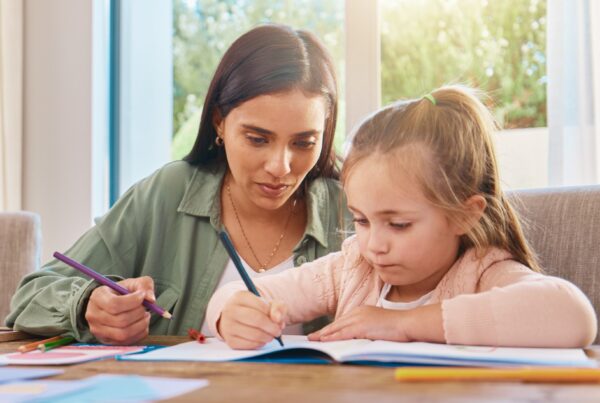
At home, supportive feedback does not need to sound like a formal lesson. It can be simple, brief, and focused on one skill at a time. If your child misses several questions on a chapter review, start by sorting the mistakes rather than correcting everything at once.
You might say, “Let us look for patterns. Were these map questions, vocabulary questions, or written response questions?” This helps your child see that not every wrong answer comes from the same problem.
Here are a few realistic ways to respond:
- If your child mixes up geography terms, ask them to point to examples on a map and say the word aloud in a sentence.
- If they struggle with sequence, have them cut apart events and put them in order before writing.
- If written answers are too vague, prompt with “What in the text makes you say that?”
- If they rush, encourage a simple check routine using directions, vocabulary, and evidence.
Many parents find it helpful to keep feedback narrow. Correcting every detail can overwhelm a child. Focusing on one or two targets, such as using text evidence or reading map symbols carefully, often leads to stronger improvement over time.
If organization is part of the problem, resources on study habits can help families build better review routines for quizzes and projects. In social studies, small habits such as reviewing vocabulary cards, labeling maps, and checking timelines can make a noticeable difference.
Elementary 4th Grade Social Studies skills that often need guided practice
Some social studies skills improve best through conversation and modeling, not independent worksheets alone. This is where guided instruction can be especially useful.
Reading informational text. Social studies passages often include headings, captions, sidebars, and domain-specific words. Your child may need help learning how to pause after each paragraph and ask, “What was the main idea here?”
Interpreting maps, charts, and diagrams. Many students answer from memory instead of using the visual in front of them. Guided practice teaches them to slow down, check labels, and connect the visual to the question.
Using academic vocabulary. Words like economy, legislature, migration, region, and resource are easier to recognize than to use accurately in speech and writing. Repeated oral practice helps these terms stick.
Explaining cause and effect. Fourth graders often know that events happened, but not why they mattered. An adult can model sentence frames such as “This led to…” or “Because of this change…” to strengthen historical reasoning.
Comparing perspectives. When students read about explorers, settlers, Native peoples, communities, or government decisions, they may assume there is only one viewpoint. Guided questions can help them notice that different groups experienced the same event differently.
These are developmental skills, and elementary teachers build them gradually. Still, some children need more repetition than the classroom schedule allows. That is where extra support can be helpful, especially if your child understands lessons during class but cannot apply them consistently on assignments.
When individualized support makes a difference
Individualized support is useful when a child keeps making the same type of social studies mistake even after class review. For one student, the issue may be reading comprehension. For another, it may be weak vocabulary or difficulty organizing written responses. A personalized approach helps adults match instruction to the actual barrier.
For example, a tutor or teacher working one on one might notice that your child answers discussion questions well verbally but freezes when writing. In that case, support may focus on turning spoken ideas into short written frames. Another child may understand history passages but miss nearly every map question. That student may need direct teaching on legends, symbols, direction, and scale with repeated practice.
This kind of instruction is academically grounded because fourth grade social studies is not just about content coverage. It is also about how students process information. In real classrooms, children learn at different paces, and many benefit from having someone slow the task down, model the thinking, and then let them try it with feedback.
Parents sometimes worry that extra help means a child is falling behind. In reality, guided instruction is a common and effective way to build independence. The goal is not to sit beside your child forever. The goal is to help them learn how to read the question carefully, use the source, organize an answer, and self-correct over time.
K12 Tutoring supports students in this way by focusing on understanding, practice, and confidence. When a child receives clear explanations and targeted feedback, social studies can become much less frustrating and much more manageable.
Helping your child grow from mistakes across the school year
Progress in social studies often happens in small steps. A child who once guessed on map questions may begin checking the legend first. A student who wrote vague answers may start citing one clear detail from the text. These changes matter because they show that skills are transferring from one assignment to the next.
You can support that growth by noticing patterns over time. Look at returned quizzes, notebook pages, project rubrics, and writing responses. Ask simple questions such as, “What kind of question feels easiest right now?” and “What kind still trips you up?” Those conversations help your child reflect on learning instead of seeing grades as the only measure.
It also helps to praise specific improvement. Instead of saying only “Good job,” try “You used the timeline correctly this time” or “I noticed you gave evidence from the reading.” That kind of response reinforces the skill your child is building.
If school feedback is limited or your child still seems confused, a tutoring session can provide the extra explanation that classroom time may not allow. A tutor can reteach a concept, model how to answer a document-based question, or practice vocabulary in a way that matches your child’s pace. For many families, this feels less like remediation and more like giving the child a clearer path to success.
Over time, the combination of teacher feedback, home review, and individualized support can help your child become more accurate, thoughtful, and confident in social studies. That is the real value behind the idea that 4th Grade Social Studies mistakes feedback helps. Mistakes are not just problems to erase. They are clues that show where learning needs to be strengthened.
Tutoring Support
If your child is struggling with fourth grade social studies, extra support can be a practical way to build understanding without adding pressure. K12 Tutoring works with families to identify where a student is getting stuck, whether that is map reading, vocabulary, written responses, timelines, or using evidence from a text. With guided instruction and personalized feedback, students can strengthen course-specific skills, ask questions more freely, and develop more confidence in classwork and homework. The focus is on steady progress, clearer thinking, and helping your child become a more independent learner.
Related Resources
- How To Build Your Child’s Confidence: A Parent’s Guide – Crimson Rise
- How High-Quality, Small-Group Tutoring Can Accelerate Learning – IES (U.S. Department of Education)
- Roles in Gifted Education: A Parent’s Guide – davidsongifted.org
Trust & Transparency Statement
Last reviewed: May 2026
This article was prepared by the K12 Tutoring education team, dedicated to helping students succeed with personalized learning support and expert guidance. K12 Tutoring content is reviewed periodically by education specialists to reflect current best practices and family feedback. Have ideas or success stories to share? Email us at [email protected].