Key Takeaways
- Mistakes in 1st grade social studies are often part of normal learning, but repeated confusion about maps, timelines, rules, communities, or citizenship can be a sign that your child needs more guided support.
- Young students in elementary social studies are learning big ideas through reading, speaking, drawing, sorting, and discussion, so errors may reflect both content confusion and language or attention needs.
- Timely feedback, teacher communication, and individualized practice can help children build understanding before misunderstandings become habits.
- Extra help does not mean a child is behind. It often means they need concepts explained in a clearer, more concrete, and more personal way.
Definitions
Social studies: In 1st grade, social studies usually introduces how families, schools, neighborhoods, maps, rules, helpers, holidays, and communities work. Students begin connecting their own daily lives to broader civic and cultural ideas.
Guided practice: Guided practice is when an adult helps a child work through a skill step by step with prompts, questions, and feedback before expecting independent work.
Why 1st grade social studies can be harder than it looks
To adults, 1st grade social studies can seem simple. The topics sound familiar: community helpers, classroom rules, maps, past and present, national symbols, and family traditions. But for many children, these lessons ask them to do several new things at once. They must listen to a read-aloud, learn new vocabulary, connect ideas to real life, answer questions aloud, and often explain their thinking in complete sentences or pictures.
That is one reason parents sometimes start wondering about when to get help with 1st grade social studies mistakes. A worksheet may look easy on the surface, but the thinking behind it can be more complex than expected. If your child mixes up left and right on a map, confuses “past” and “present,” or cannot explain why communities have rules, the issue may not be carelessness. It may be that the lesson is still too abstract.
In many classrooms, 1st graders are expected to sort pictures into categories such as rural, suburban, and urban, identify map symbols, compare life long ago to life today, or explain how a mayor, firefighter, teacher, and doctor help a community. These tasks require observation, memory, language, and reasoning. A child who is still developing one of those areas may make repeated social studies mistakes even when they are trying hard.
Teachers know that young children learn social studies best through repetition, conversation, visuals, and concrete examples. That is an important credibility point for parents to remember. If your child is not getting a concept after one exposure, that is not unusual. Many 1st graders need ideas revisited in multiple formats before they stick.
Which social studies mistakes are typical, and which ones deserve a closer look?
Some mistakes are completely expected in elementary school. A 1st grader may call a globe a map, forget the difference between a rule and a law, or need reminders that a timeline shows events in order. These errors often improve with classroom review and everyday conversation at home.
Other patterns are worth watching more closely. You may want to pay attention if your child:
- Repeatedly confuses basic location words such as near, far, left, right, north, and south even after practice
- Cannot identify common community roles after several lessons, such as who helps during a fire, who delivers mail, or who leads a school
- Struggles to sequence familiar events, such as morning to night or yesterday, today, and tomorrow
- Has trouble understanding classroom or community rules and cannot explain why rules matter
- Finds it very hard to talk about similarities and differences between families, homes, or traditions in respectful ways
- Freezes during simple social studies discussions because they cannot retrieve words or organize ideas
One isolated low quiz score usually is not a major concern. A pattern across classwork, homework, and teacher comments is more meaningful. For example, if your child keeps circling the wrong map symbol, labeling places incorrectly, or answering citizenship questions with unrelated responses, that suggests a need for more direct teaching.
Parents often notice these patterns in small moments. Your child may say, “I do not get maps,” or bring home a page where they matched a police officer to “teaches math” and a librarian to “puts out fires.” They may know the words when speaking casually but miss them on paper. That difference matters. In 1st grade social studies, understanding is often tied to how information is presented.
If you are unsure whether a mistake is typical, teacher feedback is one of the best guides. A classroom teacher can often tell you whether your child is making the same errors many classmates make at first or whether the confusion is more persistent than expected for this stage.
What first grade social studies mistakes can reveal about learning needs
Social studies mistakes do not always point to a problem with social studies itself. Sometimes they reveal a related learning need. Because 1st grade social studies is language-rich and concept-based, a child may struggle for reasons that overlap with reading comprehension, vocabulary development, attention, or working memory.
For instance, a child might miss questions about communities not because they do not understand the topic, but because they cannot yet read the directions independently. Another child may understand “past” and “present” in conversation but become confused when asked to sort historical pictures without support. A third child may know classroom rules but have difficulty explaining their reasoning in words.
This is why expert-informed instruction in early elementary grades often uses visuals, modeling, and discussion rather than expecting children to learn from worksheets alone. If your child keeps making the same type of mistake, it helps to ask what skill is getting in the way.
Here are a few common examples:
- Map mistakes: These may reflect spatial language confusion, not just weak content knowledge. A child may need hands-on practice with real rooms, playgrounds, or simple treasure maps.
- Timeline errors: These can signal difficulty with sequencing. Children often need to order familiar events from their own day before they can understand historical order.
- Citizenship misunderstandings: If your child cannot explain fairness, rules, or helping others, they may need more discussion and examples from daily life.
- Community helper confusion: This may come from vocabulary overload. Young children sometimes know what a person does but not the formal job title.
When parents ask when to get help with 1st grade social studies mistakes, this is often the turning point. If the same misunderstanding keeps appearing even after review, extra help can uncover whether your child needs slower pacing, clearer language, more repetition, or one-on-one explanation.
When should parents seek extra support in elementary social studies?
It can help to think less about a single mistake and more about duration, frequency, and impact. Extra support may be useful if your child has been confused for several weeks, if the same social studies errors show up in different assignments, or if frustration is starting to affect confidence.
You may want to reach out for more support when:
- Your child regularly says social studies is confusing or avoids related homework
- Teacher notes mention difficulty with core concepts such as maps, community, rules, or past versus present
- Classroom corrections do not seem to stick from one week to the next
- Your child needs much more adult help than expected to complete simple social studies tasks
- Mistakes are affecting participation in class discussions, projects, or oral responses
- Your child becomes upset, shuts down, or guesses randomly rather than trying to explain
Parents do not have to wait for a major problem before seeking guidance. Early support is often the most effective because 1st graders are still forming their academic habits and confidence. A short period of targeted help can make a big difference.
For some families, support starts with a teacher conference and a few home strategies. For others, individualized instruction is helpful because the child benefits from slower pacing and immediate feedback. If your child also struggles with focus, directions, or task completion, resources for focus and attention may also be useful alongside subject-specific support.
How guided practice helps children learn 1st grade social studies concepts
In 1st grade, social studies understanding grows through talk, pictures, routines, and repeated examples. Guided practice works well because it breaks broad concepts into manageable pieces.
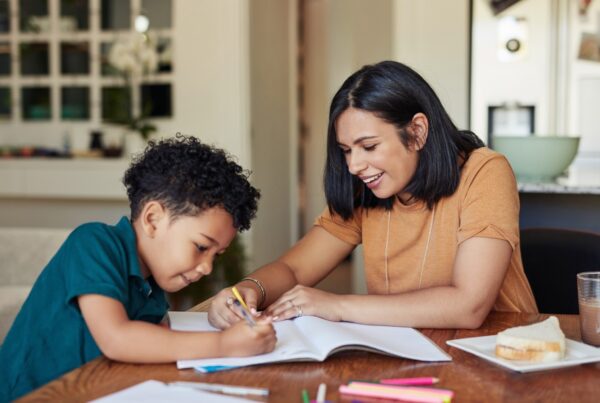
Take maps as an example. A child may first learn that a map shows where things are. Then they learn symbols, direction words, and simple labels. After that, they may be asked to read a classroom map or draw a map of their bedroom. If they skip one step in that progression, later work can feel confusing. A tutor or other support adult can slow this process down, model each step, and check for understanding right away.
The same is true for community and citizenship lessons. Instead of asking, “Why do communities need rules?” and expecting a polished answer, guided instruction might begin with concrete questions: What happens if everyone talks at once? Why do we wait in line? How does a stop sign help people stay safe? These examples make abstract ideas visible.
Helpful support often includes:
- Using real photos and familiar places instead of only textbook pictures
- Practicing new vocabulary aloud before answering written questions
- Sorting cards, drawing scenes, or acting out roles to strengthen understanding
- Asking one question at a time and giving wait time for responses
- Correcting mistakes gently and immediately so confusion does not build
This kind of feedback matters. Young children often repeat an incorrect idea simply because no one has had the chance to unpack it with them. Once they hear a clear explanation and try again with support, many begin to show much stronger understanding.
What can parents do at home if they are unsure?
You do not need to recreate school at home, but you can learn a lot by listening to how your child explains social studies ideas. Ask short, specific questions connected to daily life. For example, “Who helps our neighborhood when someone is sick?” or “What rule helps people stay safe in the parking lot?” If your child can answer in conversation but misses similar ideas on paper, that tells you the challenge may be with language, directions, or task format.
Try simple, course-specific practice such as:
- Drawing a map of your home and labeling key places
- Putting family events in order from first to last
- Talking about helpers you see in the community and what each person does
- Comparing one object from the past and present, such as an old phone and a smartphone
- Discussing why home, school, and community rules exist
Keep the tone curious rather than corrective. If your child answers incorrectly, model the idea and let them try again. “This symbol means hospital. Can you point to where someone would go for help?” Short practice sessions are usually more effective than long ones.
It is also helpful to save a few samples of work. Looking at patterns over time can make conversations with a teacher or tutor more productive. You may notice that your child understands oral questions but not written ones, or that map work is harder than community discussions. Those details can guide the next steps.
Tutoring Support
If your child is making repeated mistakes in 1st grade social studies, extra help can provide the kind of patient, individualized instruction that early learners often need. K12 Tutoring supports students by meeting them at their current level, using clear explanations, guided practice, and feedback that matches how young children learn. In a subject like social studies, that can mean turning abstract classroom ideas into concrete examples your child can see, say, draw, and understand.
Tutoring is not only for major academic concerns. It can be a practical way to strengthen vocabulary, build confidence in class discussions, and help a child make sense of maps, timelines, communities, and citizenship topics before frustration grows. With the right support, many children become more willing to participate, explain their thinking, and work independently.
Related Resources
- How To Build Your Child’s Confidence: A Parent’s Guide – Crimson Rise
- How High-Quality, Small-Group Tutoring Can Accelerate Learning – IES (U.S. Department of Education)
- Roles in Gifted Education: A Parent’s Guide – davidsongifted.org
Trust & Transparency Statement
Last reviewed: May 2026
This article was prepared by the K12 Tutoring education team, dedicated to helping students succeed with personalized learning support and expert guidance. K12 Tutoring content is reviewed periodically by education specialists to reflect current best practices and family feedback. Have ideas or success stories to share? Email us at [email protected].