Key Takeaways
- Contemporary world issues classes ask students to read closely, compare perspectives, use evidence, and discuss complex current topics, so difficulty often shows up in writing, discussion, and source analysis.
- One of the clearest signs your teen needs help with contemporary world issues is a pattern of confusion about cause and effect, bias, global connections, or how to support claims with credible sources.
- Targeted feedback, guided practice, and one-to-one support can help teens build stronger reasoning, reading, note-taking, and discussion skills without turning the class into a source of stress.
- Parents can look for specific course-based patterns rather than isolated bad grades, especially in document-based writing, current events projects, presentations, and issue analysis tasks.
Definitions
Contemporary world issues is a social studies course or unit focused on current global topics such as conflict, migration, climate policy, human rights, trade, public health, media literacy, and international cooperation.
Source analysis means examining who created a source, what perspective it reflects, how reliable it is, and how it supports or complicates a claim about a real-world issue.
Why contemporary world issues can be challenging in social studies
For many high school students, contemporary world issues is one of the first classes that feels less like memorizing facts and more like thinking through messy, unfinished problems. In a history course, your teen may study events with a clear timeline and established outcomes. In contemporary world issues, the questions are often still open. Students may need to examine a refugee crisis, an election, a trade dispute, or a public health policy while the topic is still developing in the news.
That shift can be demanding. Teachers often expect students to read articles from different viewpoints, identify bias, compare evidence, discuss ethical questions, and write about cause and effect across countries and systems. A teen who does well on traditional quizzes may still struggle when asked to evaluate whether a source is credible, explain how one policy affects another region, or support an argument with multiple pieces of evidence.
This is why parents sometimes miss early difficulty. The challenge is not always content recall. It may be reasoning, reading stamina, organization, or academic writing. One of the practical signs your teen needs help with contemporary world issues is that they understand the topic at a surface level but cannot explain it clearly in classwork. They may say, “I get it,” yet freeze when asked to write a paragraph comparing two perspectives on climate migration or to explain the difference between a fact, an opinion, and a policy claim.
Teachers in social studies often look for a combination of skills at once. Students must read, analyze, discuss, and write. When one part breaks down, the whole assignment can feel harder than it really is. That is why focused support can make a noticeable difference. A teen may not need help with every part of the course. They may need guided instruction in just one area, such as annotating articles, organizing notes, or turning evidence into a clear written response.
High school contemporary world issues patterns parents may notice
In grades 9-12, the signs of academic struggle are often subtle at first. Instead of saying they do not understand, teens may avoid the work, rush through it, or become frustrated with assignments that ask for interpretation rather than one right answer. If you are wondering whether your child needs more support, it helps to look for repeated course-specific patterns.
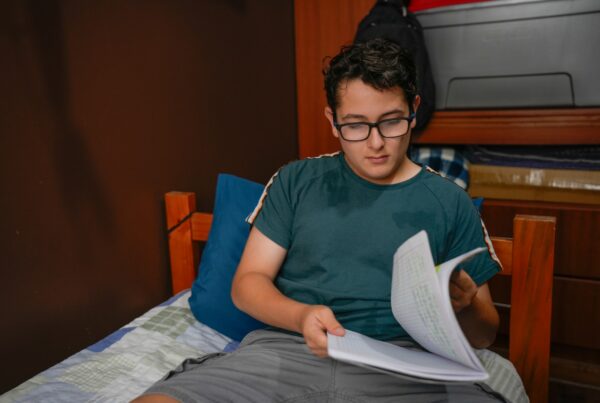
Your teen may have trouble keeping up with reading from news articles, policy briefs, or teacher-selected sources. They might read every word but miss the main claim, the author’s perspective, or the evidence being used. In class, this can show up when students summarize an article by repeating details without explaining why the source matters.
Another common pattern appears in writing. A student may have strong opinions about global issues but struggle to build an academic response. For example, they may write that a country should accept more refugees but fail to support the claim with evidence about economics, international law, or regional conflict. Or they may list facts from several sources without connecting them into a coherent argument.
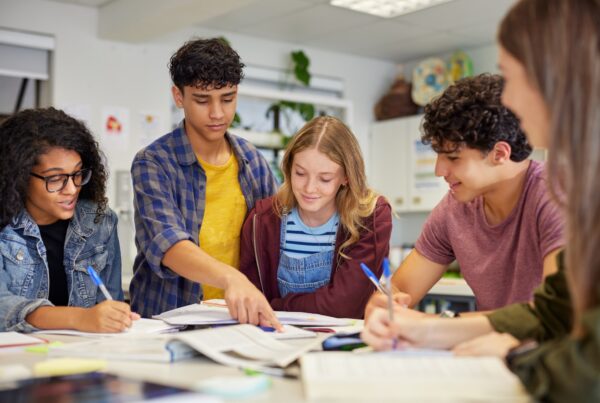
Parents may also notice difficulty with classroom discussion. Contemporary world issues often includes seminars, debates, or small-group conversations. Some teens stay quiet because they are unsure how to enter a discussion respectfully and academically. Others speak confidently but rely on personal opinion rather than evidence. Both patterns suggest that the student may need more structured practice with reasoning and support.
Grades can also tell part of the story, but look beyond averages. If quiz scores are fine while essays, presentations, and document-based assignments are consistently weak, that points to skill gaps rather than lack of effort. If your teen spends a long time on homework yet still earns comments like “needs more evidence,” “unclear reasoning,” or “analyze more deeply,” those teacher notes are valuable clues.
Some students also struggle with the pace of current-events work. Since topics change quickly, they may feel lost after missing one class discussion or one set of notes. In that case, support with planning and follow-through can matter as much as content review. Families sometimes find it helpful to build stronger routines around reading and assignment tracking through resources on study habits, especially when the course includes regular article analysis and response writing.
What assignments reveal about whether your teen needs support
If you want clearer evidence, look at the actual work your teen brings home. Contemporary world issues assignments often reveal where understanding breaks down.
Article annotations: A student may highlight large sections without noting the author’s claim, bias, or supporting evidence. This usually means they need instruction in how to read for purpose, not just how to finish the reading.
Short response questions: Your teen may answer with broad statements such as “war affects everyone” or “social media changes opinions” without naming specific examples, causes, or consequences. This suggests difficulty moving from general ideas to academic explanation.
Research tasks: Some teens collect sources that are too weak, too opinion-based, or unrelated to the question. They may not yet know how to tell the difference between a credible news report, an editorial, a think tank summary, and a social media post.
Presentations: A student may create slides full of facts but struggle to explain relationships between them. For instance, they may list inflation, sanctions, and supply chain problems without showing how those factors connect in a current global issue.
Debates or seminars: Students sometimes repeat one point several times because they do not know how to respond to counterarguments. This is not just a speaking issue. It often reflects a need for guided practice in weighing evidence and considering multiple perspectives.
These are some of the most reliable signs your teen needs help with contemporary world issues because they show how your child is handling real course demands. In social studies, teachers are often assessing historical thinking skills carried into the present day, such as sourcing, contextualization, comparison, and argumentation. When a teen has not fully developed those skills, contemporary topics can feel overwhelming because there is so much information to sort through.
A useful parent question is this: Can my teen explain not just what happened, but why it matters and how they know? If the answer is often no, support may help them build the habits this course requires.
How teachers and tutors support stronger issue analysis
Good support in this class is usually very concrete. It is not about giving students opinions to repeat. It is about helping them learn how to think through complex material in a structured way.
Teachers often begin by modeling source analysis. They may project an article and think aloud through questions such as: Who wrote this? What is the main claim? What evidence is included? What perspective might shape the language? What is missing? Students who need extra help benefit from seeing this process broken into steps instead of being asked to do it independently right away.
Writing support is also important. In many high school social studies classrooms, students are expected to write claim-evidence-reasoning paragraphs or longer issue analyses. A tutor or teacher can help by showing how to move from notes to an argument. For example, if the topic is global water scarcity, a student might learn to build a paragraph that makes one clear claim, cites a source about climate stress or infrastructure, and explains how that evidence supports the claim.
Guided discussion practice can help too. Some teens know more than they can express in the moment. With individualized support, they can rehearse how to use sentence starters, refer to a source, acknowledge another viewpoint, and add a new point instead of repeating themselves. This kind of practice often improves both confidence and classroom participation.
One-to-one academic support is especially useful when the challenge is uneven. A teen may read well but write weakly. Another may understand the issue but lose points because they cannot organize notes or keep track of assignments. Personalized instruction allows support to match the actual need. That is a common reason families seek tutoring in social studies. Not because the student cannot learn the material, but because they benefit from feedback that is immediate, specific, and tailored to how they process information.
Educationally, this matters because students build stronger long-term skills when they receive feedback during practice, not only after a graded assignment is returned. When a teen can revise a thesis statement, improve source selection, or clarify reasoning with support, they are more likely to transfer that skill to the next unit.
What parents can do at home without turning current events into a debate
Parents do not need to be experts in international relations to help. What helps most is creating space for your teen to explain their thinking. Instead of asking, “Did you finish your homework?” try asking, “What issue are you studying right now?” or “What are two different perspectives your class looked at?” These questions encourage explanation, which often reveals whether your teen truly understands the material.
You can also ask your child to walk you through one source from class. If they can identify the author, summarize the claim, and explain why the source is credible or limited, they are likely developing the right habits. If they become stuck, that gives you useful information without adding pressure.
Another practical step is helping your teen break larger assignments into parts. A current issues project may involve choosing a topic, finding sources, taking notes, building a claim, drafting, revising, and preparing a presentation. Teens often underestimate how many separate tasks are involved. When a project feels too big, even capable students may procrastinate. A simple checklist or planning session can reduce that load.
It also helps to keep discussions academic rather than personal. Contemporary topics can be emotional or politically charged. If your teen worries that every conversation will turn into a family debate, they may avoid sharing what they are learning. Try focusing on course skills instead. Ask what evidence their teacher wants, what counterargument they need to address, or how they are distinguishing a news report from commentary.
If your child has repeated difficulty despite effort, it may be time for more structured help. This does not mean something is seriously wrong. It simply means the course is asking for skills that benefit from guided instruction. Social studies classes that center on current global issues often require a level of synthesis that students are still learning to manage in high school.
Tutoring Support
When the signs your teen needs help with contemporary world issues start to form a pattern, individualized support can help them make sense of the course in a more manageable way. K12 Tutoring works with students to strengthen the specific skills this class depends on, including reading complex sources, organizing evidence, writing clearer responses, preparing for discussions, and understanding how global issues connect across regions and systems.
That support is most effective when it is targeted. A student who struggles with article analysis may need modeling and guided practice. A student who knows the content but freezes on essays may need help turning ideas into structure. A student who falls behind on current-events assignments may need better routines, pacing, and accountability. With personalized feedback and steady instruction, many teens become more confident, more independent, and better able to participate in class with clarity.
Related Resources
- How To Build Your Child’s Confidence: A Parent’s Guide – Crimson Rise
- How High-Quality, Small-Group Tutoring Can Accelerate Learning – IES (U.S. Department of Education)
- Roles in Gifted Education: A Parent’s Guide – davidsongifted.org
Trust & Transparency Statement
Last reviewed: May 2026
This article was prepared by the K12 Tutoring education team, dedicated to helping students succeed with personalized learning support and expert guidance. K12 Tutoring content is reviewed periodically by education specialists to reflect current best practices and family feedback. Have ideas or success stories to share? Email us at [email protected].