Key Takeaways
- Fifth grade social studies often becomes harder when students must connect geography, history, government, and economics instead of memorizing isolated facts.
- Many children understand a story about the past but struggle when they are asked to explain causes, compare perspectives, or use maps and timelines as evidence.
- Guided discussion, targeted feedback, and one-on-one support can help students build stronger reading, writing, and reasoning skills in social studies.
- With patient practice, your child can grow from simply recalling information to thinking like a young historian and informed citizen.
Definitions
Primary source: a document, image, speech, letter, or artifact created during the time being studied. In 5th grade social studies, students may use primary sources to learn how people in the past thought and lived.
Cause and effect: the relationship between an event and what made it happen or what happened next. This is a major thinking skill in upper elementary social studies because students are expected to explain historical change, not just name events.
Why 5th grade social studies feels different from earlier elementary years
If you have been wondering why 5th grade social studies foundations are challenging, you are not alone. Many parents notice that this subject starts to feel less like simple fact learning and more like a mix of reading, writing, discussion, and analysis. That shift is real. In many classrooms, 5th graders move from learning basic community and geography ideas toward studying American history, early government, regions, economics, and the ways events connect across time.
This matters because the course asks your child to do several things at once. A student may need to read a textbook passage about colonies, study a map of trade routes, answer written questions about why people settled in certain areas, and then compare how geography affected daily life. Even children who enjoy history stories can feel stretched when the assignments require them to infer, summarize, and support an answer with details.
Teachers often see a common pattern here. A child can say, “The colonists moved because of land or jobs,” but then struggle to explain which region offered what resources or how those choices affected later events. That gap does not mean your child is not trying. It usually means the course is asking for deeper thinking than before.
Another reason this class can feel demanding is that social studies depends heavily on literacy skills. Students must understand complex vocabulary, follow multi-step directions, and write responses that are organized and accurate. When a child is still developing reading stamina or written expression, social studies can suddenly seem harder than parents expect.
Social Studies challenges often come from reading and vocabulary demands
One of the biggest obstacles in 5th grade social studies is the language of the subject itself. Terms such as colony, representative government, taxation, migration, imports, exports, and constitution are not words children use every day. Students may recognize a term during class discussion but then freeze when they see it again in a quiz question or reading passage.
Social studies reading can also be dense for elementary learners. Textbooks and worksheets often include headings, captions, timelines, sidebars, and maps all on one page. Your child may not know where to focus first. Some students read every word but miss the main idea. Others skip charts or map keys and lose important information that the teacher expects them to use in an answer.
For example, a class assignment might ask, “How did geography influence the economy of the New England colonies?” To answer well, a student needs to understand geography, economy, influence, and colonies. Then they need content knowledge about rocky soil, coastal access, fishing, and trade. This is why a child can know some facts about colonial life but still have trouble producing a complete response.
Teachers and tutors often support this by breaking the task into smaller parts. First, define the key words. Next, identify what the question is really asking. Then, pull two or three details from notes or the text. Finally, turn those details into a full sentence or short paragraph. This kind of guided practice helps students learn how to approach social studies work more independently over time.
If your child often says, “I know it, but I cannot explain it,” that is a useful clue. The issue may be less about motivation and more about academic language. Support with vocabulary review, oral discussion, and sentence starters can make a real difference.
Elementary 5th grade social studies asks students to think across time, place, and perspective
Another reason parents notice difficulty in this course is that 5th grade social studies is built around connections. Students are not only learning what happened. They are learning when it happened, where it happened, who was involved, and why it mattered. That is a lot for an upper elementary learner to hold in mind at once.
Timelines are a good example. A child may memorize that the American Revolution came before the Constitution, but still struggle to explain how one led to the other. Similarly, a student may remember that the 13 colonies existed, yet mix up regional differences among New England, the Middle Colonies, and the Southern Colonies. In class, this can show up as answers that are partially right but not precise.
Perspective-taking is another major leap. Many 5th grade social studies programs ask students to compare how different groups experienced the same event. A teacher might ask how a law affected colonists, British leaders, and merchants differently. Or students may read short primary sources and discuss how point of view shapes what a person says. This is sophisticated thinking for elementary school.
Children often need repeated modeling before they can do this well. A teacher may think aloud by saying, “This farmer and this merchant both lived in the colonies, but their jobs gave them different concerns.” In tutoring or at home, that same strategy can be helpful. Ask your child, “Who is speaking? What do they care about? What detail in the text tells you that?” That keeps the work grounded in evidence instead of guessing.
This is also where social studies can challenge advanced readers in a new way. A strong reader may move through the text quickly but still need help slowing down to analyze details, compare sources, and support ideas clearly. Difficulty in social studies is not always about reading level alone. It is often about reasoning with information.
Writing in social studies can be harder than parents expect
Many parents are surprised to learn how much writing is involved in 5th grade social studies. Students may complete short constructed responses, compare-and-contrast paragraphs, document-based questions, or simple essays tied to class units. These tasks are challenging because they combine subject knowledge with organization, grammar, and evidence use.
A common classroom prompt might ask, “Explain two reasons settlers came to America and describe one challenge they faced after arriving.” This sounds manageable, but it requires your child to choose relevant information, organize it logically, and explain ideas in complete sentences. Some students know many interesting facts yet write scattered responses that do not fully answer the question.
Teachers often look for three things in these assignments. First, did the student answer all parts of the question? Second, did the student include accurate details from class learning? Third, is the response organized enough to follow? When children lose points, it is often because one of these pieces is missing.
Feedback matters a great deal here. A child benefits from hearing something more specific than “add more detail.” Helpful guidance sounds like, “You named one reason settlers moved, but the question asked for two,” or “Your idea is correct, but add an example from the text.” This kind of targeted feedback teaches students how to improve the next response, not just how they performed on the last one.
Parents can support this at home by asking children to say an answer aloud before writing it. Oral rehearsal helps many 5th graders organize their thinking. Graphic organizers can help too, especially for children who need a visual plan. Families looking for broader academic routines may also find support in resources on study habits, especially when social studies homework feels rushed or disorganized.

Why does my child know the facts but still struggle on tests?
This is one of the most common parent questions in social studies, and it has a very understandable answer. Tests in 5th grade social studies often measure more than recall. A child may study vocabulary words and dates, then open the test and see map questions, reading passages, matching items, short responses, and cause-and-effect prompts. If your child prepared by memorizing only isolated facts, the test may feel much harder than expected.
For example, a quiz might ask students to identify which colonial region had plantations, but another question may ask why that region developed a different economy from New England. The first question checks recall. The second checks understanding. Students often need explicit practice moving between those two levels.
There is also the issue of test wording. Social studies questions can include phrases such as “best explains,” “most likely,” or “based on the passage.” Those words signal that students must think carefully, not just search for one familiar term. If a child reads quickly or misses a key phrase, they may choose an answer that sounds right but is not the strongest one.
Guided review is especially helpful before tests. Instead of only rereading notes, students benefit from sorting information into categories, practicing map and timeline questions, and explaining answers out loud. A tutor or teacher can also help identify patterns in mistakes. Maybe your child understands content but misreads multi-part questions. Maybe they need more practice using evidence in written responses. Once the pattern is clear, support can become much more effective.
How guided practice and individualized support help in 5th grade social studies
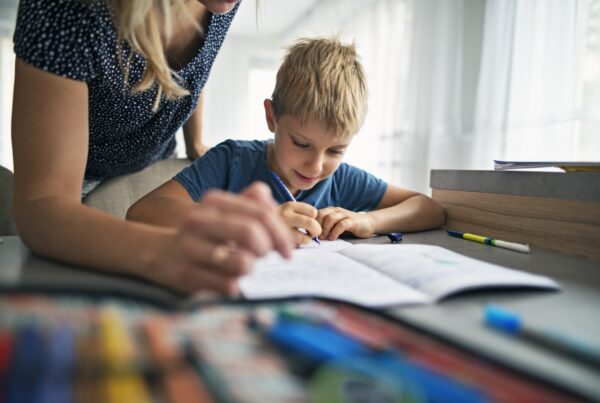
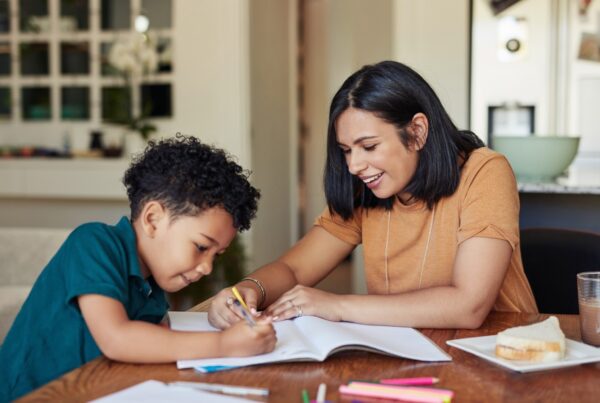
Because this course blends content knowledge with reading and writing demands, many children benefit from support that is specific and interactive. In social studies, guided practice is often more useful than simply doing more worksheets. Students need to see how a skilled reader or teacher approaches a map, a source excerpt, or an open-ended question.
In one-on-one or small-group support, an instructor might model how to annotate a short passage by circling dates, underlining causes, and marking unfamiliar vocabulary. They might show your child how to compare two regions using a chart, or how to turn notes into a paragraph with a topic sentence and supporting details. These are concrete academic moves that help students become more confident and more independent.
Individualized instruction can also help when a child has uneven strengths. One student may love class discussions but struggle to write. Another may read well but have weak background knowledge about geography. A third may understand lessons in the moment but forget details by the end of the week. Personalized support allows practice to match the actual need.
This kind of help is especially valuable because it reduces frustration without lowering expectations. The goal is not to make social studies easier by removing challenge. The goal is to make the learning process clearer. When students receive timely feedback, they are more likely to revise answers, notice patterns, and build durable understanding.
K12 Tutoring often supports families in exactly this way, with instruction that responds to the child in front of the tutor. For some students, that means strengthening vocabulary and reading comprehension. For others, it means practicing historical reasoning, organizing written responses, or reviewing content in a more structured way. Support works best when it is calm, targeted, and connected to what is actually happening in class.
What parents can watch for at home
You do not need to reteach the course to be helpful. Often, the most useful step is noticing the kind of difficulty your child is having. Does your child avoid reading the chapter because the text feels overwhelming? Do they study hard but mix up regions, events, or people? Can they talk about a lesson clearly but struggle to write it down? Those patterns tell you where support may be needed.
It can also help to listen for specific phrases. “I do not get the map” may signal a problem with visual information. “I forgot what the question wanted” may point to difficulty with attention or multi-step directions. “I know it when the teacher says it” may mean your child needs more guided retrieval and review. These are common learning patterns in elementary classrooms, and they are all workable.
Simple supports at home can include reviewing vocabulary with examples, asking your child to explain one cause and one effect from the current unit, or having them use a timeline to retell events in order. Keep the conversation concrete. Instead of asking, “Did you understand social studies?” try asking, “What changed after that event?” or “What does this map show that the paragraph does not?” Those questions mirror the kind of thinking the course requires.
If your child continues to feel stuck, extra academic support can be a positive next step, not a sign of failure. In social studies, timely help often prevents small gaps from turning into bigger confidence issues later on.
Tutoring Support
When 5th grade social studies starts to feel confusing, personalized support can help your child slow down, make connections, and practice the exact skills their class is asking for. K12 Tutoring works with families to build understanding through guided reading, discussion, writing support, and feedback that matches each student’s pace. For a child who is learning how to analyze sources, explain historical events, or organize written answers, that kind of steady instruction can support both confidence and long-term academic growth.
Related Resources
- How To Build Your Child’s Confidence: A Parent’s Guide – Crimson Rise
- How High-Quality, Small-Group Tutoring Can Accelerate Learning – IES (U.S. Department of Education)
- Roles in Gifted Education: A Parent’s Guide – davidsongifted.org
Trust & Transparency Statement
Last reviewed: May 2026
This article was prepared by the K12 Tutoring education team, dedicated to helping students succeed with personalized learning support and expert guidance. K12 Tutoring content is reviewed periodically by education specialists to reflect current best practices and family feedback. Have ideas or success stories to share? Email us at [email protected].