Key Takeaways
- Fourth grade social studies asks students to read closely, understand timelines and maps, compare regions, and explain ideas in writing, so support often needs to be more specific than simple memorization.
- Parents who want to understand how tutoring helps with 4th grade social studies skills often find that guided practice, discussion, and feedback help children connect facts to bigger historical and civic ideas.
- One-on-one support can help your child slow down, ask questions, build vocabulary, and practice using evidence from texts, maps, and classroom materials.
- With the right support, many students grow not only in social studies knowledge but also in reading comprehension, note-taking, organization, and confidence.
Definitions
Primary source: a document, image, speech, letter, map, or artifact created during the time being studied. In 4th grade, students may begin looking at simple primary sources to learn how people lived and what mattered to them.
Civics: the study of how communities and government work. In elementary social studies, civics often includes rules, responsibilities, citizenship, and the roles of local, state, and national government.
Why 4th grade social studies can feel harder than parents expect
Many parents are surprised when 4th grade social studies becomes more demanding. In earlier grades, social studies often centers on communities, holidays, helpers, and broad ideas about geography and citizenship. By 4th grade, the work usually becomes more structured. Your child may be asked to read informational passages, study state or U.S. regions, learn about history in sequence, interpret maps, and explain cause and effect in writing.
That shift matters because social studies is not just about remembering names and dates. Students are often expected to understand why people moved, how geography influenced settlement, what events happened first, and how government decisions affect daily life. A child who seems to know the facts may still struggle when a quiz asks, “Why did settlers choose this area?” or “How did rivers help trade?”
Teachers in elementary classrooms often see a common pattern. A student can participate well in discussion but freeze when asked to write a short response using details from a textbook page or classroom article. Another child may love maps but have trouble reading a timeline. A strong reader may understand the passage but miss the main idea because the vocabulary is unfamiliar. These are normal learning hurdles in this course.
This is one reason parents often look more closely at how support works in this subject. In social studies, growth usually comes from explanation, guided questioning, and repeated chances to connect details to larger ideas.
How social studies learning builds reading, writing, and reasoning
One of the most important things to know about 4th grade social studies is that it overlaps with several other academic skills. When your child studies explorers, regions, state history, economics, or government, they are also practicing reading comprehension, academic vocabulary, and written expression.
For example, a classroom assignment might ask students to read a short passage about early settlements and answer questions about natural resources, transportation, and daily life. To do that well, your child has to decode the text, understand words like resources or economy, identify relevant details, and explain an answer in complete sentences. If any one of those steps feels shaky, the whole task can become frustrating.
Map work is another good example. A 4th grader may need to use a compass rose, map key, and scale while also understanding landforms, climate, and location. A child might know north, south, east, and west, but still struggle to explain how mountains or rivers affected where people lived. That is not a sign that they are not trying. It often means they need more guided practice connecting visual information to historical or geographic reasoning.
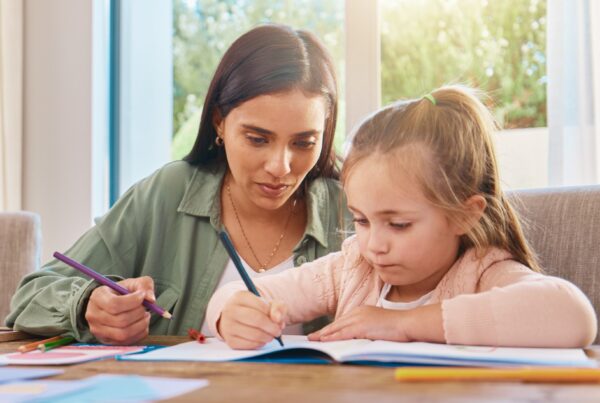
When tutoring is used thoughtfully, it can support these connected skills in a way that classroom time cannot always provide. A tutor can pause after one paragraph, ask your child to restate the main idea, point out a key vocabulary word, and model how to pull evidence from the text. That kind of immediate feedback helps students learn how to think through social studies tasks, not just finish them.
How tutoring helps with 4th grade social studies skills in real class situations
Parents often ask what tutoring actually looks like in this subject. In 4th grade social studies, effective support is usually practical and specific. It often focuses on the exact kinds of tasks students see in class.
Imagine your child is studying the regions of the United States. In class, they may need to identify states on a map, compare climates, and explain why certain jobs or industries are more common in one region than another. A tutor can break this into manageable steps. First, your child reviews the map. Next, they sort features by region. Then they practice answering a question such as, “Why is farming more common in this area?” That sequence helps move learning from recognition to explanation.
Or picture a unit on state history. Your child may be asked to put events in chronological order and explain how one event led to another. Some students mix up the timeline because they focus on isolated details. A tutor can help by using visual organizers, simple date markers, and guided discussion about words like before, after, during, and because. Over time, your child begins to see history as a sequence of connected events rather than a list to memorize.
Short-answer writing is another area where individualized help can make a difference. A student may know that a colony was founded near water, but write only, “Because it was easier.” A tutor can teach your child to expand that idea with evidence: “Settlers chose land near rivers because water helped with travel, trade, and farming.” That is a meaningful academic step forward.
In many elementary classrooms, teachers do excellent work helping students discuss ideas aloud. Tutoring can complement that instruction by giving your child more time to practice turning spoken understanding into written answers. For social studies, that bridge is often where confidence grows.

What if my child knows the facts but still struggles on quizzes?
This is a very common parent question in elementary social studies. A child may study flashcards, remember vocabulary, and still bring home a quiz grade that does not match what they seemed to know. Usually, the issue is not effort. It is that quizzes often measure more than recall.
For instance, a question might ask your child to read a small map and infer why a town developed in a certain place. Another might ask them to choose the best explanation for why a historical event mattered. These tasks require students to apply knowledge, not just repeat it.
Tutoring can help by making those hidden demands visible. A tutor might show your child how to underline clue words, look back at the map title, or notice when a question is asking for cause and effect. They may practice eliminating answers that are partly true but do not fully fit the question. These are academic habits, and they can be taught.
It also helps when a student gets immediate correction. If your child answers, “People moved there because it was nice,” a tutor can respond with a follow-up question such as, “What in the reading tells us that?” This kind of guided feedback encourages evidence-based thinking, which is central to social studies learning.
Over time, many students begin to approach assessments more calmly because they have practiced the exact reasoning their class expects. That can improve accuracy, but just as important, it can reduce the feeling that quizzes are unpredictable.
Elementary social studies support that matches your child’s pace
Children in 4th grade vary widely in how they process social studies content. Some are verbal thinkers who can talk through historical ideas but need help organizing written responses. Others are visual learners who understand maps and diagrams quickly but need extra support with textbook reading. Some students need repetition to retain vocabulary, while others need help slowing down so they do not rush past key details.
Individualized instruction matters because social studies combines so many types of learning. A tutor can notice patterns that are easy to miss in a busy classroom. Maybe your child understands lessons better when they sketch a quick timeline. Maybe they need sentence starters to answer open-ended questions. Maybe they remember geography more easily when they compare one region to another instead of studying each region alone.
This kind of support is especially helpful for students who are still developing executive function skills, such as keeping track of assignments, studying for a chapter test, or organizing notes. If that sounds familiar, parents may also find useful ideas in organizational skills resources. In social studies, small systems can make a big difference, such as keeping vocabulary cards by unit, color-coding map work, or using a simple chart for cause and effect.
Good tutoring also respects the pace of elementary learners. A 4th grader may need to revisit a concept several times before it sticks. That is developmentally normal. When support is patient and targeted, students often become more willing to ask questions, revise answers, and take academic risks.
Building stronger 4th grade social studies habits at home
Parents do not need to recreate school at home to support this subject. What helps most is reinforcing the kinds of thinking your child is already being asked to do in class.
After homework, try asking one or two specific questions rather than “How was social studies?” You might ask, “What did you learn about why people settled there?” or “What does the map show that the paragraph does not?” Questions like these encourage your child to explain ideas, not just report that they finished the assignment.
If your child is preparing for a test, review in short sections. One night might focus on vocabulary, another on timelines, and another on map interpretation. Mixing all of it together can overwhelm a 4th grader. It is often more effective to study one skill at a time and then do a brief mixed review at the end.
It also helps to let your child talk through answers before writing them. Social studies writing often improves when students first say the idea aloud. For example, if the prompt asks why a region developed certain jobs, your child might explain it verbally, then turn that explanation into two or three clear sentences.
When families understand how tutoring helps with 4th grade social studies skills, they often see that the goal is not just better homework completion. The larger goal is helping a child learn how to read for meaning, notice patterns, use evidence, and communicate understanding clearly. Those are lasting academic skills that support future history and civics learning.
Tutoring Support
K12 Tutoring supports families by meeting students where they are and helping them build the specific skills their coursework requires. In 4th grade social studies, that may mean strengthening map reading, vocabulary, timelines, note-taking, short-response writing, or test preparation strategies. Personalized support can give your child more time to process ideas, ask questions, and practice with feedback in a way that feels encouraging and manageable. For many families, tutoring is simply one helpful part of a broader learning plan that supports understanding, confidence, and steady progress.
Related Resources
- How To Build Your Child’s Confidence: A Parent’s Guide – Crimson Rise
- How High-Quality, Small-Group Tutoring Can Accelerate Learning – IES (U.S. Department of Education)
- Roles in Gifted Education: A Parent’s Guide – davidsongifted.org
Trust & Transparency Statement
Last reviewed: May 2026
This article was prepared by the K12 Tutoring education team, dedicated to helping students succeed with personalized learning support and expert guidance. K12 Tutoring content is reviewed periodically by education specialists to reflect current best practices and family feedback. Have ideas or success stories to share? Email us at [email protected].