Key Takeaways
- Second grade social studies often feels harder than parents expect because children are learning big ideas like community, geography, history, and citizenship at the same time they are still building reading, writing, and discussion skills.
- Many classroom tasks ask students to compare past and present, read maps, use timelines, and explain their thinking in writing, which can make social studies feel demanding even when the facts seem simple.
- With guided practice, clear feedback, and individualized support, children can build confidence and learn how to organize information, use vocabulary, and connect social studies ideas to everyday life.
Definitions
Civics is the study of how people live and work together in communities, including rules, responsibilities, and leadership.
Primary source means something from the time being studied, such as a photograph, letter, map, or artifact that helps students learn about the past.
Why social studies can feel unexpectedly hard in second grade
If you have been wondering why 2nd grade social studies foundations feel difficult, you are not alone. Many parents expect second grade social studies to be mostly about holidays, helpers, and simple maps. In reality, this stage often asks children to do much more. They may need to sort facts into categories, compare communities, identify landforms, explain rules, and use evidence from a short text or picture to answer questions.
That combination can be challenging because second graders are still developing core school skills. A child might understand what a community helper does when talking out loud, but freeze when asked to read a paragraph about firefighters, underline key details, and then write two complete sentences explaining how firefighters help the community. The social studies idea may not be the only obstacle. Reading stamina, handwriting, vocabulary, and attention all affect performance.
Teachers in elementary classrooms often see this pattern. A student can participate well in class discussion but struggle on a worksheet or quiz because the task requires several steps at once. This is one reason social studies can look easy from the outside while feeling hard for a young learner in practice.
Another reason is that social studies asks children to think beyond their immediate experience. In math, an answer is often visible. In early reading, a sound can be practiced directly. In social studies, children are asked to understand systems, places, and time periods they cannot always see. That kind of abstract thinking is still developing in elementary school.
What 2nd grade social studies foundations usually include
Second grade social studies is often a bridge year. Students move from very concrete ideas, such as family and classroom rules, toward broader concepts like neighborhoods, government, geography, economics, and history. The exact curriculum varies by school, but many courses include topics such as:
- communities and the roles people play
- maps, globes, cardinal directions, and landforms
- past and present comparisons
- basic government and citizenship
- goods, services, and needs versus wants
- national symbols, holidays, and historical figures
These topics may sound straightforward, but each one includes hidden demands. For example, learning map skills is not just about finding north, south, east, and west. A child may need to read a legend, understand symbols, follow directions, and connect a bird’s-eye view to a real place. That can be a lot for a seven- or eight-year-old.
History lessons bring their own challenges. When students compare life long ago to life today, they are practicing sequencing, observation, and evidence-based thinking. A teacher might show pictures of a one-room schoolhouse and a modern classroom and ask students to identify similarities and differences. Some children quickly notice desks and chalkboards. Others need guided questions like, “What do you see that students used in the past?” or “What is different about the way children traveled to school?”
In social studies, vocabulary also matters more than many parents realize. Words like citizen, responsibility, rural, urban, producer, consumer, region, and tradition are not always part of everyday conversation at home. A child can struggle simply because the language of the lesson feels unfamiliar.
Elementary school learning patterns that affect social studies
In elementary school, children are still learning how to learn. That matters a great deal in 2nd grade social studies. A lesson may require listening to a read-aloud, looking at a map, discussing ideas with classmates, and then completing independent work. If your child has trouble holding several directions in mind, shifting from one task to another, or organizing information, social studies assignments can feel especially frustrating.
This is also an age when many children are still building confidence with nonfiction text. Social studies materials often use headings, captions, labels, and diagrams. Those features are useful, but they are different from storybooks. A child who enjoys fiction may not yet know how to pull information from a chart or answer a question using a short informational passage.
Teachers and tutors often notice that second graders need explicit modeling here. For instance, when reading a short passage about local government, an adult might stop and say, “Let’s look at the heading first. It tells us this section is about mayors. Now let’s find one detail that explains what a mayor does.” That kind of guided instruction helps children learn the process, not just the answer.
Attention and pacing can also shape how social studies feels. Some students understand the material but work slowly. Others rush through and miss details in a map key or timeline. Some need repeated exposure before terms stick. None of this means a child is not capable. It means the course depends on several developing skills at once, and children do not all grow those skills on the same timeline.
Why does my child know the ideas but still struggle on assignments?
This is one of the most common parent questions in elementary social studies. A child may talk confidently about rules, neighborhoods, or famous Americans, yet bring home incomplete work or low quiz scores. Usually, the issue is not a lack of intelligence or effort. It is the gap between understanding a concept informally and showing that understanding in a school format.
Imagine a class assignment that asks students to label a map, circle a body of water, and write one sentence about why people use maps. Your child may know what a map is for, but still get stuck because they confuse left and right, forget the word ocean, or do not know how to turn their spoken idea into a written sentence.
The same thing happens with timelines. A child may understand that grandparents were children before parents were children, but a worksheet asking them to place events in chronological order can feel confusing. Terms like first, next, earlier, later, and long ago require language precision. That is a lot to manage while also trying to remember classroom directions.
Feedback is especially important here. When adults simply say, “Study more,” children may not know what to change. But when a teacher or tutor says, “You understood the community helper part. Next time, let’s slow down and read the map symbols before answering,” the child gets a clear path forward. Specific feedback builds independence because it shows what successful work looks like.

Course-specific examples of where second graders often get stuck
Some sticking points appear again and again in 2nd grade social studies. Knowing them can help you understand your child’s experience more clearly.
Map and geography tasks
Children may mix up cardinal directions, misunderstand map symbols, or have trouble connecting a flat map to a real location. A worksheet that asks, “What is west of the school?” requires spatial reasoning, not just memorization.
Past and present comparisons
Students are often asked to study pictures and explain how life has changed over time. This can be hard because children need to observe details, sort them into categories, and use comparison words like same, different, before, and now.
Civics and community roles
Young learners may know that rules matter but struggle to explain why communities need laws, leaders, and services. Questions that ask for reasons, not just facts, can feel more demanding.
Goods, services, and economics vocabulary
These lessons seem simple to adults, but children often confuse who makes a product, who sells it, and who buys it. If a class asks whether a baker is providing a good or a service, students may need repeated examples before the distinction becomes clear.
Short written responses
Even when the social studies content is understood, writing can be the barrier. A child may know two ways communities change over time but only write one short phrase because sentence formation is still hard.
In each of these situations, guided practice makes a difference. A tutor or teacher can break one task into smaller parts, model the language needed, and help a child rehearse how to answer. Over time, that support helps the student handle similar tasks more independently.
How parents can support 2nd grade social studies at home
The most effective support usually looks simple and specific. Instead of trying to reteach the whole lesson, focus on helping your child notice, name, and explain ideas from class.
For geography, use everyday moments. Ask your child which direction the park is from your house or help them sketch a simple map of their bedroom using symbols and a key. For community lessons, talk about the people you see during errands. Ask what service a librarian, cashier, or bus driver provides. For history, compare objects from your childhood to what your child uses now and ask what has changed.
Reading together also helps. If your child brings home a short social studies passage, pause at headings and pictures. Ask, “What do you think this section will teach us?” or “What detail in the picture helps you understand the text?” This supports nonfiction reading in a way that is directly connected to the course.
When homework includes writing, reduce the load without lowering the thinking. Let your child say an answer out loud first. Then help them turn that idea into a sentence starter such as, “A mayor helps a community by…” or “This map shows…” Spoken rehearsal is often the missing step.
If your child seems discouraged, it can help to normalize that social studies uses many skills at once. You might say, “This is not just about knowing the topic. You are also practicing reading directions, using new words, and explaining your ideas.” That reframes the challenge in a realistic, encouraging way.
Some families also benefit from building simple routines around schoolwork. If organization or follow-through is part of the struggle, parent resources on study habits can support more consistent practice without making homework feel overwhelming.
When individualized support can make a real difference
Sometimes a child needs more than occasional help at home. That does not mean anything is wrong. It often means the student would benefit from instruction that matches their pace and learning style. In second grade social studies, individualized support can be useful when a child regularly confuses vocabulary, avoids written responses, struggles to explain classroom concepts, or becomes frustrated by maps, timelines, and multi-step assignments.
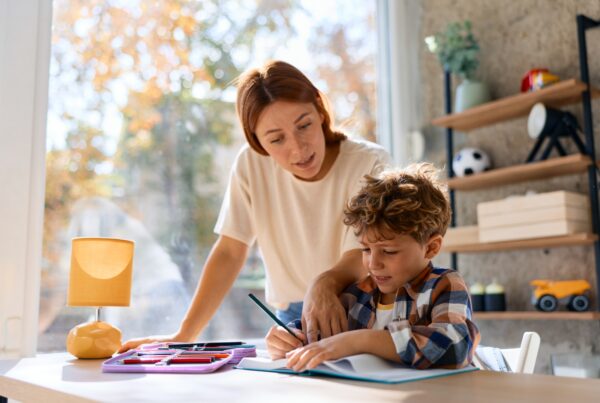
One-on-one or small-group tutoring can help by slowing the process down and making hidden skills visible. A tutor might preteach vocabulary before a unit begins, use hands-on map practice, or model how to answer a short-response question using evidence from a picture and text. That kind of targeted support is especially helpful in elementary grades because it can strengthen both subject understanding and the learning habits behind it.
Effective support is not about drilling facts in isolation. It is about helping your child connect ideas, use academic language, and build confidence through successful practice. For example, a tutor may notice that your child understands community roles but needs sentence frames to explain them in writing. Another child may need repeated work with timelines because sequencing language is still developing. Personalized feedback helps each child focus on the right next step.
This is where K12 Tutoring can be a helpful educational partner. Support that is tailored to your child’s current classroom work can reinforce what they are learning in school while reducing confusion and helping them feel more capable during lessons, homework, and assessments.
Tutoring Support
If your child is finding social studies harder than expected, extra support can be a positive and practical next step. K12 Tutoring works with families to provide individualized instruction that meets students where they are, whether they need help with map skills, social studies vocabulary, reading nonfiction, or turning ideas into written responses. With guided practice and clear feedback, many children become more confident, more organized, and better able to show what they know in class.
Related Resources
- How To Build Your Child’s Confidence: A Parent’s Guide – Crimson Rise
- How High-Quality, Small-Group Tutoring Can Accelerate Learning – IES (U.S. Department of Education)
- Roles in Gifted Education: A Parent’s Guide – davidsongifted.org
Trust & Transparency Statement
Last reviewed: May 2026
This article was prepared by the K12 Tutoring education team, dedicated to helping students succeed with personalized learning support and expert guidance. K12 Tutoring content is reviewed periodically by education specialists to reflect current best practices and family feedback. Have ideas or success stories to share? Email us at [email protected].