Key Takeaways
- Second grade social studies asks children to connect maps, communities, history, citizenship, and culture, so confusion is common even for strong readers.
- Parents looking for help with 2nd grade social studies concepts often find that guided discussion, visual examples, and feedback make abstract ideas easier to understand.
- Individualized support can help your child explain ideas in their own words, not just memorize vocabulary for a quiz.
- Tutoring can reinforce classroom learning by slowing down instruction, practicing with real examples, and building confidence step by step.
Definitions
Community: a group of people who live, work, and help one another in the same place. In 2nd grade social studies, children often study how communities function and how people contribute to them.
Citizenship: the responsibilities and actions that help a community work well, such as following rules, showing respect, and helping others. Young students usually begin learning citizenship through classroom and neighborhood examples.
Why 2nd grade social studies can feel harder than it looks
To adults, 2nd grade social studies can seem simple. Topics like neighborhoods, maps, holidays, leaders, and rules sound familiar. But for many children, this subject introduces a new kind of thinking. Instead of only recalling facts, your child may need to compare communities, interpret symbols on a map, explain why rules matter, or describe how the past affects life today.
That shift can be challenging in elementary school because social studies often blends several skills at once. A child might read a short passage about a historical figure, answer questions in complete sentences, study a timeline, and then discuss how that person helped a community. If your child is still building reading stamina or written expression, the social studies content can feel harder than it really is.
Teachers see this often in second grade classrooms. A student may understand the idea of a mayor, a law, or a landmark when talking aloud, but struggle to show that understanding on paper. Another child may remember that a map has a compass rose and a key, yet mix up how those tools are actually used. These are normal learning patterns, not signs that something is wrong.
When parents seek support, it helps to know that social studies learning is developmental. Children at this age are moving from concrete experiences toward more abstract ideas. They understand family routines and classroom rules easily because those are immediate. It takes more guided practice to understand state symbols, historical change, or why communities create systems and services.
What your child is really learning in social studies
Second grade social studies usually centers on how people live together and how places, rules, and history shape daily life. Depending on the curriculum, your child may study local government, geography, cultural traditions, economics, historical figures, and the roles people play in a community. These units are connected, even when they look separate on homework pages.
For example, a map lesson is not just about directions. Your child may be learning how location affects a community. A lesson on goods and services is not just vocabulary practice. It introduces how people depend on one another. A unit on national symbols or important leaders is often the beginning of historical thinking, where students learn that people and events from the past still matter today.
Parents sometimes notice that their child can answer simple oral questions but gets stuck on class assignments. That often happens because the assignment asks for more than one skill. A worksheet might ask students to read a paragraph about a community helper, identify the main idea, and explain how that person contributes to society. A child may know what a firefighter does, but still need help organizing a written response.
In many classrooms, students are also expected to use social studies vocabulary accurately. Words like rural, urban, citizen, producer, consumer, government, and landmark can be unfamiliar. Young children may memorize the words for a quiz but not fully understand how to apply them. Guided instruction helps bridge that gap by connecting vocabulary to everyday examples.
If your child needs extra support with classroom routines that affect learning, families sometimes also benefit from broader parent resources on organizational skills, especially when keeping track of folders, projects, and take-home assignments becomes part of the challenge.
Where children commonly need help with 2nd grade social studies concepts
One common difficulty is understanding geography in a meaningful way. Your child may know left and right, but using cardinal directions like north and south on a map is different. They may recognize a map key in class, yet forget how symbols represent real places. In tutoring or one-on-one support, a child can practice these ideas slowly by mapping familiar spaces like a bedroom, school, or playground before moving to larger community maps.
Another challenge is telling the difference between past and present. Second graders often learn through timelines, biographies, and stories about how communities change over time. A child may know that something happened long ago but still struggle to place events in order or explain what changed. A tutor can help by using simple sequencing practice, such as comparing transportation then and now or discussing how schools looked different in the past.
Citizenship and government can also be tricky because the concepts are abstract. Children hear words like leader, rule, vote, and responsibility, but these ideas are easier to understand when tied to real experiences. For example, a child may better understand government by comparing a classroom job chart, school rules, and the role of a principal with how a town has leaders and laws. Personalized support can make those connections clearer.
Social studies reading is another area where students often need targeted help. Informational texts are structured differently from storybooks. Headings, captions, maps, charts, and photographs all carry meaning. Some children skip those features and miss important information. Others read every word but struggle to identify the big idea. Guided practice can teach them how to pause, notice text features, and talk through what each one adds.
Finally, many second graders need help explaining their thinking. A teacher may ask, “Why are rules important in a community?” or “How does a producer help others?” These are open-ended questions. Even when your child knows the answer, turning that knowledge into a clear sentence can take support, modeling, and repetition.

How tutoring supports elementary learners in 2nd grade social studies
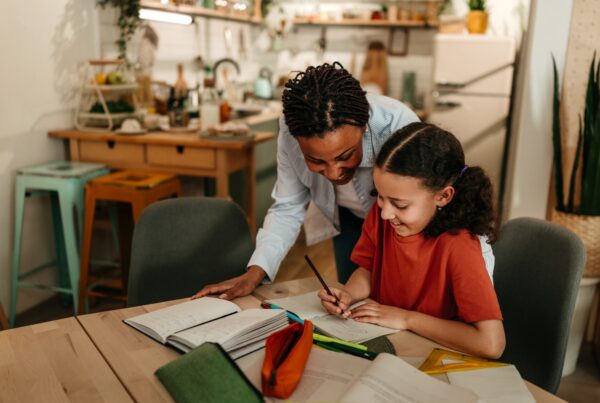
Tutoring works best when it matches the way young children learn. In 2nd grade social studies, that usually means short explanations, visuals, discussion, and lots of chances to practice with examples that feel familiar. Instead of rushing through a worksheet, a tutor can pause and ask your child to describe what they notice, explain a picture, or connect a concept to their own community.
That kind of support is especially helpful because social studies often looks easier on the surface than it feels during class. A child who falls behind may not need more information so much as more processing time. One-on-one instruction allows the adult to check for understanding in the moment. If your child says that a consumer is “someone who works at a store,” the tutor can gently correct the misunderstanding and give a clearer example, such as buying groceries or using electricity at home.
Feedback matters a great deal in this subject. Young learners benefit from hearing exactly what they understood and what needs adjustment. For example, if your child writes, “A community is a place with houses,” a tutor can affirm the accurate part and then extend the idea by adding people, services, and shared spaces. This helps children build stronger concepts rather than simply being told they are wrong.
Tutoring can also support classroom performance in practical ways. A student preparing for a quiz on map skills might practice identifying symbols, reading a map key, and following simple directions like “Start at the library, go north to the park.” A student working on a social studies writing response might rehearse sentence starters such as “Rules are important because…” or “This person helped the community by…” These small supports often improve both understanding and confidence.
Importantly, individualized support does not replace school instruction. It complements it. Teachers introduce the curriculum for the whole class, while tutoring can revisit the parts that need more time, more examples, or a different explanation.
What can a parent do when social studies homework leads to frustration?
Start by looking closely at what is actually causing the frustration. Sometimes the issue is the social studies concept itself. Other times, the challenge is reading directions, writing complete answers, or remembering vocabulary. When you know which part is getting in the way, support becomes more effective.
It can help to ask your child to explain the topic aloud before completing written work. If the homework asks about goods and services, for instance, you might say, “Tell me which one a haircut is and why.” Oral explanation often reveals whether your child understands the idea but needs help expressing it.
Use real-life examples whenever possible. If your child is studying community helpers, connect the lesson to people they know, such as a librarian, nurse, crossing guard, or mail carrier. If they are learning map skills, draw a simple map of your route to school. If the class is discussing needs and wants, talk through examples at the grocery store. Second graders learn social studies best when concepts are tied to lived experience.
Keep support short and specific. Instead of reteaching the entire lesson, focus on one target. You might practice just the vocabulary, just the timeline order, or just answering one open-ended question clearly. This reduces overload and helps your child experience success.
If homework battles are becoming frequent, it may be useful to share examples with the classroom teacher. Teachers can often clarify expectations, point out patterns, or suggest the most important skills to reinforce at home. In some cases, regular tutoring provides the consistency a child needs to make classroom content feel manageable again.
Signs that individualized instruction may be especially helpful
Some children benefit from extra support even when grades look acceptable. You may notice that your child memorizes facts for a quiz but forgets them quickly afterward. Or they may participate in discussion but freeze when asked to write about what they learned. These are signs that deeper understanding is still developing.
Another sign is repeated confusion across related units. A child who struggles with maps, timelines, and comparing communities may need help with the broader thinking skills behind social studies, such as sequencing, categorizing, and connecting evidence to ideas. Individualized instruction can make those thinking steps visible.
Support can also be helpful for students who are bright and curious but move quickly past details. In social studies, careful observation matters. A child may rush through a map and miss the legend, or skim a passage and overlook a heading that explains the main topic. A tutor can slow the pace just enough to build stronger habits of attention and interpretation.
For children with ADHD, language-based learning differences, or school support plans such as a 504 or IEP, social studies may require accommodations in how information is presented and practiced. Breaking tasks into smaller parts, using visuals, previewing vocabulary, and checking understanding often make a noticeable difference. These supports are common, practical, and academically appropriate.
Over time, the goal is not simply higher quiz scores. It is helping your child become more independent with social studies tasks, more accurate in their explanations, and more confident in class discussions and written work.
Tutoring Support
K12 Tutoring supports families by meeting students where they are and helping them build understanding one concept at a time. In 2nd grade social studies, that may mean practicing map skills, clarifying vocabulary, strengthening written responses, or connecting classroom topics to everyday life. With guided instruction, patient feedback, and individualized pacing, many children begin to participate more confidently and retain what they learn more effectively. When a child needs extra help, tutoring can be a steady, encouraging part of the learning process.
Related Resources
- How To Build Your Child’s Confidence: A Parent’s Guide – Crimson Rise
- How High-Quality, Small-Group Tutoring Can Accelerate Learning – IES (U.S. Department of Education)
- Roles in Gifted Education: A Parent’s Guide – davidsongifted.org
Trust & Transparency Statement
Last reviewed: May 2026
This article was prepared by the K12 Tutoring education team, dedicated to helping students succeed with personalized learning support and expert guidance. K12 Tutoring content is reviewed periodically by education specialists to reflect current best practices and family feedback. Have ideas or success stories to share? Email us at [email protected].