Key Takeaways
- In 2nd grade social studies, children are expected to read simple informational text, use maps and timelines, and explain how communities work, so trouble in this subject often shows up through confusion with vocabulary, sequencing, or class discussions.
- One of the clearest signs my child needs help with 2nd grade social studies is when your child can remember isolated facts but struggles to connect ideas such as past and present, rules and responsibilities, or goods and services.
- Targeted support, teacher feedback, and guided practice can help young learners build confidence with social studies skills without making the subject feel stressful.
- Extra help is often most effective when it is specific to the actual classroom tasks your child sees in second grade, such as reading a map key, comparing communities, or answering short written questions.
Definitions
Community: A group of people who live, work, and help one another in the same place. In 2nd grade social studies, children often learn about communities through jobs, rules, local government, and services.
Timeline: A simple visual tool that shows events in order from past to present. Second graders use timelines to practice sequencing and understand how events happen over time.
Why 2nd grade social studies can feel harder than parents expect
Many parents are surprised when social studies becomes a sticking point in second grade. At this age, the subject usually looks simple on the surface. Students may study maps, neighborhoods, holidays, government helpers, historical figures, and how communities meet people’s needs. But underneath those topics, children are being asked to do several important academic tasks at once.
They need to listen to new information, understand topic-specific vocabulary, connect ideas across lessons, and explain their thinking out loud or in writing. A worksheet about a community may actually require your child to identify text evidence, compare two roles, and explain why rules matter. A map activity may ask them to use symbols, directions, and a key all at the same time. These are real academic demands, even when the pages look colorful and child-friendly.
Teachers in elementary classrooms also know that social studies learning depends heavily on language. Children who are still developing reading fluency or expressive language may understand more than they can show. That is one reason it helps to look beyond grades alone. A child may pass a simple quiz but still feel lost during discussions, partner activities, or short-answer tasks.
When parents wonder about signs my child needs help with 2nd grade social studies, it can help to focus on patterns rather than one bad day. A single forgotten homework page is normal. Ongoing confusion about maps, timelines, community roles, or classroom vocabulary may point to a need for more guided instruction.
Common signs your child may need support in social studies
In second grade, social studies struggles often show up in small ways before they become obvious. Because the subject blends reading, listening, speaking, and thinking skills, your child may not say, “I do not understand social studies.” Instead, you may notice frustration, avoidance, or incomplete explanations.
Here are some course-specific signs to watch for:
- They mix up basic social studies vocabulary. Words like citizen, community, government, past, present, producer, consumer, rural, and urban may sound familiar but not fully understood. Your child may use the words incorrectly or avoid using them at all.
- They struggle to explain how ideas connect. For example, they may know that firefighters help the community and that taxes exist, but not understand how public services are supported or why rules exist in a community.
- Map activities feel confusing. Your child may not understand a compass rose, may ignore the map key, or may guess rather than use symbols and directions carefully.
- Timelines are difficult. They may have trouble putting events in order, using words like before and after, or understanding the difference between long ago and now.
- They give very short answers even when they know some facts. In social studies, children are often asked to answer questions such as, “Why are laws important?” or “How are city and rural communities different?” A child who says only one word or repeats the question may need help organizing ideas.
- Homework leads to tears or shutdowns. This can happen when the reading load, writing demand, or vocabulary level feels just above what your child can manage independently.
- They remember details but miss the main idea. A child may recall that a lesson mentioned a mayor, a police officer, and a librarian, but not understand that the larger topic was how community members work together.
These patterns do not mean your child is incapable or behind in a lasting way. They usually mean the child needs clearer explanations, more repetition, or support breaking big concepts into smaller parts.
What social studies learning looks like in elementary school
Elementary social studies is not just about memorizing facts. In a 2nd grade classroom, students are building early civic understanding, map skills, historical thinking, and academic language. That means children are learning to sort information into categories, compare places and people, and explain cause and effect in simple terms.
For example, a teacher might read a short passage about goods and services. After reading, students may need to identify which examples are goods, which are services, and how both help a community. A child who can define one term but cannot sort examples may need practice with application, not just memorization.
Another common task is comparing life in the past and present. Students may look at pictures of transportation, schools, or homes from long ago and discuss what has changed. This sounds straightforward, but it requires observation, sequencing, and language for comparison. If your child says, “This one is old,” but cannot explain how daily life was different, that is useful information for parents and teachers.
Teachers also often assess understanding through conversation. During carpet discussions or partner talk, students may be asked to answer questions such as, “Why do communities need rules?” or “How do people in a community depend on one another?” Children who need more processing time or more explicit modeling may struggle to join in, even if they are listening carefully.
This is why feedback matters so much. When a teacher or tutor can say, “You identified the worker correctly. Now let us explain what service that worker provides,” the child gets a clear next step. Personalized support is especially helpful in social studies because so much of the learning depends on making connections between ideas.

Elementary school and 2nd grade social studies challenges parents often notice at home
At home, social studies difficulty does not always look like a failing grade. More often, parents notice a child who seems unsure, rushed, or disconnected from the material. You may ask what they learned and hear, “I do not know,” even after a full lesson. That does not always mean they learned nothing. It may mean they need help retrieving and organizing what they heard.
Here are a few realistic home situations that can point to a need for support:
During homework, your child reads the question but does not know how to start. A prompt such as “Name two ways citizens help their community” may feel open-ended. Your child may need sentence starters, examples, or a reminder from class discussion.
Your child studies for a quiz by rereading but still performs poorly. In social studies, rereading alone may not be enough. Children often need to sort picture cards, talk through examples, or practice matching vocabulary to real situations.
Projects become parent-led. If a simple poster about a neighborhood or national symbol turns into a task you are mostly directing, your child may be struggling with content understanding, not just effort.
Your child confuses similar concepts. They may mix up a leader and a helper, a rule and a law, or a good and a service. These are common second grade misunderstandings and often improve with explicit examples and review.
Written responses stay very limited. A child might know that rules keep people safe, but write only “rules help.” This can signal a need for guided verbal rehearsal before writing.
If these patterns sound familiar, it may help to explore broader parent supports on parent guides while also looking closely at the actual social studies tasks your child is bringing home.
How guided practice can help your child build real understanding
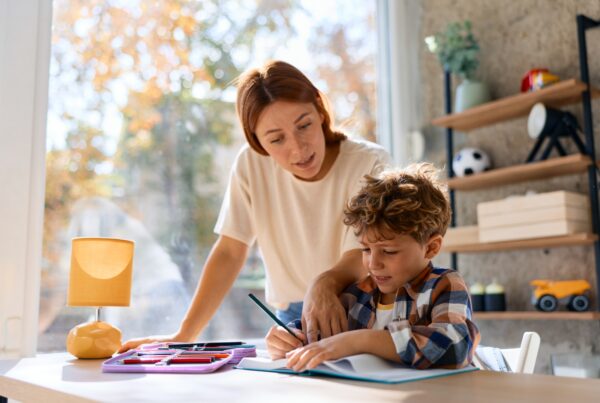
Young children usually learn social studies best when adults make the thinking visible. Instead of asking for a correct answer right away, it helps to model how to arrive at the answer. This is where guided practice, tutoring, or one-on-one support can make a real difference.
Imagine your child is learning about map skills. Rather than saying, “Find the school on the map,” an adult might walk through the steps: first look at the title, then find the key, then notice the symbol for school, then use the compass rose to describe the location. This kind of support teaches a process, not just one answer.
The same is true for timelines. A child who struggles with sequencing may benefit from physically arranging picture cards from past to present before completing a worksheet. For community roles, a tutor or parent might use simple prompts such as, “What does this person do? Who does it help? Why is that important?” These questions help children move from naming to explaining.
Good academic support in 2nd grade social studies often includes:
- Preteaching vocabulary before reading
- Using pictures, maps, and real-life examples
- Practicing short oral explanations before writing
- Breaking multi-step assignments into smaller parts
- Reviewing teacher feedback together so your child understands what to improve
- Repeating key concepts across several sessions instead of expecting instant mastery
This kind of instruction is especially useful for children who are bright and curious but need more time, more examples, or more direct teaching to show what they know.
How can I tell if this is a social studies issue or a reading issue?
This is one of the most helpful questions a parent can ask. In second grade, social studies and reading are closely connected. If your child struggles to read informational text, understand question wording, or write complete sentences, those challenges can affect social studies performance. But the reverse can also be true. Some children read well but still have trouble with social studies concepts such as chronology, community systems, or civic roles.
A few clues can help you sort this out. If your child can read the words in a passage but cannot explain what a mayor does or why people pay for goods, the main issue may be content understanding. If your child understands the lesson when it is discussed aloud but cannot read the worksheet independently, reading may be the bigger barrier.
Teachers often see this distinction in class. A child may participate well in oral discussion yet struggle on written assignments. Another child may read fluently but give inaccurate answers because they are not connecting the key idea. That is why individualized support matters. The most effective help targets the actual point of breakdown.
When tutoring is used thoughtfully, it can address both sides. A tutor might support reading comprehension of informational text while also helping your child practice course-specific ideas like comparing communities, identifying civic responsibilities, or interpreting a map. The goal is not just better homework nights. It is stronger understanding and more independence over time.
Tutoring Support
If your child is showing signs of confusion, avoidance, or inconsistent understanding in social studies, extra help can be a calm and constructive next step. K12 Tutoring works with families to provide individualized academic support that matches the way a child learns, whether that means slowing down map work, practicing vocabulary with examples, or helping a student turn class discussion into clear written answers.
In a subject like 2nd grade social studies, personalized instruction can help children build confidence with the specific skills their classroom expects. With guided practice and feedback, many students begin to participate more fully, explain ideas more clearly, and feel more comfortable with lessons about communities, history, geography, and citizenship.
Related Resources
- How To Build Your Child’s Confidence: A Parent’s Guide – Crimson Rise
- How High-Quality, Small-Group Tutoring Can Accelerate Learning – IES (U.S. Department of Education)
- Roles in Gifted Education: A Parent’s Guide – davidsongifted.org
Trust & Transparency Statement
Last reviewed: May 2026
This article was prepared by the K12 Tutoring education team, dedicated to helping students succeed with personalized learning support and expert guidance. K12 Tutoring content is reviewed periodically by education specialists to reflect current best practices and family feedback. Have ideas or success stories to share? Email us at [email protected].