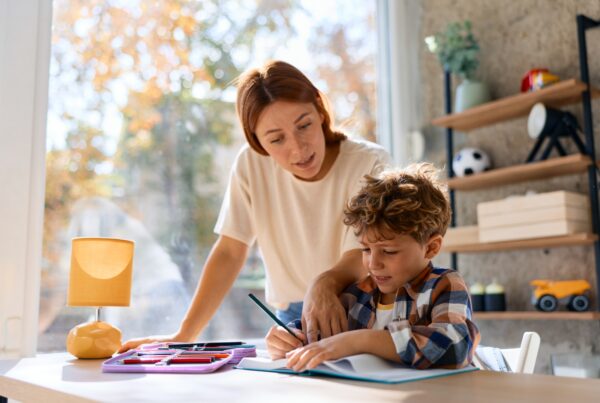
Key Takeaways
- Many common mistakes in 2nd grade social studies happen because children are learning how to sort time, place, rules, maps, and community roles all at once.
- Specific feedback helps your child move from guessing to understanding by showing exactly what was mixed up and what to try next.
- In elementary social studies, guided practice often matters more than memorization because students are still building vocabulary, comparison skills, and historical thinking.
- Personalized support can help when a child understands ideas during discussion but struggles to show that understanding on worksheets, projects, or quizzes.
Definitions
Social studies: In 2nd grade, social studies usually includes communities, maps, geography, citizenship, timelines, holidays, culture, and how people live and work together.
Feedback: Feedback is clear information a teacher, parent, or tutor gives after your child completes work. Good feedback points out what is correct, what needs adjustment, and how to improve on the next task.
Why 2nd grade social studies can feel harder than it looks
To adults, 2nd grade social studies can seem simple. A worksheet about maps, a short reading about community helpers, or a classroom discussion about rules and responsibilities may look straightforward. But for many children, this course asks them to do several new kinds of thinking at once. That is why common mistakes in 2nd grade social studies are so normal.
Your child is not only learning facts. They are also learning how to organize information by category, tell the difference between past and present, read symbols on a map, connect a text to real life, and explain ideas using new vocabulary. In many classrooms, students are expected to listen to a read aloud, answer oral questions, complete a graphic organizer, and then write a few sentences about what they learned. That is a big jump in independence for elementary learners.
Teachers often see patterns that make sense developmentally. A child may understand that a firefighter helps the community but confuse the role of local government. Another may know where north is on a classroom map but struggle to explain why a map key matters. These are not signs that a child cannot do social studies. They usually show that the child is still building the background knowledge and language needed to express their thinking clearly.
From an educational standpoint, young students learn social studies best when ideas are concrete, repeated, and connected to everyday life. That is why classroom examples often begin with neighborhoods, school rules, family traditions, and simple maps of familiar places. When work becomes more abstract, such as comparing communities from long ago to communities today, mistakes tend to increase unless students receive guided explanation and practice.
Common mistakes in social studies lessons about communities, citizenship, and rules
One of the most frequent areas of confusion in 2nd grade social studies is the difference between rules, laws, jobs, and responsibilities. These ideas sound related because they are related, but they are not identical. A child might say, “The principal is the mayor of the school” because they are trying to connect leadership roles across settings. That answer shows reasoning, even though it is not accurate.
Another common mistake appears when students study community helpers. Your child may memorize that doctors, police officers, teachers, and mail carriers help people, but then struggle when asked a comparison question such as, “How do a librarian and a teacher help a community in different ways?” This is because the task is no longer simple recall. It asks for classification and explanation.
Citizenship lessons can also be tricky. A 2nd grader may know that being a good citizen means being kind, but classroom assignments often ask for more detail. For example, a worksheet might ask students to sort actions into “rights” and “responsibilities.” A child may place “voting” and “cleaning up toys” in the same category because both sound like things people do. They need feedback that explains the difference, not just a check mark showing the answer was wrong.
Parents often notice these errors during homework. Your child may rush through a page and circle every positive behavior as a “rule” or call every public worker a “leader.” Helpful feedback sounds specific and calm: “A rule tells what people should do in a place like school. A community helper is a person with a job that serves others. Let us look at each picture and decide which label fits best.” That kind of response teaches sorting, not just correction.
When children repeatedly confuse these terms, individualized support can help slow the pace and make room for examples from daily life. A tutor or parent might compare home rules, classroom rules, and city laws using simple scenarios. This kind of guided instruction helps children build a more accurate mental map of how communities work.
Elementary 2nd grade social studies mistakes with maps, geography, and timelines
Maps and timelines are another place where many common mistakes in 2nd grade social studies show up. These skills look visual, but they depend on language, sequencing, and perspective taking. A child has to understand that a small drawing can represent a large real place. That is not automatic for every 7 or 8 year old.
Map keys often cause confusion. Your child may see a blue line on a map and know it means water, but forget to use the key when the symbol changes. They may also mix up left and right with east and west, or assume that the top of every map means “forward” instead of north. In class, a teacher may ask students to follow directions such as “Start at the school, move east to the park, then south to the library.” A child who understands the places but not the directional language can still get the answer wrong.
Timelines create a different challenge. Students are asked to place events in order, often using words like first, next, long ago, and today. Some children can retell a story orally but struggle to transfer that sequence onto paper. Others understand personal timelines, such as baby to child, but become unsure when looking at historical timelines about transportation or communication.
A realistic classroom example might involve pictures of a candle, a light bulb, and a flashlight. A student may know all three objects, but place them out of order because they are focusing on size or familiarity rather than historical sequence. Feedback is especially useful here because it can point to the reasoning error: “You chose the flashlight first because you use it now. Let us think about which item people used long ago before electricity was common.”
These mistakes are common because social studies asks children to connect visual information with time concepts and vocabulary. Guided practice helps them learn how to look for clues. If your child needs extra support, it can help to practice with familiar materials, such as drawing a map of the bedroom or making a mini timeline of a school morning. Families looking for broader learning support ideas can also explore parent guides that explain how children build understanding across subjects.

What kind of feedback actually helps your child learn?
Not all feedback supports learning equally. In 2nd grade social studies, the most helpful feedback is immediate, specific, and connected to the thinking behind the mistake. Young children usually do not benefit much from being told only that an answer is wrong. They need to know what they misunderstood.
For example, if your child labels a rural area as urban because it has a road and a house, a strong response might be, “You noticed people live there, which is true. Now let us look at how many buildings there are and how spread out they are. Urban places usually have many buildings close together.” This kind of feedback honors what your child noticed while guiding them toward a more accurate concept.
Teachers often use this approach in class discussions, anchor charts, and corrected assignments. A social studies worksheet with teacher notes such as “Check the map key” or “This belongs in the past column” can be more useful than a simple score. It gives your child a next step. Educationally, this matters because second graders are still learning how to use feedback to revise their work and monitor their own thinking.
At home, you can support this process by asking short, concrete questions. Try prompts like, “What clue helped you decide that?” “Does this belong in the past or present?” or “Which job matches this responsibility?” These questions encourage your child to explain their reasoning. Once they explain, it becomes much easier to spot the exact misunderstanding.
Some children also need feedback delivered in smaller pieces. If a page has ten items, correcting all ten at once can feel overwhelming. A more effective approach is to review two or three together, model the thinking, and then let your child try the next few independently. This mirrors how strong elementary instruction often works in classrooms and tutoring sessions.
When a parent might notice a pattern instead of a one-time mistake
Every child makes occasional errors, especially when a class introduces new vocabulary or a new unit. What matters more is the pattern. If your child keeps confusing map symbols, cannot explain the difference between a need and a want, or mixes up past and present across several assignments, that may signal a skill gap worth addressing more directly.
Parents sometimes see an uneven profile. A child may participate eagerly in class discussions about holidays, traditions, or family history but freeze when asked to write answers on a quiz. Another child may do well with pictures and sorting cards but struggle with short reading passages about communities around the world. These patterns are useful clues. They show where understanding is strongest and where expression is getting in the way.
Teacher communication is especially valuable here. Classroom teachers often know whether a mistake is typical for the whole class or whether your child needs more targeted support. They can tell you if the challenge is mostly vocabulary, reading comprehension, attention to directions, or concept development. That kind of context is a strong credibility signal because it reflects what educators observe in real classroom practice.
If concerns continue, individualized instruction can help unpack the issue. A tutor might use pictures, maps, sentence frames, and verbal rehearsal to help your child explain social studies ideas more clearly. For some students, one-on-one support is helpful because it slows down the pace and allows immediate correction before confusion builds. This is not about turning social studies into a high-pressure subject. It is about giving your child enough guided practice to feel capable and clear.
How guided practice builds confidence in 2nd grade social studies
Confidence in social studies usually grows when children realize they can make sense of information, not just memorize it. Guided practice is one of the best ways to build that confidence. In a strong practice routine, an adult first models the task, then works through an example with the child, and finally lets the child try one alone.
Imagine your child is learning about goods and services. Instead of handing over a worksheet and hoping for the best, you might start with examples: “A haircut is a service because someone does something for you. A backpack is a good because it is an object you can buy.” Then you sort a few pictures together. After that, your child tries the last few independently and explains each choice out loud.
This same structure works for geography, timelines, and citizenship. With maps, you can model how to check the compass rose first. With timelines, you can talk through clue words such as before, after, and long ago. With community roles, you can compare jobs by asking who helps, where they work, and what responsibility they carry.
Children at this age often benefit from hearing the language of social studies repeated in clear sentences. Sentence frames can help, such as “This is in the past because…” or “This person helps the community by…” These supports are common in elementary classrooms because they reduce the language load while still requiring thinking.
Over time, consistent feedback and guided practice help your child become more independent. They start checking the map key on their own, noticing timeline order, or using terms like citizen, responsibility, and community more accurately. That growth matters more than getting every item right the first time.
Tutoring Support
If your child is making repeated mistakes in 2nd grade social studies, extra support can be a practical and positive next step. K12 Tutoring works with families to provide individualized instruction that matches a student’s pace, learning style, and classroom expectations. In a one-on-one setting, children can get immediate feedback on map skills, timelines, vocabulary, reading responses, and social studies reasoning without the pressure of keeping up with a full class.
This kind of support is especially helpful when a child understands ideas during conversation but has trouble applying them on assignments or assessments. A tutor can break concepts into smaller steps, use familiar examples, and give targeted practice that builds both understanding and confidence. For many families, tutoring is not about fixing a major problem. It is simply one more way to help a child strengthen skills and feel more successful in school.
Related Resources
- How To Build Your Child’s Confidence: A Parent’s Guide – Crimson Rise
- How High-Quality, Small-Group Tutoring Can Accelerate Learning – IES (U.S. Department of Education)
- Roles in Gifted Education: A Parent’s Guide – davidsongifted.org
Trust & Transparency Statement
Last reviewed: May 2026
This article was prepared by the K12 Tutoring education team, dedicated to helping students succeed with personalized learning support and expert guidance. K12 Tutoring content is reviewed periodically by education specialists to reflect current best practices and family feedback. Have ideas or success stories to share? Email us at [email protected].