Key Takeaways
- First grade social studies often feels harder than adults expect because children are learning new content while also building reading, listening, speaking, and classroom discussion skills.
- Topics like maps, rules, community roles, past and present, and national symbols ask young learners to think in abstract ways that are still developing in the elementary years.
- Many students do better when adults use concrete examples, visuals, repeated practice, and simple conversations that connect school topics to daily life.
- Targeted feedback, guided instruction, and one-on-one support can help your child build confidence and understanding without turning social studies into a source of stress.
Definitions
Social studies: In 1st grade, social studies usually includes community, citizenship, geography, history, rules, symbols, and how people live and work together.
Abstract thinking: This is the ability to understand ideas that cannot always be touched or seen directly, such as fairness, responsibility, the past, or why communities make laws.
Why 1st grade social studies can feel unexpectedly challenging
If you have wondered why 1st grade social studies skills are hard for your child, you are not alone. Many parents expect early social studies to feel simple because the topics sound familiar. Children talk about families, helpers, neighborhoods, and holidays all the time. But in class, these ideas become academic skills. Your child may need to sort information, compare places, read simple maps, explain rules, identify symbols, and talk about how communities function.
That is a lot for a 6- or 7-year-old. In first grade, students are still learning how to listen for key details, follow multi-step directions, answer questions in complete thoughts, and connect pictures to words. So when a worksheet asks a child to circle which worker provides a service, match a map symbol to a location, or explain how life was different long ago, the difficulty is not just the topic itself. It is the combination of content, language, memory, and reasoning.
Teachers see this often in elementary classrooms. A student may seem to understand a class discussion about community helpers, but struggle when asked to sort helpers into categories like goods and services. Another child may know what a flag is, but freeze when asked why national symbols matter. These are normal learning patterns, not signs that your child is failing at social studies.
It also helps to remember that first grade social studies is often taught through short lessons woven into reading and writing time. That means students may be expected to learn content while also reading a passage, labeling a picture, or writing a sentence. For some children, the subject feels hard because the academic format is still new.
What makes social studies hard in the elementary years?
One reason social studies can be tricky in first grade is that much of it is less concrete than early math or phonics. In math, your child can count cubes. In reading, your child can sound out a word. In social studies, ideas like citizenship, leadership, fairness, and past versus present are more conceptual. Young children are still learning how to organize those ideas in their minds.
Take maps as an example. Adults know that a map is a picture of a place from above. A first grader may understand that in conversation, but still struggle to use a map key, identify north, or connect a tiny symbol on paper to a real location like a park or school. The challenge is not a lack of effort. It is that symbolic representation is a developing skill.
History concepts can be even harder. When a teacher asks students to compare life today with life long ago, children must understand time in a broader way than yesterday, today, and tomorrow. They may know their grandparents are older, but not fully grasp what it means that transportation, communication, or home life changed across generations. A child might say, “Olden days had no toys,” not because they were careless, but because historical comparison is still emerging.
Classroom language matters too. Social studies vocabulary can sound simple to adults but still be demanding for young learners. Words like community, citizen, government, responsibility, culture, and tradition are not always easy to define from context. Even terms like rural, urban, state, and symbol can feel slippery if a child has only heard them once or twice.
Parents sometimes notice this when homework directions look straightforward, yet their child cannot explain what the page is asking. In those moments, the obstacle may be vocabulary more than content. A child who knows that firefighters help people may still not understand a prompt asking them to identify a public service.
Common 1st grade social studies skills that trip students up
Some social studies skills show up again and again in first grade classrooms. Knowing which ones are commonly difficult can help you understand your child’s experience more clearly.
Using maps and location words
Students may be asked to read a simple map, use a compass rose, identify land and water, or describe where places are using words like near, far, left, right, north, and south. This can be confusing because children are still building spatial awareness. A child may know the route to the grocery store in real life but not recognize that route on paper.
Understanding rules and citizenship
First graders often learn why communities have rules and what it means to be a good citizen. These lessons sound simple, but they ask children to move beyond “follow directions” and think about why rules exist. A student may know not to cut in line, yet have trouble explaining that rules help keep groups safe and fair.
Comparing past and present
Assignments about the past can be especially challenging. A child may look at pictures of an old classroom and a modern classroom and be able to name visible differences, but not explain what those differences tell us about daily life. This kind of comparison requires observation, background knowledge, and language.
Sorting needs, wants, goods, and services
These categories are common in early social studies, but they are not always easy. For example, your child may say that a bicycle is a need because it helps someone get to work, or call a haircut a good instead of a service. These mistakes are useful because they show how your child is thinking. With guided feedback, children learn to refine their understanding.
Participating in discussion and written response
In many classrooms, social studies learning is shown through speaking and writing. A child may understand the lesson but struggle to answer, “How does a mayor help a community?” in a complete sentence. This is one reason social studies performance can look uneven. The issue may be expression, not understanding alone.
Why your child may know the idea but still miss the question
Parents often see a puzzling pattern in 1st grade social studies. Their child can talk about the topic at home but gets answers wrong on classwork. This usually happens because school tasks ask for more than recognition. They ask for transfer.
For example, your child may know that teachers, doctors, and police officers help people. But if a worksheet asks which worker provides a service in the community, your child has to connect a familiar person to a more academic category. Or your child may know that rules matter at school, but struggle to choose the best reason from three answer choices that sound similar.
Young learners also tend to focus on the most obvious detail. If a page shows a picture of a farm and asks whether the area is rural or urban, a child might answer based on a tractor they recognize rather than the larger idea of population and land use. That does not mean they are not learning. It means they still need support noticing which details matter most.
This is where feedback becomes especially important. When a teacher or tutor says, “You noticed the barn, which was a strong clue. Now let’s think about how much open land we see,” the child gets a model for how to reason through the task. Specific feedback helps social studies feel more learnable.
What helps 1st grade social studies click for young learners?
Because the subject blends language, reasoning, and background knowledge, children often benefit from support that is concrete and interactive. The most effective help usually does not look like memorizing facts. It looks like guided conversation, visual practice, and repeated examples.
One helpful strategy is to connect school concepts to daily routines. If your child is learning about community roles, talk about who helps your family during the week. The librarian, bus driver, cashier, nurse, and mail carrier all make abstract ideas more visible. If the class is studying maps, draw a simple map of your home or route to school and label a few landmarks together.
Another useful support is practicing with short, clear questions. Instead of asking, “What did you learn in social studies?” try questions like, “What is one rule that helps your classroom work well?” or “How is our neighborhood different from a farm area?” Specific prompts help children retrieve and organize what they know.
Visuals matter too. Picture cards, timelines with family photos, labeled maps, and side-by-side comparisons can make first grade social studies much easier to understand. Young children often need to see examples repeatedly before they can explain them independently.
At school, many teachers already use modeling and guided practice for this reason. They may think aloud while reading a map, sort examples with the class before assigning independent work, or revisit vocabulary across several lessons. When students continue to need more support, individualized instruction can be especially helpful because it slows the pace and gives them more chances to explain their thinking.
If your child tends to shut down when work feels confusing, confidence support can matter just as much as content review. A calm routine, short practice sessions, and praise for effort and reasoning can make a real difference. Families looking for broader support with academic confidence may also find helpful ideas in confidence-building resources.
When extra help in social studies makes sense
Not every child who struggles with social studies needs intensive intervention. But extra support can make sense when your child regularly misunderstands directions, cannot explain key classroom topics, avoids the subject, or seems to know more in conversation than on assignments. In first grade, these patterns are often most noticeable during units on maps, communities, or past and present because those topics require several skills at once.
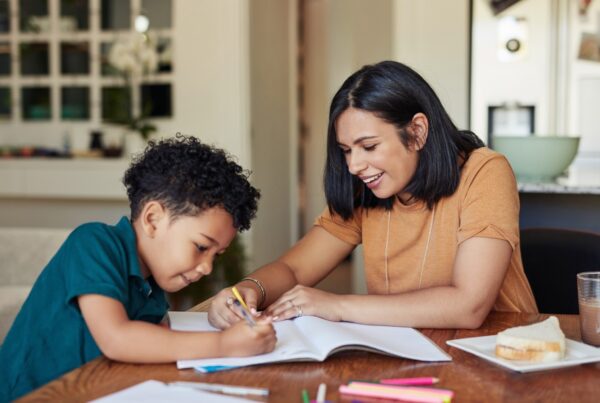
One-on-one or small-group help can be useful because it gives your child time to process language and practice thinking aloud. A tutor or teacher can pause after each question, clarify vocabulary, use manipulatives or pictures, and check understanding immediately. That type of guided instruction is often hard to provide continuously in a busy classroom, even with strong teaching.
For example, if your child confuses needs and wants, a tutor might sort everyday items with them, ask follow-up questions, and gently challenge edge cases. If your child struggles with maps, the support might start with real objects in a room, then move to a drawn layout, then to a simple neighborhood map. This step-by-step progression builds understanding in a way that matches how many elementary students learn.
Extra help can also support children who are advanced verbally but inconsistent on paper. Sometimes a bright child understands the big idea but misses details, rushes through answer choices, or has trouble turning thoughts into written responses. Personalized feedback helps close that gap.
Tutoring Support
When social studies feels harder than expected, supportive instruction can help your child make sense of the subject in a steady, confidence-building way. K12 Tutoring works with families to provide personalized academic support that matches a student’s pace, learning style, and classroom expectations. In 1st grade social studies, that may mean practicing map skills with visuals, talking through community roles, building vocabulary, or learning how to answer questions more clearly. The goal is not just to finish homework. It is to help your child understand ideas, respond with more confidence, and develop stronger learning habits over time.
Related Resources
- How To Build Your Child’s Confidence: A Parent’s Guide – Crimson Rise
- How High-Quality, Small-Group Tutoring Can Accelerate Learning – IES (U.S. Department of Education)
- Roles in Gifted Education: A Parent’s Guide – davidsongifted.org
Trust & Transparency Statement
Last reviewed: May 2026
This article was prepared by the K12 Tutoring education team, dedicated to helping students succeed with personalized learning support and expert guidance. K12 Tutoring content is reviewed periodically by education specialists to reflect current best practices and family feedback. Have ideas or success stories to share? Email us at [email protected].