Key Takeaways
- In 1st grade social studies, children are learning to understand community roles, maps, rules, citizenship, timelines, and how people live and work together.
- Some of the clearest signs your child needs help with 1st grade social studies include confusion about classroom topics, trouble explaining simple social studies ideas, and difficulty connecting lessons to daily life.
- Support often works best when it includes teacher feedback, guided practice, picture-based discussion, and one-on-one help that matches your child’s pace.
- Early support can build both understanding and confidence, especially when social studies learning is tied to reading, speaking, and observation skills.
Definitions
Community: A group of people who live, work, and help one another in the same place, such as a neighborhood, town, or school.
Citizenship: The age-appropriate idea that people have roles, rules, and responsibilities that help a community work well.
Map skills: Early social studies skills that help children read simple maps, understand location words, and recognize symbols like roads, buildings, and landmarks.
Why 1st grade social studies can be harder than it looks
To adults, 1st grade social studies can seem simple because the topics sound familiar. Children may study families, neighborhoods, school rules, helpers in the community, holidays, maps, and past versus present. But for a 6- or 7-year-old, these lessons ask for several skills at once. Your child may need to listen closely, understand new vocabulary, connect ideas to real life, and explain thinking out loud.
This is one reason many parents start noticing signs my child needs help with 1st grade social studies even when reading and math seem to get more attention. Social studies in the early elementary years is not just about memorizing facts. It also involves sorting information, noticing patterns, comparing people and places, and learning how communities function. Those are big ideas for young learners.
Teachers often introduce social studies through read-alouds, class discussions, picture cards, simple maps, and short writing or drawing tasks. A child might be asked to answer questions like, “Who helps keep a community safe?” or “What is the difference between the past and the present?” Even if your child has heard these words before, putting them into a clear answer can be challenging.
Educationally, this is typical. Young children are still developing language, attention, sequencing, and background knowledge. If your child struggles, it does not mean they are not capable. It may mean they need more modeling, repetition, and guided conversation than the classroom schedule allows.
Common signs your child may need more support in social studies
Not every rough homework night points to a larger issue. Still, some patterns are worth watching. Parents often notice concerns first during homework, dinner table conversations, or when reviewing class papers sent home.
One common sign is that your child cannot explain what they are learning in social studies, even in simple terms. If you ask, “What did you learn about communities today?” and your child regularly says, “I don’t know,” that may mean the lesson did not fully stick. Young children will not always give detailed answers, but they should usually be able to share a basic idea with support.
Another sign is repeated confusion about social studies vocabulary. Words like citizen, neighbor, rule, map, symbol, past, present, leader, and responsibility may come up often in 1st grade. If your child mixes these words up, forgets them quickly, or cannot connect them to examples, they may need more direct teaching and practice.
You may also notice difficulty with classwork that involves sorting or comparing. For example, a worksheet might ask students to place pictures under headings like “needs” and “wants” or “jobs at school” and “jobs in the community.” If your child guesses randomly or becomes frustrated by these categories, the challenge may be with understanding the concept, not just finishing the page.
Map activities can reveal another learning gap. In 1st grade, students may use simple maps of a classroom, school, or neighborhood. They might identify symbols, follow directions such as left and right, or find a place using landmarks. A child who struggles to read these visual cues may need slower, hands-on instruction.
Some children also have trouble with time concepts in social studies. Lessons about long ago and today can be harder than they seem. If your child cannot explain how life in the past differs from life now, or if they confuse yesterday, last year, and long ago, they may need extra support with sequencing and historical thinking.
Parents should also pay attention to emotional patterns. If your child avoids social studies homework, says the subject is boring because it feels confusing, or shuts down during questions about class topics, that can be one of the practical signs your child needs help with 1st grade social studies. Children often protect themselves from frustration by acting uninterested.
What these struggles can look like in real classroom situations
In many 1st grade classrooms, social studies is woven into reading, writing, and discussion. That means a child may appear to be struggling with social studies when the real issue is a mix of content understanding and language demands.
For example, a teacher may read a picture book about community helpers and then ask students to write one sentence about how firefighters help people. Your child may know what a firefighter does but still have trouble turning that idea into a complete sentence. In that case, social studies understanding and early writing skills are working together.
Another common activity is comparing then and now. Students might look at pictures of old and modern transportation and discuss differences. A child who says, “They are different,” but cannot explain how may need help noticing details, using descriptive words, and organizing thoughts.
Group discussions can also be revealing. Some children understand more than they can express independently. Others repeat classmates’ answers without really grasping the concept. A teacher may notice that a student can point to the mayor’s office on a community map when prompted, but cannot explain what a mayor does. That kind of uneven performance is common in early learning and often improves with targeted feedback.
Quizzes in 1st grade social studies are usually short and simple, but they still require focus. A child may be asked to match a worker to a job, circle a map symbol, or identify a rule that helps in school. If your child makes errors that seem careless, it is worth looking more closely. Sometimes the issue is attention, but sometimes the child is still unsure about the concept itself.
Teachers and tutors often look for patterns over time rather than one low score. If your child repeatedly struggles with the same kinds of tasks, that is useful information. It can help adults decide whether the best next step is more vocabulary work, more visual supports, more discussion practice, or more one-on-one instruction.

How can I tell if it is a temporary wobble or a real need for help?
This is one of the most common parent questions, and it is a good one. In 1st grade, children grow quickly. A topic that feels hard in September may click by November. At the same time, waiting too long can make your child feel less confident.
A temporary wobble usually looks narrow and short term. Maybe your child is confused by one unit on maps but does well when discussing families or rules. Maybe they had a tiring week and had trouble focusing during homework. If understanding improves after a few extra conversations or examples at home, the issue may simply be normal adjustment.
A stronger sign of ongoing need is when the same difficulties show up across multiple topics. If your child struggles with community roles, map skills, classroom rules, and past versus present, there may be a broader issue with vocabulary, comprehension, or concept development.
You can also look at how much support your child needs to succeed. If they can answer social studies questions after a brief reminder, that is different from needing every direction repeated and every idea explained again. When a child depends heavily on adult prompting just to begin or complete simple social studies tasks, extra support may be helpful.
Teacher feedback matters here. If the teacher mentions that your child has trouble participating in discussions, understanding unit vocabulary, or completing social studies assignments independently, that is an important credibility signal. Classroom teachers see how children perform across lessons, not just in one homework moment.
It can also help to compare performance across formats. Some children can talk about a topic clearly but struggle on paper. Others do better with pictures than spoken questions. Understanding these patterns can guide the kind of support that will actually help.
What helps children build confidence in elementary social studies
When support is matched to the actual challenge, progress can be steady. In elementary social studies, children often benefit from concrete, visual, and discussion-based learning. They are still building the background knowledge that older students use automatically.
One effective strategy is to connect social studies ideas to everyday life. If your child is learning about community helpers, talk about the librarian, mail carrier, crossing guard, nurse, or grocery store worker they already know. If the unit is about maps, draw a simple map of your home or route to school. These real examples make abstract ideas easier to understand.
Vocabulary practice also matters. Instead of asking your child to memorize a list, try using words in context. You might say, “A rule helps people stay safe,” or “This symbol on the map shows the park.” Repeated exposure through conversation often works better than drilling in isolation.
Guided questioning is especially useful in 1st grade. Rather than asking, “What is citizenship?” you might ask, “What is one thing a good classmate does to help others?” This narrows the task and helps your child build toward the larger idea. Teachers use this kind of scaffolding often because young learners need step-by-step access to concepts.
Visual supports can make a big difference too. Picture sorts, simple timelines, neighborhood maps, and labeled drawings help children organize what they know. If your child has difficulty with attention or working memory, visual tools can reduce the amount they need to hold in mind at once. Families looking for broader learning support ideas may also find helpful strategies in parent guides.
Confidence grows when children get feedback that is specific. Instead of hearing only “good job,” they benefit from comments like, “You matched the police officer to the correct job” or “You noticed that old telephones looked different from the ones we use now.” Specific feedback helps children see what they are learning and repeat it.
When individualized instruction or tutoring can make a difference
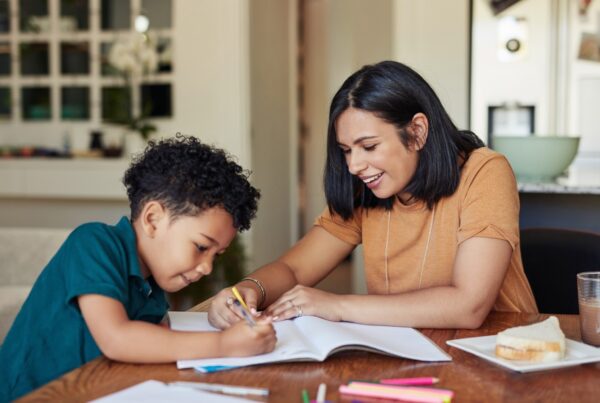
Sometimes a child understands more with one-on-one guidance than in a busy classroom. That is especially true in social studies, where discussion, vocabulary, and background knowledge all matter. Individualized support can slow the pace, clarify confusing words, and give your child more chances to explain ideas aloud.
A tutor or other learning support teacher might work on a skill such as reading a simple map, comparing past and present, or understanding community roles through pictures and conversation. Because the session is tailored to your child, the adult can notice where understanding breaks down. Maybe your child knows the answer when choices are shown visually but struggles when questions are asked verbally. That kind of insight can shape much more effective practice.
Guided instruction can also reduce frustration. In a one-on-one setting, children often feel safer making mistakes, asking questions, and trying again. That matters in 1st grade, when confidence is closely tied to participation. If your child has started to think social studies is something they are “bad at,” gentle and targeted support can help rebuild a more positive learning experience.
Parents sometimes think tutoring is only for major academic problems, but that is not how many families use it. It can also be a steady support tool when a child needs more repetition, more language practice, or more structured review than the classroom day provides. In that sense, tutoring fits naturally alongside teacher communication, home practice, and classroom instruction.
K12 Tutoring supports students by focusing on understanding, practice, and confidence, not just finishing assignments. For a 1st grader, that can mean turning a confusing unit into a series of manageable steps and helping your child become more independent over time.
Tutoring Support
If you are noticing signs your child needs help with 1st grade social studies, extra support can be a practical and reassuring next step. Many children benefit from having concepts retaught in a slower, more interactive way. K12 Tutoring works with families to provide personalized learning support that matches a child’s current skill level, classroom expectations, and pace of learning. In early social studies, that may include guided discussion, vocabulary reinforcement, map practice, and help connecting lessons to the real world so your child can participate with more confidence and understanding.
Related Resources
- How To Build Your Child’s Confidence: A Parent’s Guide – Crimson Rise
- How High-Quality, Small-Group Tutoring Can Accelerate Learning – IES (U.S. Department of Education)
- Roles in Gifted Education: A Parent’s Guide – davidsongifted.org
Trust & Transparency Statement
Last reviewed: May 2026
This article was prepared by the K12 Tutoring education team, dedicated to helping students succeed with personalized learning support and expert guidance. K12 Tutoring content is reviewed periodically by education specialists to reflect current best practices and family feedback. Have ideas or success stories to share? Email us at [email protected].