Key Takeaways
- Kindergarten science asks young children to observe, describe, compare, predict, and explain, all while they are still developing language, attention, and self-control.
- If your child seems unsure during science activities, that does not mean they are behind. It often means the thinking work is new and needs more guided practice.
- Hands-on experiences, repeated vocabulary, and simple teacher or tutor feedback can make science ideas much easier for kindergarten students to understand and remember.
- Personalized support helps children connect what they see in class with the words, patterns, and routines they need to show what they know.
Definitions
Observation is the act of noticing details using the senses, such as seeing that one leaf is smooth and another is bumpy.
Prediction is an early science skill in which a child says what they think might happen next, such as guessing whether an ice cube will melt faster in the sun or shade.
Why science can feel harder than it looks in kindergarten
Many parents are surprised by how much thinking is packed into early science. On the surface, kindergarten science may look simple. Children sort objects, talk about weather, watch plants grow, and notice how animals move. But underneath those activities, your child is being asked to do several demanding things at once. That is a big reason why kindergarten science skills are hard to learn for many young students.
In a typical lesson, a teacher may place a tray of objects on the table and ask students to sort them into groups. Your child is not just playing with materials. They are expected to notice features, compare items, decide on a rule for sorting, explain their thinking, and listen to how classmates sorted differently. For a five- or six-year-old, that is complex mental work.
Science in kindergarten also depends heavily on language. A child might understand that a rock feels rough or that a plant needs water, but still struggle to say it clearly. Teachers often hear answers like “this one is weird” or “it changed” when they are hoping for words such as smooth, absorb, float, melt, or grow. This gap between understanding and expression is common in early elementary classrooms.
Another challenge is that science asks children to slow down and notice details. Young learners often want to jump to the fun part, such as mixing, pouring, planting, or touching. Their teacher, however, may be guiding them to first observe, then predict, then test, then discuss results. That sequence is developmentally appropriate, but it can feel hard because self-control and attention are still developing.
From an educational standpoint, kindergarten science is not mainly about memorizing facts. It is about building habits of thinking. Teachers are helping children learn how to look closely, ask questions, talk about evidence, and revise ideas. Those are foundational academic skills, which is one reason science can be both exciting and challenging at this age.
Kindergarten science skills that often trip students up
When parents wonder why their child does well in some parts of the school day but struggles during science, it helps to look at the specific skills involved. Kindergarten science includes a mix of content knowledge and process skills. The process skills are often the tricky part.
Observation is one of the first hurdles. Your child may glance at two objects and say they are the same because both are green. A teacher might encourage a closer look and ask, “How else are they different?” Now your child has to notice size, texture, shape, or weight. That kind of careful comparison takes practice.
Classification can also be harder than adults expect. A class might sort animals by where they live, how they move, or what covers their bodies. A child may sort a duck with fish because it swims, while another puts it with birds because it has feathers. Both answers show thinking, but your child may need help understanding that science often depends on the rule being used.
Cause and effect is another major area. In kindergarten science, children may explore what happens when a plant does not get sunlight or what happens when ice warms up. These lessons require them to connect an action with a result. Some children can describe what happened but have trouble explaining why it happened.
Science vocabulary creates its own learning curve. Words such as habitat, weather, season, sink, float, living, nonliving, and predict may be brand new. Even if your child has seen the concept before, the school language may be unfamiliar. This is especially important for children who are still building expressive language, multilingual learners, or students who need extra processing time.
Finally, recording ideas can be difficult. In kindergarten, students may draw what they observed, circle a picture answer, or complete a simple sentence frame like “The plant needs \_\_\__.” A child may understand the lesson but have trouble turning that understanding into a drawing or spoken response that matches the task. Teachers know this is common, which is why guided instruction and repeated modeling matter so much.
Parents who want to better understand how learning habits grow across subjects may also find helpful support in K12 Tutoring’s learning resources.
What elementary science classrooms expect from young learners
In elementary science, even at the kindergarten level, teachers are building routines that prepare students for later grades. Your child is learning more than facts about animals, weather, plants, and materials. They are learning how to participate in science as a subject.
That often means listening to a question before touching materials, using classroom tools carefully, and sharing observations with a partner. It may mean watching a seed over several days rather than expecting instant results. It may also mean noticing that classmates can have different predictions before the class tests an idea together.
These expectations can be tough for young children because kindergarten science blends physical activity with academic structure. A child may love pouring water into different containers but lose focus when asked to explain which object floated and why. Another child may enjoy talking about bugs but shut down when asked to compare two insects using complete sentences.
Teachers usually support this learning through modeling. They might say, “I notice the cotton ball soaked up water, but the plastic cube did not.” That sentence gives students both the science idea and the language pattern. Repetition like this is powerful because children begin to borrow the structure in their own responses.
Parents sometimes worry when a science worksheet comes home with incomplete answers or simple drawings. In kindergarten, that does not always signal a lack of understanding. Often, it shows that your child is still learning how to represent ideas in school-friendly ways. A teacher or tutor can help break tasks into smaller steps such as first noticing, then saying, then drawing, then labeling.
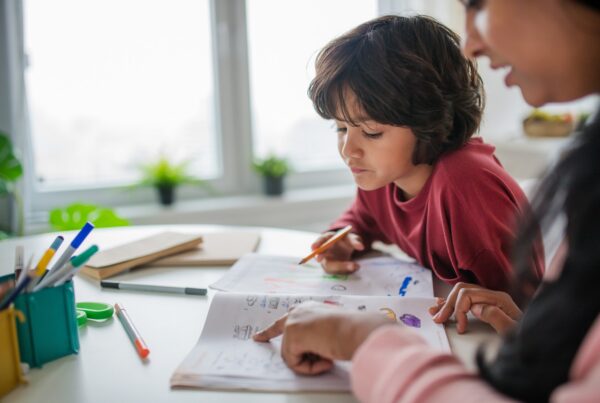
This is one reason individualized support can be so effective. A child who misses key details in a whole-group lesson may thrive when an adult slows the pace, repeats the question, and gives immediate feedback. In one-on-one or small-group instruction, the adult can say, “Tell me what you saw first,” and build the response from there. That kind of support strengthens both science thinking and classroom confidence.

Why does my child understand the experiment but struggle to explain it?
This is one of the most common parent questions in kindergarten science, and it has a very normal explanation. Young children often understand more than they can express. In science, that gap becomes very visible.
Imagine your child watches an ice cube melt in warm water. They clearly see the change. If you ask what happened, they may say, “It went away” or “It got all wet.” Those responses show partial understanding, but they do not yet use the precise language of melt, solid, liquid, or warmer. The challenge is not always the concept itself. It is often the combination of vocabulary, sequencing, and verbal expression.
Children may also struggle because science explanations require order. A teacher might ask, “What did you notice first? What happened next? Why do you think that happened?” That sequence can be difficult for a child who is still developing memory, attention, or spoken language. Some students need visual prompts, sentence starters, or repeated practice before they can explain an experiment clearly.
Another factor is that kindergarten students are still learning that science answers should connect to evidence. Instead of saying, “I just think so,” they are encouraged to say, “I think the paper towel absorbed more because it got wetter than the foil.” That kind of evidence-based language is taught gradually. It is not expected to appear perfectly on its own.
Helpful support at home can be simple and specific. After a class activity, you might ask, “What did you see?” instead of “What did you learn?” You could offer two choices such as, “Did the bean sprout before or after you watered it for a few days?” You can also model the vocabulary naturally: “Yes, the shadow changed when the sun moved.” These small conversations reinforce classroom learning without turning home into another school day.
If your child needs more structured help, guided practice with a teacher or tutor can make a real difference. Immediate feedback helps children connect their observations to the right words and patterns. Over time, they become more comfortable explaining what they notice, which is a major part of science success in the early grades.
How guided practice builds confidence in kindergarten science
Because so many kindergarten science tasks combine language, observation, and reasoning, children benefit from practice that is active and supported. They usually do not master these skills through one lesson alone. They need chances to revisit the same kind of thinking in slightly different ways.
For example, a child learning about living and nonliving things may first sort picture cards with help. Later, they may walk around the classroom and identify examples. After that, they might draw one living thing and tell why it is living. Each step builds on the last. This kind of progression is how foundational science understanding develops.
Feedback matters here. A teacher might gently correct a child who says a toy dog is living because it can move. Rather than simply saying “no,” the teacher may ask questions such as, “Does it grow? Does it need food and water?” That guided feedback helps the child refine the idea instead of feeling wrong. Educationally, this is important because early science learning is built through comparison, discussion, and revision.
Young learners also benefit when adults make thinking visible. During a weather lesson, an adult might say, “I see dark clouds, so I predict it may rain.” In a plant lesson, they might say, “This plant is leaning toward the window. I wonder if it needs sunlight.” Hearing this kind of self-talk teaches children how science reasoning sounds.
Individualized support is especially useful for children who need more repetition, more wait time, or a quieter setting to process information. Some students do well with pictures and hands-on materials. Others need oral rehearsal before they can answer in class. A personalized approach allows the adult to match support to the child rather than expecting every learner to respond the same way.
This is where K12 Tutoring can be a helpful educational partner. When a child finds kindergarten science confusing, one-on-one support can focus on exactly what is getting in the way, whether that is vocabulary, attention, explaining observations, or following multi-step tasks. The goal is not just finishing assignments. It is helping your child build understanding, confidence, and independence in the way they learn science.
Signs your child may benefit from extra support in science
Some children just need time and normal classroom repetition. Others benefit from more targeted help. If your child regularly enjoys science but cannot explain basic ideas after several lessons, that may be a sign they need more guided practice. If they avoid participating during experiments, become frustrated by science journals, or seem lost when asked to compare and describe, additional support may help them access the material more comfortably.
You might also notice that your child remembers isolated facts but struggles with the process of science. For instance, they may know that plants need water but still have trouble observing changes over time or making a simple prediction about what will happen next. That pattern suggests the challenge is not effort. It is skill development.
Extra support can also help advanced learners. Some kindergarten students are ready to ask deeper questions, make more detailed observations, or extend lessons beyond the basic class task. Individualized instruction can keep their curiosity engaged while strengthening careful reasoning and academic language.
If you talk with your child’s teacher, you may hear useful details such as whether the challenge appears during group discussion, independent work, or vocabulary use. That classroom context is valuable. It helps parents understand whether the issue is content knowledge, communication, pacing, or attention. A thoughtful tutoring plan can then reinforce what the teacher is already working on in class.
The good news is that early science skills grow well with patient instruction. When children get repeated chances to observe, talk, test, and explain, they usually make steady progress. What looks like a big struggle at first is often a normal stage in learning how school science works.
Tutoring Support
If your child is finding kindergarten science harder than expected, extra help can be a positive next step, not a sign that anything is wrong. K12 Tutoring supports young learners with personalized instruction that matches their pace, language development, and classroom goals. In science, that may mean practicing observation skills, building vocabulary, talking through experiments, or learning how to explain answers more clearly. With patient guidance and specific feedback, many children become more confident participating in science lessons and showing what they know.
Related Resources
- How To Build Your Child’s Confidence: A Parent’s Guide – Crimson Rise
- How High-Quality, Small-Group Tutoring Can Accelerate Learning – IES (U.S. Department of Education)
- Roles in Gifted Education: A Parent’s Guide – davidsongifted.org
Trust & Transparency Statement
Last reviewed: May 2026
This article was prepared by the K12 Tutoring education team, dedicated to helping students succeed with personalized learning support and expert guidance. K12 Tutoring content is reviewed periodically by education specialists to reflect current best practices and family feedback. Have ideas or success stories to share? Email us at [email protected].