Key Takeaways
- Kindergarten science is built through observation, language, routines, and hands-on experiences, so progress often looks gradual rather than immediate.
- Young children may understand a science idea during play or class discussion before they can explain it clearly with words, drawings, or sorting tasks.
- Repeated practice, teacher feedback, and individualized support can help your child connect science vocabulary, patterns, and real-world experiences over time.
- When parents understand why kindergarten science foundations take time to learn, it becomes easier to support growth without turning normal early struggles into a bigger worry.
Definitions
Science foundations are the early skills children use to notice, describe, compare, predict, and ask questions about the world around them.
Guided practice is supported learning with a teacher, parent, or tutor who models the task, asks questions, and helps a child explain their thinking step by step.
Why early science learning develops slowly in kindergarten
Many parents are surprised by how much is packed into kindergarten science. It may look simple on the surface because students are talking about weather, plants, animals, motion, seasons, and the five senses. But underneath those topics, your child is learning how to observe carefully, listen for details, sort information, use new vocabulary, and explain what they notice. That is a big developmental load for a 5- or 6-year-old.
This is one reason why kindergarten science foundations take time to learn. A child may be able to point to a plant and say it needs water, but still struggle to compare two plants, describe changes over time, or explain how they know one is healthy. In class, teachers often ask students to do more than name facts. They may ask them to observe a seed, draw what they see after a few days, talk about what changed, and use words like grow, stem, roots, and leaves. Each of those steps depends on language, memory, attention, and early reasoning.
Kindergarten science also depends heavily on oral language. Students are often expected to answer questions such as, “What do you notice?” “What is the same?” and “What changed?” A child who understands the concept may still need time to put thoughts into words. This can make science progress look uneven, even when learning is happening.
Teachers in elementary classrooms know that young children often learn science through repetition and experience. A lesson on shadows, for example, may need several rounds of practice before a child connects the idea that light creates a shadow and that the shadow changes when the light source moves. That is not a sign that something is wrong. It is a normal part of building durable understanding.
What kindergarten science really asks your child to do
In kindergarten science, your child is not just memorizing nature facts. They are being introduced to habits of scientific thinking in age-appropriate ways. A teacher might place objects in front of the class and ask students to sort them as living or nonliving. That sounds straightforward, but it requires students to notice features, compare examples, and explain a rule for sorting. Some children sort correctly but cannot explain why. Others can explain one example but not apply the same rule to a new object.
Another common classroom task is observing weather over time. Students might track sunny, rainy, windy, or cloudy days on a calendar. The challenge is not only remembering the labels. It is also noticing patterns and connecting weather to clothing, outdoor choices, or seasonal changes. A child may know it is raining outside but still need help understanding why that means boots are a better choice than sandals.
Hands-on investigations are also more demanding than they appear. If the class tests which objects sink or float, your child may need to predict first, watch closely during the test, and then talk about what happened. Many kindergarteners are still learning how to wait their turn, focus during a group activity, and separate what they hoped would happen from what they actually observed. Those are real science learning skills.
Parents sometimes notice that a child seems confident during experiments but struggles on follow-up worksheets or science journals. That pattern is common. Doing the activity and recording the thinking are different tasks. Drawing a plant life cycle, circling the correct weather symbol, or matching animal needs to pictures all require fine motor control, listening, and understanding directions. In early elementary science, performance is often shaped by these developmental factors as much as by content knowledge.
Science vocabulary can slow down understanding at first
One of the biggest reasons science takes time in kindergarten is vocabulary. Young students are learning words that may sound familiar in daily life but have more precise meanings in school. Words such as observe, compare, predict, season, habitat, and motion are not always easy for children to use accurately right away.
For example, a child may know that winter is cold, but a science lesson may ask them to connect winter with shorter days, different clothing, and changes in plants or animals. That requires more than one-word recognition. It requires a network of ideas. The same thing happens when students study living things. A child may know that a dog is alive, but may not yet understand how to explain that living things need food, water, air, and space.
This is where teacher feedback matters. In a well-run kindergarten classroom, the teacher may gently recast a child’s answer. If a student says, “The plant is sad,” the teacher might respond, “Yes, it looks droopy. It may need water.” That kind of feedback helps children move from everyday language to academic language without shame or pressure.
At home, you may see the same need for support. If your child says, “It moved fast,” you can build the science language by adding, “Yes, it had quick motion,” or “What made it move?” These small conversations help children connect words to observations. Over time, that makes classwork easier.
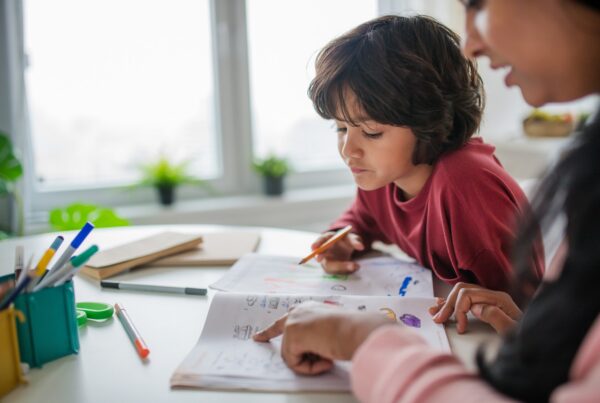
If your child needs extra support with language-rich tasks, individualized instruction can be especially helpful. A tutor or guided learning partner can slow down the pace, repeat key words, use pictures or objects, and give your child more chances to explain ideas out loud. This kind of one-on-one support is often effective because kindergarten science understanding grows through repeated, supported talk.

Elementary kindergarten science often blends content with developmental skills
Parents sometimes expect science progress to look like a steady climb from one unit to the next. In kindergarten, however, science learning often moves in loops. Your child may seem to master a topic one week and then need reminders the next. That happens because early science is closely tied to developmental skills that are still emerging.
Attention is one example. During a lesson on the five senses, your child may eagerly identify what they can smell or hear, but miss the teacher’s direction to sort picture cards by sense. In a unit on animals and habitats, your child may know that birds live in nests, yet struggle to complete a matching page because they lose track of the instructions halfway through. These moments do not always reflect weak science understanding. Sometimes they reflect the normal challenge of managing directions, language, and task completion at the same time.
Memory also plays a role. Kindergarten students are often asked to remember what happened during a class investigation and then discuss it later. If your child cannot retell every step, that does not mean the lesson failed. Young learners often need visual reminders, repeated questioning, and multiple exposures before they can retrieve and explain what they learned.
Fine motor demands can also affect science work. A child might understand that a caterpillar becomes a butterfly but have trouble sequencing picture cards, cutting and pasting stages in order, or drawing changes in a science notebook. When parents see unfinished or messy work, it can help to ask whether the challenge was the science idea itself, the directions, or the recording task.
For some families, resources on focus and attention can also be useful because many kindergarten science tasks depend on careful listening and sustained observation.
What support looks like when your child is having trouble
Is my child behind in kindergarten science?
Usually, what parents notice as falling behind is actually uneven early development. One child may speak confidently about weather but struggle to sort living and nonliving things. Another may love experiments but freeze when asked to explain an answer in front of the class. Kindergarten science is full of these uneven profiles.
Helpful support starts with identifying the exact sticking point. Is your child having trouble with vocabulary? Following multistep directions? Comparing two things? Explaining observations? Recording answers on paper? The more specific the challenge, the easier it is to support.
Guided practice works well because it breaks a science task into manageable parts. If your child is learning about push and pull, you might practice with toy cars, a laundry basket, or a chair. First ask, “Did you push it or pull it?” Then ask, “What happened after you pushed?” Finally ask, “Can you show me something else that moves with a pull?” This sequence helps your child connect action, vocabulary, and explanation.
Feedback should stay concrete and calm. Instead of saying, “That’s wrong,” try, “Let’s look again,” or “Tell me what you noticed first.” Early science understanding grows when children feel safe revising an answer. In many classrooms, teachers use exactly this kind of language because it keeps the focus on observation and reasoning rather than perfection.
If school feedback suggests your child needs more targeted help, tutoring can be a natural next step. In kindergarten science, tutoring often looks like hands-on review, picture-based vocabulary work, guided questioning, and practice turning observations into simple explanations. The goal is not to rush children through advanced material. It is to strengthen the foundations so classroom learning feels more accessible.
How parents can build science understanding at home without pressure
The best at-home support for kindergarten science is simple, specific, and connected to real life. You do not need to recreate a classroom lab. Instead, look for moments when your child can observe, compare, describe, and predict.
During a walk, ask which trees look the same and which look different. While cooking, ask what happens when ice sits on the counter. At bath time, test which objects float. If a plant on the windowsill looks different from last week, ask your child what changed and what the plant might need. These are the kinds of experiences that strengthen science thinking in meaningful ways.
It also helps to keep expectations realistic. If your child gives a partial answer, that can still be progress. A kindergartener who says, “The rock sank,” is already making an observation. With support, that answer can grow into, “The rock sank, but the leaf floated.” Later, it may become, “I think the leaf floated because it is lighter.” The explanation becomes more complete over time.
Parents can also support science learning by revisiting classroom topics after school in a relaxed way. If the class is studying seasons, ask your child to notice clues outside. If the class is learning about animals, sort toy animals by where they live. If the class is discussing weather tools, talk about what a thermometer or rain gear helps people understand. Repetition in familiar settings often helps young children hold onto new ideas.
When home support is combined with classroom teaching, teacher feedback, and individualized guidance when needed, children are more likely to build real confidence. That confidence matters because science in later grades depends on these early habits of noticing, describing, and asking questions.
Tutoring Support
If your child needs more time with kindergarten science, that is a common and manageable part of early learning. K12 Tutoring supports families by helping students build understanding through guided practice, clear feedback, and individualized instruction matched to their pace. In a subject like science, that can mean extra help with vocabulary, observation skills, simple experiments, and explaining ideas in ways that make sense to young learners. The goal is steady growth, stronger confidence, and a better connection between what your child experiences in class and what they can independently understand and express.
Related Resources
- How To Build Your Child’s Confidence: A Parent’s Guide – Crimson Rise
- How High-Quality, Small-Group Tutoring Can Accelerate Learning – IES (U.S. Department of Education)
- Roles in Gifted Education: A Parent’s Guide – davidsongifted.org
Trust & Transparency Statement
Last reviewed: May 2026
This article was prepared by the K12 Tutoring education team, dedicated to helping students succeed with personalized learning support and expert guidance. K12 Tutoring content is reviewed periodically by education specialists to reflect current best practices and family feedback. Have ideas or success stories to share? Email us at [email protected].