Key Takeaways
- Many kindergarten science practice problems are hard because children are still learning how to observe, compare, sort, predict, and explain their thinking with words and pictures.
- Young learners often understand a science idea during hands-on class activities but struggle when that same idea appears in a worksheet, picture prompt, or multi-step question.
- Clear feedback, guided practice, and one-on-one support can help your child connect classroom exploration to science questions more confidently.
- Steady growth in kindergarten science comes from repeated practice with noticing details, using simple evidence, and talking through answers out loud.
Definitions
Observation is when your child carefully notices what something looks like, feels like, sounds like, or does. In kindergarten science, observation is one of the first skills behind many practice problems.
Evidence is the detail your child uses to support an answer. For a kindergartener, evidence may be as simple as saying, “The ice is melting because I see water around it.”
Why kindergarten science practice problems can feel harder than the lesson
If you have been wondering where kindergarteners struggle with science practice problems, the answer is often not the science topic alone. The challenge is usually the combination of science thinking, listening, language, and early academic routines all happening at once. A child may enjoy learning about weather, plants, animals, push and pull, or the five senses during class, but then freeze when asked to answer a question on paper.
That is very common in kindergarten science. At this age, students are still developing the ability to follow directions, understand question words, look closely at pictures, and explain what they notice. A teacher might lead a hands-on activity about which objects sink or float, and your child may participate successfully. Later, a practice page may ask, “Circle the object that will float and tell why.” Now your child has to remember the experiment, identify the picture, understand the word float, and give a reason. That is a much bigger task than it first appears.
Teachers and early childhood educators often see this pattern. Young children can show understanding through action before they can show it through formal school tasks. That is one reason science practice problems in kindergarten can reveal gaps that are really about expression, pacing, or question format rather than a lack of curiosity or ability.
Parents sometimes notice this at home too. A child can talk excitedly about a worm in the garden or explain that the sun helps plants grow, but still miss several questions on a simple science review sheet. This does not mean your child is behind. It usually means they need more guided practice turning real-world observations into school-style answers.
Common science trouble spots in elementary kindergarten classrooms
In elementary kindergarten science, practice problems usually focus on a few core skills. When children struggle, the difficulty often shows up in predictable ways.
Sorting and classifying. Many kindergarten science tasks ask children to sort living and nonliving things, day and night activities, weather types, or objects by material and use. This seems simple to adults, but young learners may focus on one detail and miss the category the question is asking about. For example, a child might say a stuffed bear is living because it looks like an animal. That answer tells you the child is thinking, but not yet using the scientific category correctly.
Understanding cause and effect. Science questions often ask what happens next or why something changes. A child may know that plants need water, but a practice problem asking what happens if a plant gets no water requires reasoning, not just recall. Kindergarteners are still learning to connect an action to a result in words.
Reading picture-based questions accurately. Many kindergarten science pages rely heavily on images. Children must notice small details in the picture to answer correctly. If two animals are shown, one in water and one on land, your child has to identify the important clue the question is targeting. Some children answer based on what they like or recognize first rather than what they observe.
Using science vocabulary. Words such as observe, predict, compare, habitat, weather, motion, and change can be new. A child may understand the concept but not the word used in the question. This is especially true when teachers introduce academic vocabulary during class discussions and children hear it more often than they use it independently.
Explaining an answer. A major place where kindergarteners struggle with science practice problems is the step after choosing an answer. They may point to the right picture but not know how to explain why. In many classrooms, students are asked to finish a sentence such as, “I know this because…” That sentence frame supports scientific thinking, but it is still demanding for early learners.
These patterns are developmentally normal. In fact, they reflect how children typically learn science in the early grades. They move from concrete experiences to spoken explanations and then gradually to more independent written or picture-based responses.
Where parents often see the biggest breakdowns in kindergarten science
At home, the hardest part is often figuring out whether the problem is science understanding, attention, language, or task stamina. In kindergarten, those pieces overlap.
Is my child confused by the science question or by the directions?
This is one of the most useful questions a parent can ask. A worksheet might say, “Draw the weather you would see on a rainy day and circle what you would wear.” If your child only completes one part, the issue may be multi-step directions rather than weather knowledge. If they draw the wrong weather pattern, then the science idea may need more review.
Another common example appears in life science. A page may show a seed, sprout, and flower and ask children to put them in order. Some children know plants grow, but they still struggle to sequence the pictures correctly. That may be because sequencing itself is still developing, not because they do not understand plants.
Teachers often use oral discussion, movement, and partner talk in kindergarten because young children learn well through interaction. A practice page removes some of that support. Without a teacher nearby to restate the question or model thinking, your child may not know how to begin.
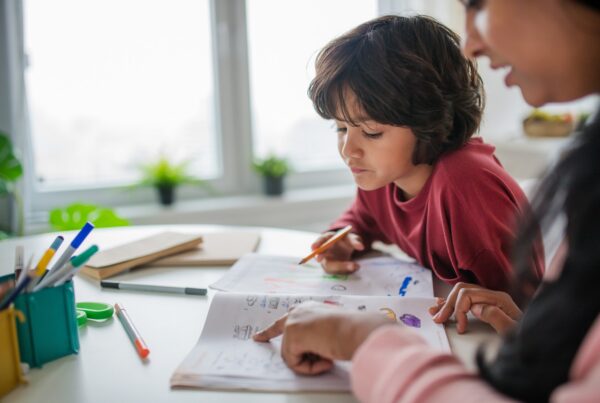
That is where guided instruction matters. When an adult sits beside a child and says, “Let us look at the question together. What is it asking you to find? What do you notice first?” the child starts learning a repeatable process. This kind of feedback helps them build independence over time.

Kindergarten science skills that need extra practice
Strong kindergarten science learning is not just about facts. It is about habits of thinking. Practice problems become easier when children build a few foundational skills.
Close looking. Encourage your child to slow down and notice details. In science, tiny clues matter. If a worksheet shows two trees in different seasons, your child needs to notice leaves, color, and weather signs. Children often rush because they want to finish, not because they do not care. Slowing down is a skill that can be taught.
Comparing. Science in kindergarten often asks how two things are the same or different. Your child may need help using simple language such as big and small, rough and smooth, wet and dry, or fast and slow. Comparing objects during everyday routines can support this. Even simple conversations like comparing two leaves or two types of clouds build science readiness.
Predicting. Prediction questions can be tricky because children sometimes think there is a hidden right answer. In science, a prediction is a thoughtful guess based on what they know. If asked what will happen to an ice cube in the sun, your child can use prior experience. They do not need a perfect explanation at first. They need practice connecting what they know to what might happen.
Talking through reasoning. Before writing, many kindergarteners need to say the answer out loud. If your child can explain, “The rock sinks because it is heavy,” they are beginning to use evidence, even if the wording is simple. Spoken reasoning is an important bridge to later written science work.
Staying with a task. Science pages can be tiring because they ask for attention, language, and decision-making all at once. If your child loses focus quickly, shorter practice with breaks may help. Families looking for broader support with attention and learning routines may find helpful strategies in focus and attention resources.
How guided practice helps young children answer science problems
When parents hear the word tutoring, they sometimes imagine a child who is far behind. In kindergarten science, support is often much simpler and more proactive than that. A child may benefit from extra guided practice just because they need more time to connect hands-on learning with question formats used in school.
For example, if your child struggles with a page about the five senses, a tutor or parent might place familiar objects on the table and ask, “Which one can you smell? Which one feels rough? Which one makes a sound?” Then they can move to a picture-based question that asks the same thing. This step-by-step support helps your child transfer understanding from real objects to school tasks.
In a weather unit, guided instruction might sound like this: “Let us read the question. It says to choose what you wear on a snowy day. What do you notice in the picture? What clothes would keep you warm? Why?” That kind of coaching teaches your child how to approach science practice problems, not just how to finish one page.
Good feedback in kindergarten is immediate and specific. Instead of saying only “good job” or “that is wrong,” helpful feedback sounds more like, “You noticed the cloud, which was a good clue, but let us look again at the raindrops too.” This keeps the child thinking and reduces frustration.
One-on-one support can also help children who are advanced verbally but inconsistent on paper, children who need repetition, or children who become discouraged after making mistakes. Personalized instruction allows the adult to adjust pace, simplify language, and model how to reason through a question.
What parents can do at home without turning science into more worksheets
You do not need to recreate school at home to support kindergarten science. In fact, many of the best supports are playful, brief, and connected to daily life.
During a walk, ask your child to observe and compare. Which leaf is bigger? Which surface feels smoother? What do you think will happen to the puddle later? These are science practice questions in everyday language.
When reading a picture book about animals or seasons, pause and ask simple evidence questions. “How do you know it is winter in this picture?” or “What tells you this animal lives in water?” This builds the same reasoning children need on class assignments.
At bath time or in the kitchen, test sink and float, melting and freezing, or push and pull. Then ask your child to explain what they noticed. The goal is not a perfect answer. The goal is helping them connect observation to language.
If your child brings home science homework, try a simple support routine. Read the directions aloud. Have your child point to key picture clues. Ask them to say the answer before marking it. Then ask for a short reason. This keeps the task manageable and mirrors the way many teachers scaffold learning in kindergarten classrooms.
Most importantly, keep the tone calm. Early science learning should feel exploratory. If your child answers incorrectly, treat it as information. You are learning how they are thinking, and that is useful for future practice.
Tutoring Support
If your child is having a hard time with kindergarten science practice problems, extra support can be a positive next step, not a sign that something is wrong. K12 Tutoring works with families to provide individualized instruction that matches a child’s pace, language development, and classroom expectations. In early science, that may mean practicing how to observe pictures carefully, answer simple cause-and-effect questions, use science vocabulary, or explain thinking with sentence frames and guided feedback.
Because kindergarten learning is so hands-on and developmental, personalized support can make a real difference. A tutor can break tasks into smaller steps, model how to approach a question, and give immediate feedback in ways that build confidence and independence. For many children, that kind of support helps science feel clearer, more manageable, and more enjoyable.
Related Resources
- How To Build Your Child’s Confidence: A Parent’s Guide – Crimson Rise
- How High-Quality, Small-Group Tutoring Can Accelerate Learning – IES (U.S. Department of Education)
- Roles in Gifted Education: A Parent’s Guide – davidsongifted.org
Trust & Transparency Statement
Last reviewed: May 2026
This article was prepared by the K12 Tutoring education team, dedicated to helping students succeed with personalized learning support and expert guidance. K12 Tutoring content is reviewed periodically by education specialists to reflect current best practices and family feedback. Have ideas or success stories to share? Email us at [email protected].