Key Takeaways
- Second graders often make science mistakes because they are learning new vocabulary, observation skills, and cause-and-effect thinking at the same time.
- In 2nd grade science, a wrong answer often shows partial understanding, not lack of ability, so specific feedback matters.
- Individualized help can slow down the thinking process, correct misunderstandings, and give your child guided practice with real science tasks.
- Support works best when it connects directly to what your child is doing in class, such as sorting materials, recording observations, or explaining weather and life cycles.
Definitions
Observation means noticing and describing what happens using the senses or simple tools. In 2nd grade science, students use observation to compare plants, weather, materials, and animals.
Scientific explanation is a simple statement that tells what happened and why. For young learners, this may sound like, “The ice melted because it got warm.”
Why science mistakes are so common in 2nd grade
If you have been wondering about why 2nd graders make science mistakes, it helps to look closely at what this grade level actually asks children to do. In many elementary classrooms, science is no longer just about noticing cool facts. Your child is expected to observe carefully, sort information into groups, talk about patterns, and explain simple changes in the natural world. That is a big leap for a 7 or 8 year old.
Second grade science often includes units on plant growth, animal habitats, states of matter, weather, landforms, and the properties of materials. These topics sound approachable, but they require several skills at once. A child may need to read a short passage, look at a picture, remember class vocabulary, and choose the best explanation. If one part breaks down, the answer may be wrong even when the child has some understanding.
Teachers see this often. A student may know that plants need water and sunlight but still mix up the order of a life cycle. Another child may understand that rain comes from clouds but struggle to explain evaporation in simple terms. These are normal learning patterns in elementary science.
Parents sometimes expect science mistakes to be easy to fix because the content seems concrete. In reality, 2nd grade science asks children to move between what they can see and what they need to infer. For example, your child can see a puddle disappear, but understanding that the water changed into vapor is more abstract. That gap between seeing and explaining is where many errors happen.
This is one reason individualized support can be so valuable. When an adult listens to how a child is thinking, it becomes easier to spot whether the problem is vocabulary, attention to detail, confusion about sequence, or a deeper misunderstanding of the concept itself.
What 2nd grade science mistakes can reveal about learning
Not all mistakes mean the same thing. In science, a wrong answer often gives useful information about how your child is processing ideas. That is why guided feedback matters more than simply marking an answer incorrect.
For example, imagine a worksheet that asks which material would be best for keeping hands dry in the rain: paper, sponge, or plastic. If your child picks sponge, the mistake may not mean they know nothing about materials. It may mean they focused on softness instead of water resistance. A teacher or tutor can use that response to ask a follow-up question such as, “What happens to a sponge when it gets wet?” That kind of conversation helps the child revise the idea instead of memorizing a correction.
Here are a few common patterns in 2nd grade science:
- Vocabulary confusion: Words like absorb, predict, compare, habitat, and evidence may be new. A child may understand the idea but miss the question because the language is unfamiliar.
- Mixing up categories: Students may sort an object by the wrong property, such as grouping metal and glass together because both feel cold.
- Weak observation habits: Some children answer quickly without looking closely at diagrams, charts, or pictures from an experiment.
- Cause-and-effect errors: A child may notice that a plant drooped after not being watered, but still struggle to explain the relationship clearly.
- Sequence mistakes: Life cycles, weather changes, and experiment steps can be hard to keep in order.
These patterns are academically meaningful. They show where support should begin. In strong elementary instruction, adults do not just correct the final answer. They help children describe what they noticed, explain their reasoning, and compare one idea with another. That is how science understanding becomes more stable over time.
Elementary science learning often needs slower, more personal guidance
Science in the elementary years depends heavily on language, attention, and reasoning. Even when the topic is hands-on, the learning is not automatic. Your child may enjoy mixing water and ice, planting seeds, or watching clouds, but enjoyment alone does not always lead to accurate scientific thinking.
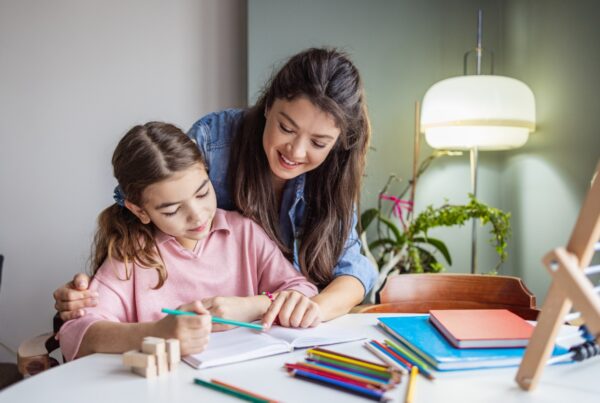
Individualized help gives children room to process at their own pace. In a full classroom, a teacher may have limited time to unpack every mistake. A child who is quiet, distracted, or unsure may move on before understanding what went wrong. One-on-one or small-group support creates space for repetition, clarification, and guided correction.
Consider a common classroom task: students observe two objects, such as a wooden block and a metal spoon, then describe how they are alike and different. Your child might say, “The spoon is better because it is shiny.” That response tells an adult something important. The child may be giving a preference instead of comparing scientific properties. With individualized instruction, the adult can model stronger language: “Let’s compare what they are made of, how they feel, and whether they bend.”
This kind of support is especially helpful for children who need more time to organize their thoughts before speaking or writing. Some students understand a concept during discussion but cannot transfer that understanding to a quiz. Others need visual examples, sentence starters, or repeated practice with the same skill in different science topics.
Parents may also notice that science mistakes increase when reading demands increase. A child might know the content during hands-on activities but miss answers on a written assessment. In that case, the issue may be partly science and partly reading comprehension. Individualized help can separate those factors and support both.
For families looking for broader ways to support learning habits, the parent resources at /parent-guides/ can help you think through routines, communication, and school support in a practical way.

Where personalized feedback helps most in 2nd grade science
At this age, children benefit from feedback that is immediate, specific, and connected to the task in front of them. General comments like “check your work” are usually too broad for a second grader. More useful feedback sounds like, “Look again at the picture. Which animal has what it needs in that habitat?” or “Tell me what changed first, next, and last.”
In 2nd grade science, personalized feedback often helps in four important areas.
Observation and recording
Students may watch a seed sprout over several days and record changes in a journal. A child might write only “It grew.” An adult can guide deeper noticing by asking about height, color, number of leaves, or changes over time. This teaches that science depends on careful details, not just broad impressions.
Using evidence in answers
Young learners often give answers based on guesses or prior beliefs. If asked which object will sink, they may choose the largest item without testing or observing. Guided support helps them connect answers to evidence by asking, “What did you see in the experiment?”
Understanding diagrams and models
Science worksheets often include arrows, labels, and picture sequences. Some children do not naturally read these visuals in a meaningful way. They may skip labels or misunderstand what an arrow shows. One-on-one guidance can teach them how to read a life cycle diagram or weather chart step by step.
Explaining ideas out loud and in writing
Many second graders can think more than they can express. They may know that the Sun warms the ground but write only “because hot.” With support, they can learn simple academic sentence patterns such as “The ground got warmer because the Sun was shining on it.” That kind of language growth strengthens science learning and classroom confidence.
These are not small gains. They are the building blocks of later science success. As students move through elementary school, they will be expected to make predictions, compare results, and explain systems more clearly. Early support helps those habits develop before confusion becomes a pattern.
A parent question: When should you seek extra help for science?
It is reasonable to wonder whether occasional mistakes are normal or whether your child needs more support. In most cases, a few wrong answers on a science worksheet are not a concern. What matters is the pattern over time and how your child responds to correction.
You may want to look more closely if your child regularly:
- confuses key science words even after classroom review
- has trouble explaining observations from simple experiments
- guesses instead of using evidence from pictures, charts, or hands-on tasks
- becomes frustrated when asked to compare, classify, or sequence science ideas
- understands during class discussion but cannot show that understanding independently
Extra help does not have to mean something is seriously wrong. It may simply mean your child learns best with more repetition, more modeling, or more chances to talk through ideas before answering. That is common in elementary school.
Teacher input is especially valuable here. Classroom teachers can often tell whether a child is struggling with the science content itself, the language of the assignment, or the pace of instruction. Parents and teachers together can build a clearer picture than either one alone.
When tutoring is part of the plan, it works best as guided academic support, not as pressure. A good session in 2nd grade science might involve sorting real objects by properties, practicing weather vocabulary with pictures, or revisiting a classroom experiment and explaining what happened in simple steps. That kind of focused practice can make schoolwork feel much more manageable.
How individualized support builds confidence and independence in elementary science
Children this age are still forming beliefs about themselves as learners. If your child starts to think, “I am bad at science,” small mistakes can feel bigger than they are. Supportive instruction helps reframe mistakes as part of learning.
In science, confidence grows when children can see their own thinking improve. A child who once mixed up solids and liquids may feel proud after correctly sorting examples at home and at school. Another child may gain confidence after learning how to answer with a full sentence using evidence from an experiment. These moments matter because they connect effort with progress.
Individualized help also promotes independence. When an adult consistently models how to observe, compare, and explain, your child begins to internalize those habits. Over time, they may start asking themselves useful questions such as, “What do I notice?” “What changed?” or “What evidence do I have?” Those are early scientific thinking skills.
Parents can support this process in simple ways. After a class activity, ask your child to show or tell what happened first, next, and last. If they bring home a paper with corrections, talk through one or two items instead of reviewing everything at once. Keep the focus on reasoning, not just right answers.
It also helps to remember that science growth in second grade is uneven. A child may do well with animals and habitats but struggle with matter and materials. Another may enjoy weather observations but find diagrams confusing. That unevenness is typical, and it is one reason personalized instruction is so effective. It meets the child where they are instead of assuming every topic will click in the same way.
Tutoring Support
K12 Tutoring supports families by meeting students at their current level and helping them strengthen the specific science skills that need attention. In 2nd grade science, that may include improving observation, building vocabulary, practicing classification, or learning how to explain ideas with evidence. Personalized instruction can give your child the extra time, feedback, and guided practice that classroom learning sometimes cannot provide on its own.
For many families, tutoring is not about fixing failure. It is a practical way to support steady growth, reduce frustration, and help a child feel more capable during everyday classwork, homework, and assessments. With patient guidance and course-aware practice, students can build both understanding and confidence in science.
Related Resources
- How To Build Your Child’s Confidence: A Parent’s Guide – Crimson Rise
- How High-Quality, Small-Group Tutoring Can Accelerate Learning – IES (U.S. Department of Education)
- Roles in Gifted Education: A Parent’s Guide – davidsongifted.org
Trust & Transparency Statement
Last reviewed: May 2026
This article was prepared by the K12 Tutoring education team, dedicated to helping students succeed with personalized learning support and expert guidance. K12 Tutoring content is reviewed periodically by education specialists to reflect current best practices and family feedback. Have ideas or success stories to share? Email us at [email protected].