Key Takeaways
- Kindergarten math asks children to build several skills at once, including number sense, language, attention, memory, and fine motor control.
- Many early math struggles are not signs that a child is bad at math. They often reflect pacing, developmental readiness, or a need for more guided practice.
- Specific support with counting, comparing amounts, shapes, patterns, and simple problem solving can strengthen long-term math understanding.
- Patient feedback, hands-on practice, and individualized instruction can help your child build confidence and stronger math habits.
Definitions
Number sense is a child’s early understanding of numbers, quantities, counting, and how numbers relate to each other. It includes knowing that 5 is more than 3 and that the last number counted tells how many objects are in a group.
One-to-one correspondence means matching one number word to one object while counting. A child who touches each block once and says one number for each block is using one-to-one correspondence.
Why kindergarten math can feel harder than it looks
To adults, kindergarten math can seem simple. Children count bears, sort shapes, fill ten-frames, and compare which group has more. But in the classroom, these tasks are doing serious academic work. They are helping your child build the foundation for addition, subtraction, place value, and problem solving later on.
This is one reason why kindergarten math foundations need extra help for many students. Early math is not just about saying numbers in order. Your child may be expected to count objects accurately, recognize numerals, connect numerals to quantities, describe shapes, notice patterns, and explain thinking out loud. That is a lot for a 5- or 6-year-old learner.
Teachers often see children who can recite numbers to 20 but still struggle to count 12 objects correctly. A child may say, “1, 2, 3, 4, 5,” while pointing too quickly, skipping an object, or counting the same object twice. Another child may recognize the numeral 8 on a flashcard but not understand what eight counters actually looks like. These are common learning patterns in kindergarten math, and they make sense developmentally.
Early elementary teachers also know that young children do not all arrive with the same preschool experiences. Some have played number games, used counting books, or talked about shapes and sizes at home. Others are encountering structured math vocabulary for the first time. That difference can affect how quickly they connect classroom lessons to real understanding.
What your child is really learning in kindergarten math
Kindergarten math is broad, even when the activities look playful. A worksheet with circles to count may involve visual tracking, pencil control, listening to directions, and remembering where to start. A class activity about shapes may require your child to notice attributes such as sides, corners, and whether a shape stays the same when turned.
In many classrooms, the year includes skills such as:
- Counting forward and sometimes backward within a set range
- Recognizing numerals and matching them to quantities
- Comparing groups as more, less, or equal
- Understanding zero as none
- Composing and decomposing numbers such as making 5 from 2 and 3
- Beginning addition and subtraction with objects, pictures, or stories
- Identifying and describing two-dimensional and three-dimensional shapes
- Sorting by attributes such as color, size, or shape
- Extending and creating simple patterns
Each of these skills supports later math learning. For example, when your child learns that 4 can be made from 1 and 3 or 2 and 2, that is an early step toward flexible addition strategies. When your child compares two groups without counting each item one by one, that supports number sense and mental math later.
Parents sometimes notice a mismatch between what a child can do at home and what happens on schoolwork. Your child may count toy cars correctly during play but freeze during a class exit ticket. That does not necessarily mean the skill is missing. It may mean the school task adds language demands, time pressure, or less concrete materials.
If you want a broader look at how children build learning habits over time, the family resources at /learning/ can help put subject-specific growth in context.
Why elementary students often need more support with early number sense
When parents ask why kindergarten math foundations need extra help, number sense is often the clearest answer. Number sense is not memorized in one step. It develops through repeated experiences with real objects, visuals, language, and guided correction.
For example, a child may know that 7 comes after 6 but still not understand that 7 means a set of seven items. Another child may count five cubes and answer “5,” but if the cubes are spread farther apart, the child may think there are more because the arrangement looks bigger. This shows that the child is still learning that quantity stays the same even when objects move.
Teachers also see difficulty with subitizing, which is recognizing a small amount without counting one by one. A child who instantly knows there are 3 dots on a card is building an important visual math skill. If your child must recount every small set from the beginning each time, that is not unusual, but it can make classroom math feel slower and more effortful.
Language plays a role too. Words such as more, fewer, equal, before, after, first, last, and altogether are part of math instruction in kindergarten. A child may understand the quantity but get confused by the wording of the question. In story problems, children also have to listen, picture the situation, and decide what action is happening. If a teacher says, “Mia has 3 apples and gets 2 more,” your child needs both language comprehension and quantity understanding to solve it.
These are exactly the kinds of moments where guided support helps. When an adult slows the task down, asks your child to touch each object, and gives immediate feedback, misunderstandings are easier to catch before they become habits.
What does math struggle look like in kindergarten?
Math difficulty in kindergarten does not always look dramatic. Sometimes it looks like hesitation. Sometimes it looks like guessing. Sometimes it looks like a child who seems cheerful during calendar time but avoids independent math stations.
You might notice that your child:
- Counts aloud confidently but loses track when counting objects
- Reverses numerals or confuses similar ones such as 6 and 9
- Knows shape names but cannot describe why a shape fits that name
- Has trouble comparing groups without recounting several times
- Gets frustrated when asked to explain an answer
- Can do a skill with blocks or fingers but not on paper
- Needs many reminders to start, continue, or finish a math task
None of these signs automatically point to a serious problem. In elementary classrooms, teachers expect variation in readiness, attention, and pace. Still, patterns matter. If your child repeatedly struggles with the same type of task, it may be a sign that the foundation needs more direct teaching and practice.
Feedback is especially important here. In early math, children can practice an error many times without realizing it. A child who always starts counting from 1 again when solving “5 and 2 more” may need explicit modeling to see how counting on works. A child who sorts shapes by color when the task is to sort by number of sides may need help noticing which attribute matters in that lesson.

How guided practice builds stronger kindergarten math foundations
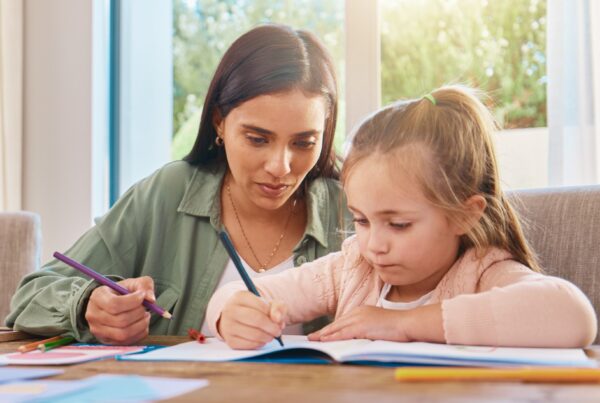
Young children usually learn math best when practice is active, brief, and specific. Guided practice means an adult is not just watching for right or wrong answers. The adult is noticing how the child is thinking.
Imagine your child is solving 4 + 1 with counters. One child may count all five counters from the beginning. Another may know 4 and then count on one more. Both can reach the correct answer, but the second child is showing a more advanced strategy. Good instruction pays attention to that difference.
In kindergarten math, support often works best when it includes:
- Hands-on materials such as buttons, cubes, counters, or snack pieces
- Visual tools like ten-frames, dot cards, number paths, and picture models
- Short verbal prompts such as “Touch each one once” or “How do you know?”
- Immediate correction before a mistake becomes repeated practice
- Plenty of chances to revisit the same idea in slightly different ways
This kind of teaching is academically grounded in how children typically learn early math. They move from concrete objects to pictures to more abstract symbols. If a child is rushed past the concrete stage, worksheets may look completed while understanding remains shaky.
Individualized support can also help with pacing. In a full classroom, the lesson has to move on. In one-on-one or small-group instruction, a child can spend extra time on counting sets to 10, comparing groups, or building numbers with manipulatives until the idea feels secure. That extra time is often what helps confidence grow.
Why confidence and math language matter so much
In kindergarten, math confidence is closely tied to participation. A child who feels unsure may stop raising a hand, stop trying a second strategy, or say “I can’t do it” before even starting. This can happen even when the child is capable of learning the skill with more support.
Math language matters because kindergarten students are often asked to explain simple reasoning. A teacher may ask, “How do you know this group has more?” or “Why does this shape not belong?” If your child understands the idea but cannot put it into words, the task can feel harder than it should.
Parents can see this during homework or informal practice. Your child may point to the larger group correctly but struggle to say, “This one has more because it has 6 and the other has 4.” That verbal piece is part of the learning. It helps children organize and strengthen their understanding.
Supportive instruction keeps the tone calm and specific. Instead of saying, “No, that’s wrong,” a teacher or tutor might say, “Let’s count again and touch each bear once,” or “Tell me what you notice about these two groups.” That kind of response lowers pressure and keeps the focus on thinking.
When extra help is a smart next step
Extra help does not have to mean something is seriously wrong. In fact, kindergarten is often the ideal time to support math development because the skills are still forming. Small gaps are easier to address now than after they affect first grade addition or second grade place value.
You may want more targeted support if your child consistently avoids math tasks, becomes upset during counting or number work, or seems unable to hold onto a skill from one week to the next. It can also help if your child understands concepts in conversation but struggles to show them in classroom formats.
Tutoring can be a natural option when it is focused on instruction, not pressure. In kindergarten math, that usually means short, engaging sessions with concrete materials, repeated modeling, and lots of chances to practice with feedback. A good tutor can notice whether your child needs help with number recognition, quantity matching, counting accuracy, math vocabulary, or early problem solving strategies.
K12 Tutoring supports families by meeting children where they are academically and building skills step by step. For a kindergartner, that might mean practicing one-to-one correspondence, learning to compare sets without guessing, or using pictures and objects to make sense of simple addition stories. The goal is not to rush ahead. It is to help your child feel steady, capable, and ready for what comes next.
Tutoring Support
If your child needs more time, more repetition, or a different way of learning, individualized math support can make a meaningful difference. K12 Tutoring works with families to strengthen foundational skills through guided practice, clear feedback, and instruction matched to a child’s pace. In kindergarten math, that kind of support can help children connect numbers to quantities, build early problem solving habits, and develop confidence that carries into later elementary math.
Related Resources
- How To Build Your Child’s Confidence: A Parent’s Guide – Crimson Rise
- How High-Quality, Small-Group Tutoring Can Accelerate Learning – IES (U.S. Department of Education)
- Roles in Gifted Education: A Parent’s Guide – davidsongifted.org
Trust & Transparency Statement
Last reviewed: May 2026
This article was prepared by the K12 Tutoring education team, dedicated to helping students succeed with personalized learning support and expert guidance. K12 Tutoring content is reviewed periodically by education specialists to reflect current best practices and family feedback. Have ideas or success stories to share? Email us at [email protected].