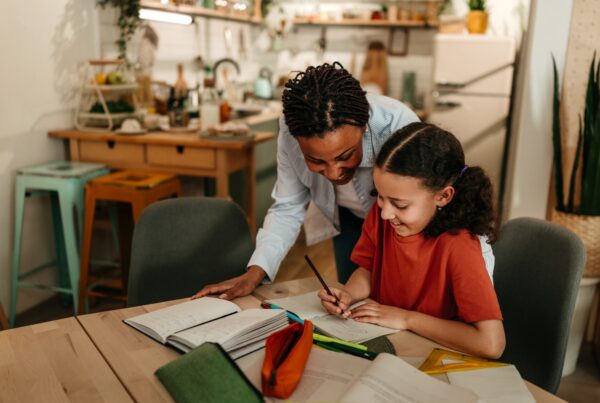
Key Takeaways
- Many second grade math errors happen when children are learning place value, regrouping, math facts, and word problem language at the same time.
- Mistakes often show a partial understanding, not a lack of ability. A child may know the procedure but lose track of steps, symbols, or quantities.
- Specific feedback, guided practice, and one-on-one support can help your child slow down, notice patterns, and build stronger number sense.
- When parents understand where second graders make math mistakes, it becomes easier to support practice at home in a calm, focused way.
Definitions
Place value is the idea that a digit has a different value depending on where it is in a number. In 42, the 4 means four tens, not just four ones.
Regrouping is the process of making a new ten or breaking apart a ten when adding or subtracting. In second grade math, children often begin using regrouping with two-digit numbers.
Why 2nd grade math can feel harder than parents expect
Second grade is a major transition year in math. Your child is no longer working only with small counting tasks or simple number sentences. In many classrooms, students are expected to understand place value to 100 or beyond, add and subtract within 100, explain their thinking, solve one-step and sometimes multi-step word problems, read graphs, and begin using more efficient strategies instead of counting every object one by one.
That combination is exactly why parents often wonder where second graders make math mistakes. The errors are usually not random. They tend to appear at points where several skills overlap. A child may understand tens and ones during a lesson with base-ten blocks, but then make mistakes on paper when there are no manipulatives in front of them. Another child may know an addition fact like 8 + 5, but still get confused when solving 38 + 25 because the problem also requires lining up place values and regrouping.
Teachers see this often in elementary math classrooms. A student may participate well during whole-group instruction, then make repeated errors during independent work because second grade asks children to hold more information in mind at once. That is a developmental challenge, not a character flaw. Young learners are still building attention, memory, and self-checking habits alongside math understanding.
This is also why feedback matters so much. When an adult can look closely at the type of mistake, the support becomes more useful. Instead of saying, “You got it wrong,” a teacher, parent, or tutor can say, “You added the ones correctly, but then forgot to regroup the extra ten,” or “You solved the numbers, but the question asked how many were left.” That kind of guidance helps children connect the mistake to a clear next step.
Common math mistakes in second grade classrooms
Some second grade errors show up again and again because they are tied to core course expectations. If your child is making these mistakes, they are in very familiar territory for this grade level.
Place value mix-ups
One of the biggest trouble spots is place value. A child may read 53 as 35, write 402 when trying to write 42, or say that the 6 in 67 means six instead of six tens. These mistakes happen because place value is abstract. Children have to move from counting objects to understanding that groups can represent larger units.
In class, this often appears when students are asked to compare numbers. For example, a child may say 48 is greater than 52 because 8 is bigger than 2. That answer shows the child is looking only at the ones place and not yet comparing tens first.
Addition and subtraction alignment errors
Another common issue is lining numbers up incorrectly. If a worksheet shows 34 + 8, some students write the 8 under the 3 instead of under the 4. Then they add the wrong digits together. On subtraction problems, children may also subtract the smaller digit from the larger one automatically, even when the order matters. For instance, in 42 – 18, a child might write 34 because they do 8 – 2 = 6 in reverse or apply a rule that does not fit the problem.
These are not just careless mistakes. They often show that the child is still developing an understanding of how written math represents quantities. Second graders benefit from seeing the same problem with drawings, blocks, number lines, and equations so the symbols connect to meaning.
Regrouping confusion
Regrouping is one of the clearest places where second graders make math mistakes because it combines place value, procedural steps, and attention to detail. A child solving 27 + 16 may correctly add 7 + 6 = 13, but then write 213 or forget to move the extra ten. In subtraction, a child may know that 52 – 28 requires regrouping, but not understand why the 5 tens becomes 4 tens and 10 ones become 12 ones.
When regrouping is taught only as a set of steps, students may imitate the procedure without understanding it. Guided instruction can help by returning to concrete models. Ten sticks and ones cubes, quick drawings, and place value charts often make the process much clearer.
Word problem misunderstandings
Second graders are also expected to solve math situations described in words, and this is where reading and math start to overlap more strongly. A child may know how to add and subtract but still miss the meaning of a problem. If the question says, “Lena had 24 stickers. Her friend gave her 8 more. How many stickers does she have now?” some children subtract because they see two numbers and know subtraction is also being practiced that week.
Others solve the arithmetic correctly but answer with the wrong quantity because they do not track what the question is asking. This is especially common when the unknown is at the beginning or in the middle of the problem rather than at the end.

Where second graders make math mistakes most often at home and on homework
Homework can reveal patterns that are less obvious in class. At school, teachers provide reminders, visual models, and immediate correction. At home, your child may be working more independently, and that is often when certain second grade math mistakes become easier to spot.
When speed takes over accuracy
Some children rush because they want to finish quickly or because they think being good at math means answering fast. They may skip counting carefully, forget a regrouping step, or misread a symbol. You might see a page where most answers are close but not correct. That pattern usually points to pacing and self-monitoring, not a complete lack of understanding.
Parents can help by asking your child to explain one or two problems out loud rather than correcting every item. If your child says, “I added the ones first, then I made a new ten,” you learn much more than you would from simply marking answers wrong. This kind of talk-through mirrors good classroom practice and gives children a chance to hear their own reasoning.
Overreliance on counting by ones
Second graders are expected to become more efficient with numbers. A child who still solves 9 + 7 by counting all from 1 each time may get the answer eventually, but the process is slow and fragile. On longer assignments, that can lead to fatigue and more errors. The same child may struggle with subtraction because counting back by ones from larger numbers is harder to manage accurately.
Teachers often encourage strategies such as making ten, using doubles, or counting on from the larger number. If your child resists these methods, it does not mean they are refusing to learn. Many children need repeated guided practice before a strategy feels natural. Individualized support can be especially helpful here because a tutor or teacher can notice which strategy makes the most sense for that child and build from there.
Difficulty transferring classroom learning to a new format
Your child may do well with number bonds in class but freeze when the same idea appears in a vertical addition problem. Or they may understand a lesson using counters but become confused on a quiz with only numerals and words. This transfer issue is common in elementary math. It means the child is still connecting representations, not that they learned nothing.
If this sounds familiar, it may help to revisit the same concept in more than one form. Drawings, spoken explanations, equations, and real-life examples all strengthen understanding. Families looking for practical ways to support learning habits at home can also explore parent guides and at-home tools.
How teachers and tutors identify the real source of a math error
One of the most useful things about skilled math support is that it looks beneath the wrong answer. In second grade math, the same incorrect answer can come from very different causes. If a child writes 51 as the answer to 27 + 24, the issue might be basic fact fluency, a regrouping mistake, a place value misunderstanding, or simple inattention. The support should match the cause.
Teachers often do this through observation during small-group work. They may ask a student to show how they solved a problem, use manipulatives, or explain why they chose addition or subtraction. That process gives insight into whether the child understands the concept, the procedure, both, or neither.
Tutoring can add another layer of support because it creates space for slower, more targeted feedback. In a one-on-one setting, a student can work through a few carefully chosen problems while the instructor notices patterns in real time. Maybe your child consistently forgets to answer the final question in word problems. Maybe they understand regrouping with addition but not subtraction. Maybe they know the math but become overwhelmed by a crowded worksheet. Those details matter.
This kind of individualized instruction is especially valuable in second grade because early math skills build on each other quickly. Place value supports regrouping. Fact fluency supports multi-digit computation. Reading comprehension supports word problems. When one piece is shaky, later tasks can feel harder than they really are. Clear feedback helps children strengthen the exact skill they need instead of practicing the wrong thing over and over.
What support at home can look like in elementary math
Parents do not need to recreate a classroom to help. In fact, the most effective support is often simple, specific, and tied to the kinds of mistakes your child is already making.
Ask your child to show, not just tell
If your child says an answer is 63, ask, “Can you show me with a drawing or explain how you got it?” In 2nd grade math, showing thinking is often more revealing than the final answer. A quick sketch of tens and ones can uncover a place value mix-up right away.
Use short practice with immediate feedback
Long homework sessions can make young children tired and frustrated. A shorter set of problems with quick correction is usually more productive. If your child solves three subtraction problems with regrouping, pause and check them together before moving on. Immediate feedback helps prevent repeated practice of the same error.
Keep word problems connected to real situations
Second graders often understand math better when the context feels concrete. You might ask, “We have 18 grapes and eat 7. How many are left?” or “You have 26 trading cards and get 9 more. What is your new total?” Real objects and familiar situations reduce the reading load and help children focus on the math structure.
Watch for emotional patterns too
Sometimes the biggest clue is not the worksheet itself but your child’s reaction. If they shut down during subtraction but not addition, or if word problems trigger frustration even when number computation is strong, that pattern can guide support. A calm adult response matters. Children this age can start to believe they are “bad at math” after a few repeated mistakes, even when they are making very typical second grade errors.
Reassurance should stay specific. Instead of saying, “Math is easy,” try, “This part is new, and you are still learning how tens and ones work in subtraction.” That kind of language supports confidence without dismissing the challenge.
Tutoring Support
If your child is showing repeated patterns in place value, regrouping, math facts, or word problems, extra support can be a helpful and very normal next step. K12 Tutoring works with families to identify where understanding is breaking down and provide guided practice that matches the way each student learns. In second grade math, that often means slowing down, using clear models, giving immediate feedback, and helping children build confidence alongside accuracy. With personalized instruction, many students begin to make sense of mistakes that once felt confusing and develop stronger habits for independent work.
Related Resources
- How To Build Your Child’s Confidence: A Parent’s Guide – Crimson Rise
- How High-Quality, Small-Group Tutoring Can Accelerate Learning – IES (U.S. Department of Education)
- Roles in Gifted Education: A Parent’s Guide – davidsongifted.org
Trust & Transparency Statement
Last reviewed: May 2026
This article was prepared by the K12 Tutoring education team, dedicated to helping students succeed with personalized learning support and expert guidance. K12 Tutoring content is reviewed periodically by education specialists to reflect current best practices and family feedback. Have ideas or success stories to share? Email us at [email protected].