Key Takeaways
- Homeschool learners often need intentional support to develop classroom confidence.
- Parents can create low-pressure environments to help children express ideas and take academic risks.
- Small, consistent steps are key to building classroom self belief for homeschool learners.
- Confidence grows when learners feel heard, capable, and supported at their own pace.
Audience Spotlight: Confidence & Habits in the Homeschool Setting
If your child is learning at home, you may have noticed moments of hesitation when they join a co-op, participate in group discussions, or even present their work during a virtual class. These moments can chip away at self-belief over time, especially if your child already struggles with confidence. Supporting confidence and habits in homeschool learners means helping them feel secure not just at home but also in any classroom-style experiences they encounter. Whether your child is preparing for a group project, virtual class, or transitioning back to a traditional school, building classroom self belief for homeschool learners can make all the difference.
Why does my homeschooler struggle with classroom confidence?
Many parents report that their homeschooler is bright and curious at home but reluctant to speak up or take initiative in group settings. This shift is common and solvable. Experts in child development note that confidence grows with repetition and positive reinforcement, especially in environments where students feel psychologically safe. In a homeschool setting, the learning space is often more relaxed or personalized, so stepping into a more formal or group-based classroom setting can feel intimidating. Children may worry about being wrong, not being heard, or not fitting in with peers who are used to different norms. These feelings can lead to self-doubt, avoidance, or even anxiety.
Strategies to help your child grow confidence in homeschool learning
Confidence is a skill that can be nurtured with time, patience, and the right strategies. Here are several ways parents can help children build classroom self belief for homeschool learners:
- Practice public speaking at home: Give your child opportunities to speak in front of family, record a presentation, or lead a game. These low-stakes scenarios build comfort in expressing thoughts aloud.
- Use peer-learning activities: Invite other homeschool families for collaborative learning. Group activities simulate classroom dynamics and help normalize sharing ideas with peers.
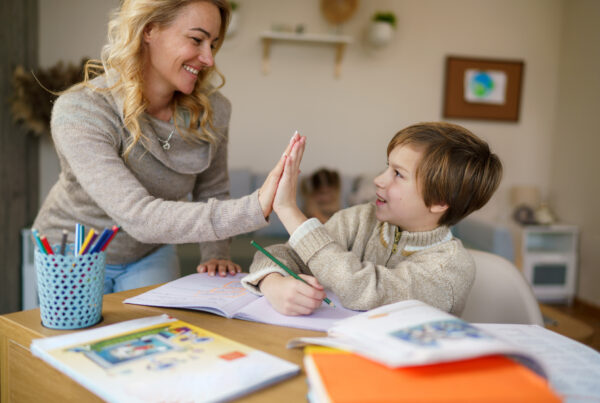
- Celebrate effort, not just outcome: Praising your child for trying something new or speaking up reinforces the value of participation, not just getting the answer right.
- Model self-belief: Share stories of your own learning challenges and how you overcame them. Children learn resilience by observing it.
- Encourage questions: Let your child know that curiosity is stronger than perfection. Make asking questions a celebrated habit at home.
These steps help create a bridge between the comfort of home and the expectations of classroom environments. By focusing on daily wins, you can help grow confidence in homeschool learning without overwhelming your child.
Supporting self-belief in elementary, middle, and high school homeschoolers
Building classroom self belief for homeschool learners looks different at each grade level. Here are ways to adapt your approach based on your child’s developmental stage:
Elementary (K–5):
Young learners benefit from routines that build familiarity. Encourage turn-taking games, story sharing during group lessons, and role-playing as a way to practice classroom behaviors. Reinforce that mistakes are part of learning and that every voice matters.
Middle School (6–8):
This age group often feels more self-conscious. Help them prepare for group discussions by practicing key points at home. Encourage journal writing or video reflections to help them process their thoughts before speaking up. Normalize discomfort and praise courageous moments.
High School (9–12):
Older homeschoolers may need support balancing academic demands with social confidence. Encourage them to lead a study group or attend virtual classes with a camera on. Help them set personal goals for participation and reflect on what went well after each new experience. You can explore more tools on confidence building here.
What emotional barriers hold homeschool learners back?
Emotional barriers to confidence often start with a fear of judgment or failure. In homeschool settings, students may not face frequent peer comparison, so entering a classroom-style environment can feel exposing. They may worry about how their ideas will be received or whether they measure up academically. Some common emotional blocks include:
- Perfectionism: Fear of making a mistake can lead to avoidance.
- Low self-esteem: Children may underestimate their own abilities.
- Past negative experiences: A single moment of embarrassment can create lasting hesitation.
- Difficulty with transitions: Moving from a quiet, personal learning space into a dynamic group can feel overwhelming.
Many teachers and parents report that these barriers lessen over time when children experience supportive, consistent encouragement. As a parent, your role is to be a steady presence and a mirror that reflects your child’s strengths back to them, especially when they can’t yet see them clearly.
Definitions
Self-belief: A student’s internal confidence in their ability to learn, contribute, and succeed in academic or social settings.
Emotional barrier: A psychological or emotional factor that prevents a child from participating fully or confidently in a learning environment.
Tutoring Support
K12 Tutoring understands that confidence is not just about knowing the right answers. It is about helping your child feel empowered to try, speak, and engage. Our tutors are trained to support homeschool learners with a blend of academic guidance and emotional skill building, so your child can grow in confidence both at home and in group learning settings.
Related Resources
- Student Self-Reflection Strategies – Edutopia
- How To Foster a Growth Mindset in Children – Parents.com
- Growth Mindset Strategies to Shift Student Perspectives
Trust & Transparency Statement
Last reviewed: November 2025
This article was prepared by the K12 Tutoring education team, dedicated to helping students succeed with personalized learning support and expert guidance. K12 Tutoring content is reviewed periodically by education specialists to reflect current best practices and family feedback. Have ideas or success stories to share? Email us at [email protected].