


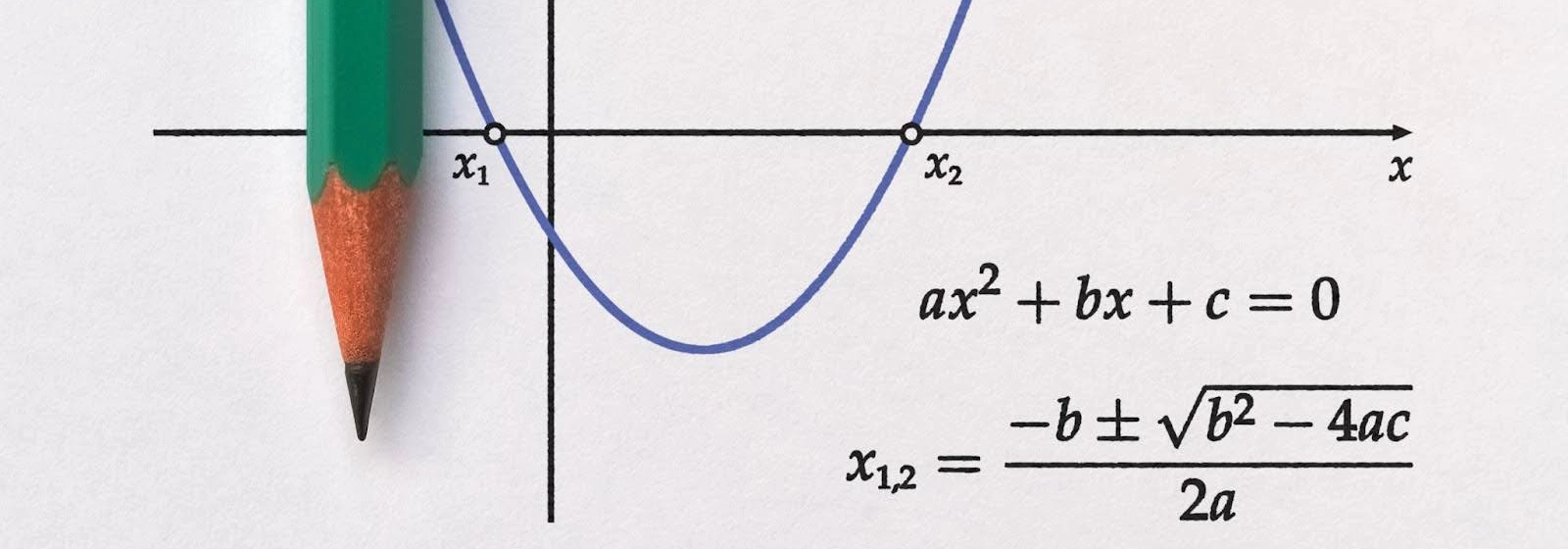
When studying functions in mathematics, one critical concept often overlooked is end behavior. Whether you’re analyzing graphs or solving real-world problems, understanding the end behavior of a function provides valuable insight into how it behaves as its input, x, moves toward positive or negative infinity.
Knowing this behavior allows students to accurately interpret functions, predict trends, and connect their mathematical understanding to practical applications. This blog aims to demystify the concept of end behavior by breaking it down into digestible parts, complete with examples and clear explanations tailored for students like you.
What is End Behavior?
At its core, end behavior refers to a function's behavior or trend as the input x approaches positive infinity or negative infinity . It helps determine whether the graph of a function rises, falls, or levels off at its far ends.
For example, imagine tossing a ball. To predict where it will land, you’d need to know how its path (or trajectory) behaves as it moves farther away from its starting point. Similarly, end behavior explores the long-term “path” of a function.
Mathematically, analyzing end behavior can involve looking at the graph of a function or considering the algebraic form, such as its degree, leading coefficient, or exponential terms. It’s an essential skill in understanding the “big-picture trends” of functions.
Why Does End Behavior Matter?
End behavior isn’t just a theoretical concept—it holds practical value. Understanding the end behavior of functions can help you in a variety of ways, such as:
- Making Predictions: It helps you identify the trends of data modeled by a function. For instance, in economics, understanding end behavior can show whether a business will experience growth or decline as time progresses.
- Graph Analysis: Knowing end behavior helps to sketch accurate function graphs without needing to plot every point.
- Limits and Calculus: It lays the groundwork for advanced topics such as limits in calculus, interpolation, and extrapolation.
- Real-world Applications: End behavior is vital in engineering, physics, and other sciences where mathematical modeling is key.
Types of End Behavior
Now that you understand what end behavior is, let’s explore the four common types of end behavior that functions exhibit. Each type depends on the function’s degree (highest power of x) and leading coefficient.
1. Rises to Infinity on Both Ends
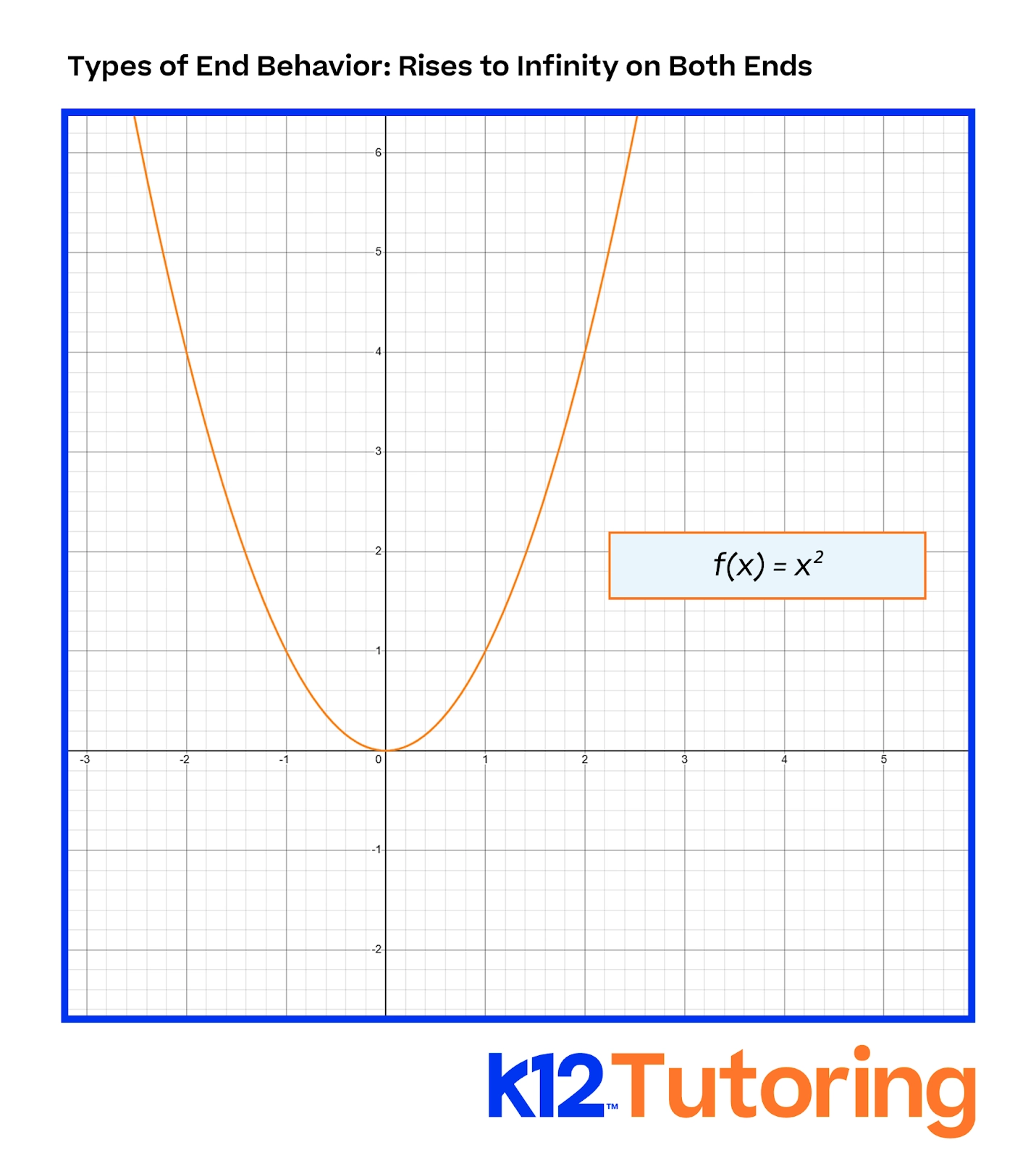
- Example Function:
- Description: The graph moves upward as and .
- Key Insight: Common in polynomial functions with an even degree and a positive leading coefficient.
2. Falls to Negative Infinity on Both Ends
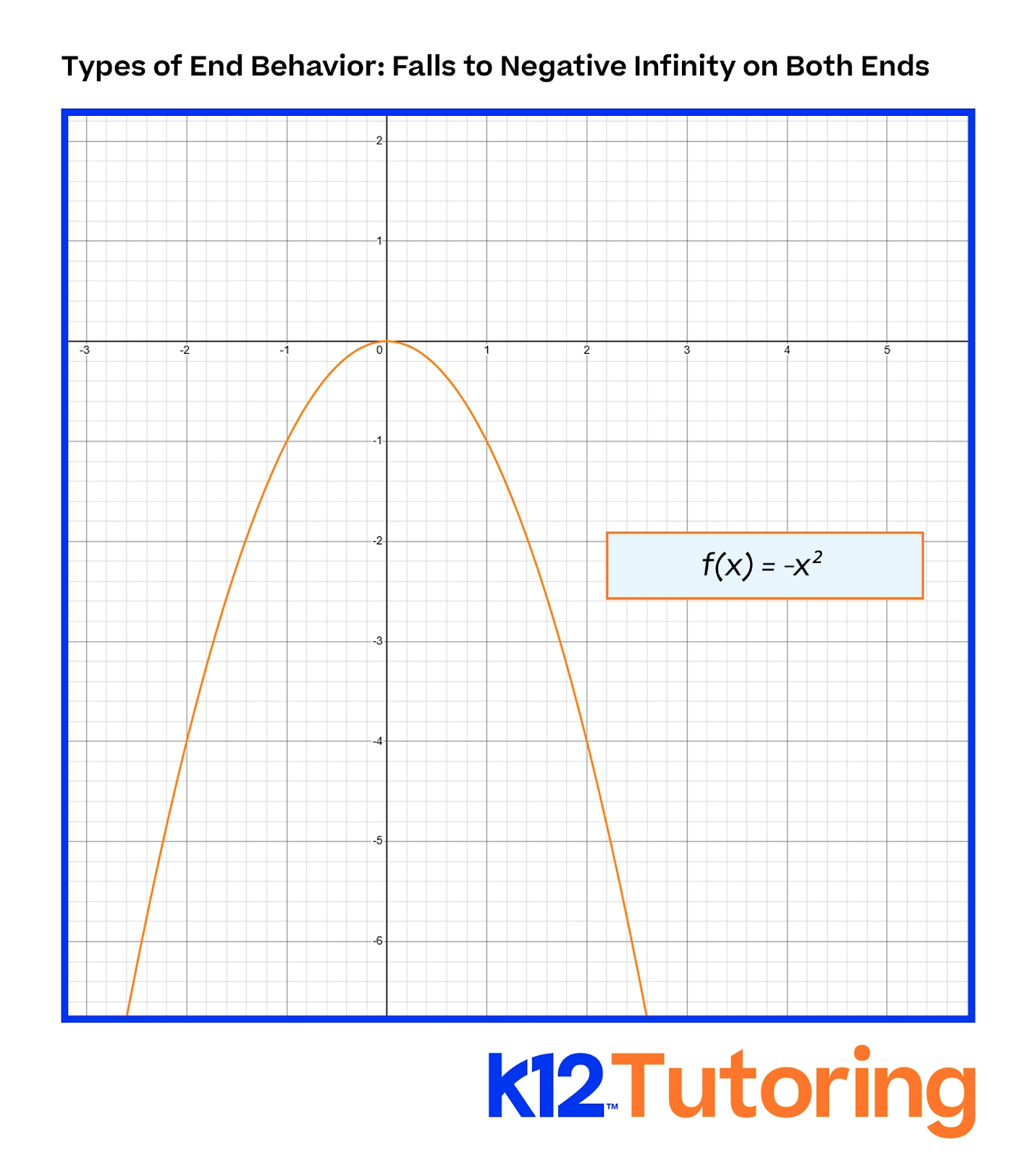
- Example Function:
- Description: The graph moves downward as and .
- Key Insight: Found in polynomial functions with an even degree and a negative leading coefficient.
3. Rises to Infinity on One End, Falls to Negative Infinity on the Other

- Example Function:
- Description: The graph increases as and decreases as .
- Key Insight: Typical for polynomial functions with an odd degree and a positive leading coefficient.
4. Falls to Negative Infinity on One End, Rises to Infinity on the Other
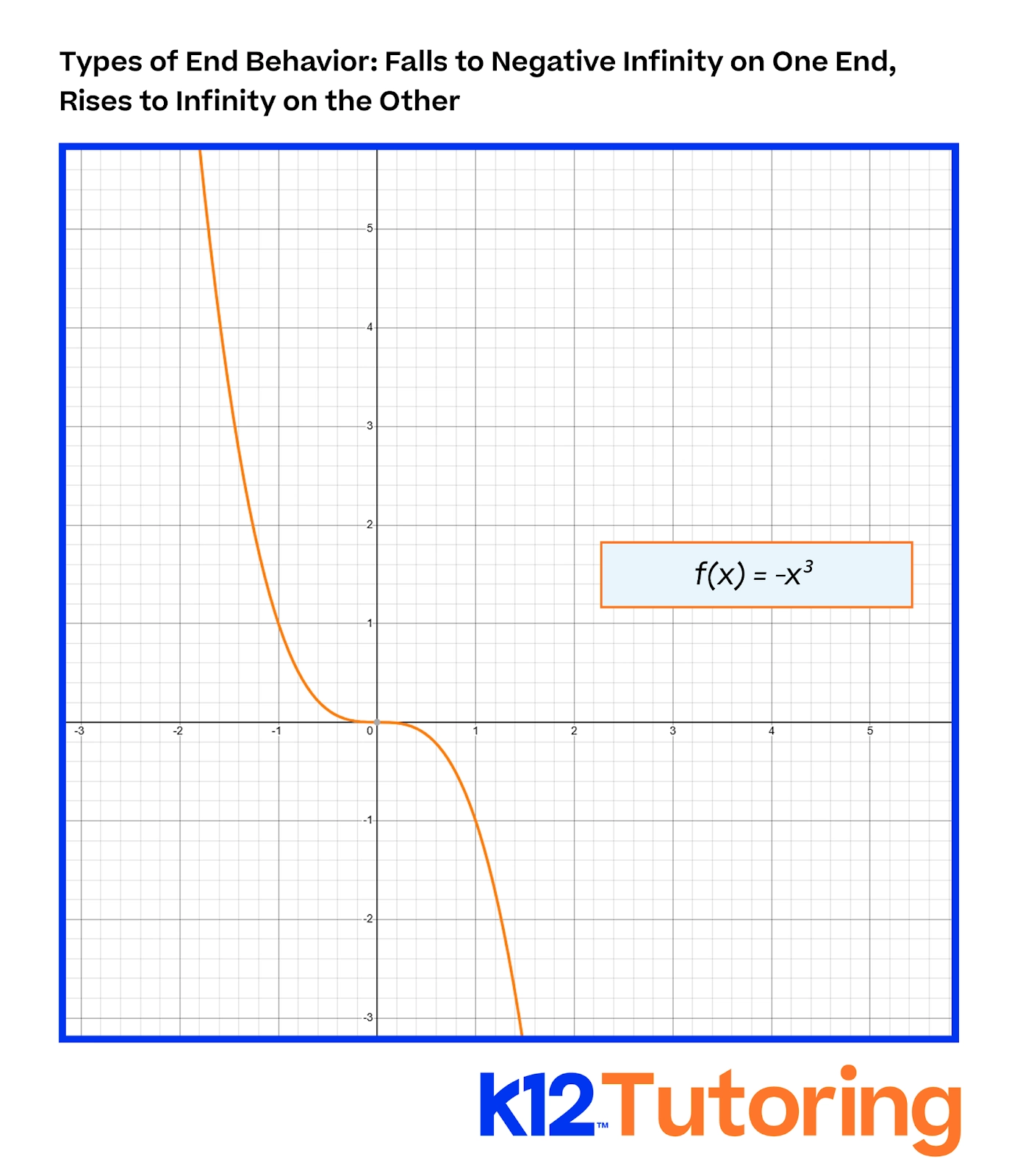
- Example Function:
- Description: The graph decreases as and increases as .
- Key Insight: Occurs in odd-degree polynomial functions with a negative leading coefficient.
Techniques for Analyzing End Behavior
1. Use the Leading Term
For polynomial functions, focus on the leading term (the term with the highest power of x). This term dominates the behavior of the function as or .
Example: For , the leading term is . Since it's an odd degree with a positive coefficient, the function rises to infinity on one end and falls to negative infinity on the other.
2. Graph the Function
Use tools like graphing calculators or online graphing software (e.g., Desmos) to observe how the function behaves visually. Pay attention to the direction of the graph as x becomes very large or very small.
3. Consider Exponential Growth or Decay
For exponential functions like , analyze whether the base (e.g., e or 2) is greater than 1 (growth) or between 0 and 1 (decay).
4. Remember Common Patterns
Memorize how common types of functions (linear, quadratic, cubic, exponential, etc.) behave. This will make it easier for you to recognize end behavior at a glance.
Real-world Applications of End Behavior
Understanding end behavior isn’t just limited to math class. Here’s how it plays a role in the real world:
- Physics: Predicting a projectile’s path or how an object moves at extreme distances (e.g., satellite orbits).
- Economics: Determining long-term business trends, population growth, or market saturation.
- Engineering: Designing structures or systems that must handle extreme conditions without failure.
- Environmental Science: Modeling climate change or predicting changes in natural systems over time.
A Quick Exercise
Test your knowledge!
Sketch the graph and identify the end behavior of the following function:
(Hint: Focus on the leading term!)
Answer:
Leading Term:
The leading term is .
- The degree (highest power of x) is 4, which is even.
- The leading coefficient is —3, which is negative.
End Behavior:
Using this information:
As , the term becomes very large and negative. Thus, .
As , the term also becomes very large and negative (since raising a negative number to an even power results in a positive value, but the negative coefficient flips it). Thus, .
Final Answer:
The function falls to negative infinity on both ends.
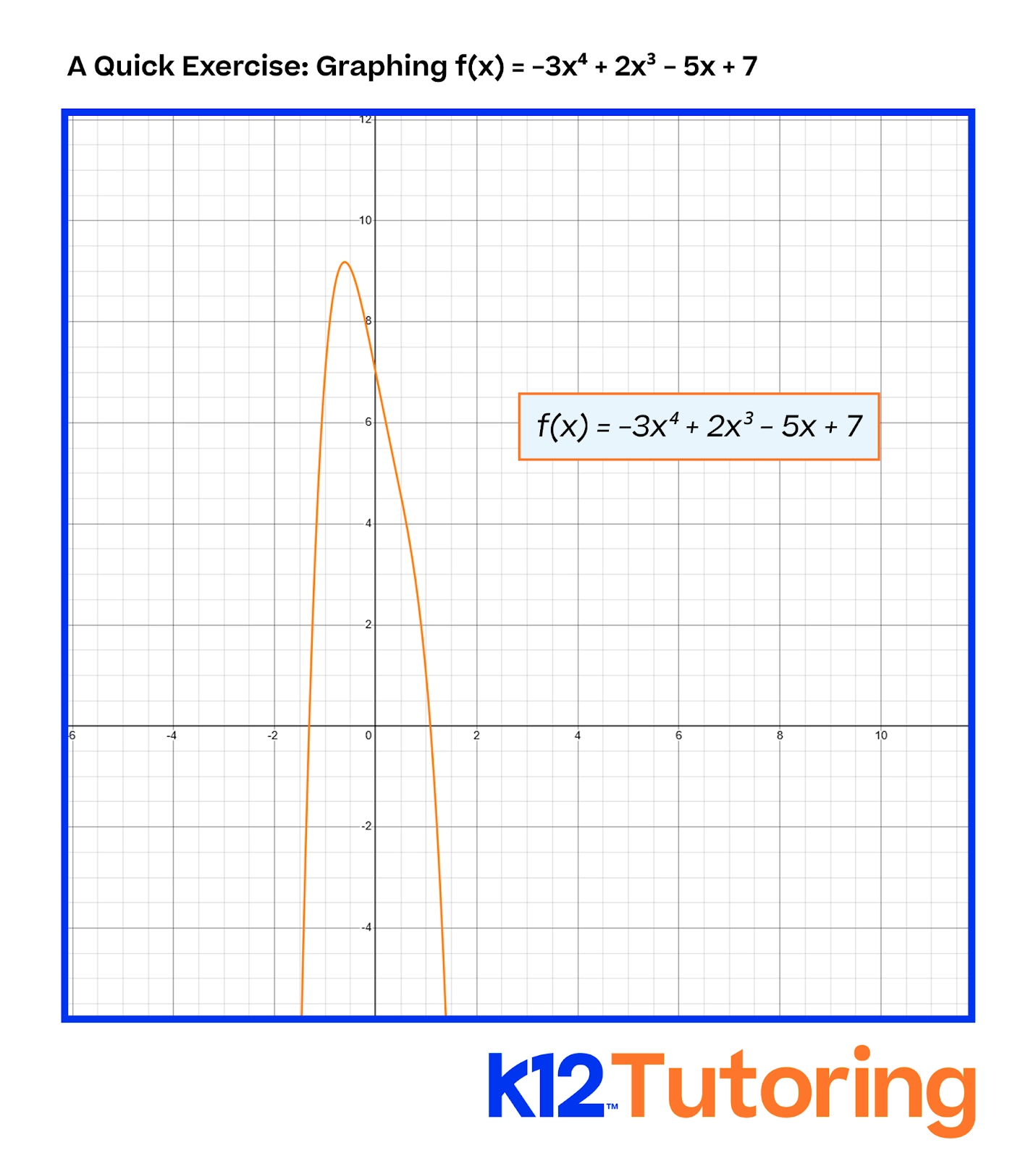
This matches the behavior of a polynomial function with an even degree and a negative leading coefficient.
Wrapping Up
The end behavior of functions is a key concept that simplifies how we analyze and interpret functions in mathematics. By understanding how a function behaves as or , you gain the power to make accurate predictions, draw graphs efficiently, and connect math to real-world applications like physics, economics, and more.
Ready to take your knowledge further? Keep practicing, exploring new challenges, and applying what you’ve learned to solidify your understanding.
Need extra support? Math tutors can provide personalized guidance with hands-on examples and exercises to help you master functions and their graphed behavior. With expert help, you’ll build confidence, sharpen your skills, and excel in your mathematical journey!


